The Legend of Macdonaldtown
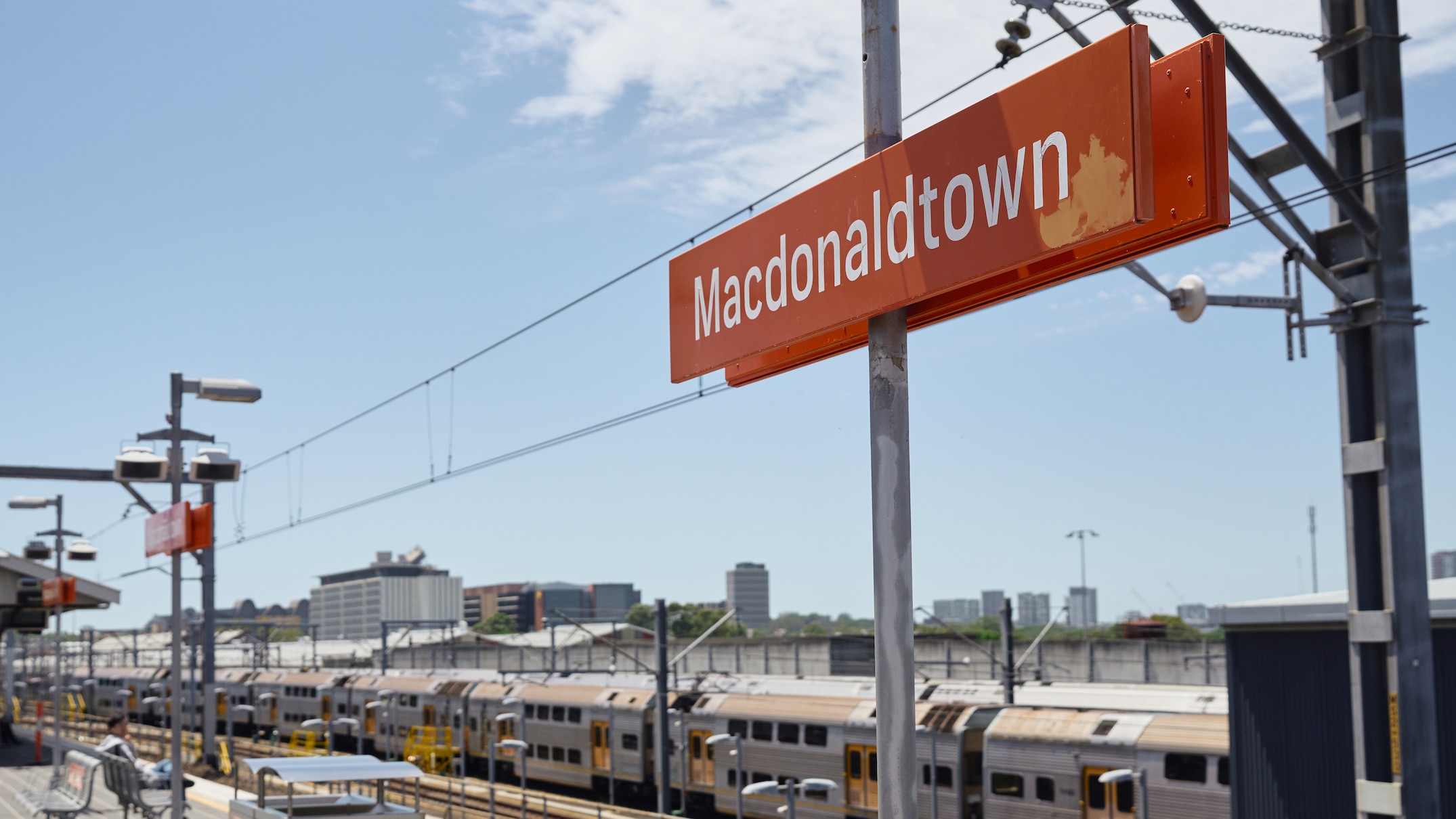
An urban legend has persisted in Sydney for decades — did the scandal of an infamous serial killer couple erase an inner-city suburb from the modern-day map? The story surrounding Macdonaldtown has long been shrouded in mystery, with questions about what truly happened to this once-bustling borough. Today, the only remnants of its existence are the obscure train station one stop before Newtown and a few scattered plaques in Erskineville.
However, in the early 1890s, a scandal brought it infamy across the country. The grim discovery that led to this notoriety involved a couple who became known as “baby farmers.”
The Crimes of Sarah and John Makin
The case of Sarah Makin and her husband John Makin was both horrific and unbelievable. They were fostering unwanted children for money, only to kill them to make room for more. This practice led to the deaths of numerous infants, with the remains of seven being found in their yard on Burren Street in Macdonaldtown.
The discovery occurred in October 1892 when workers digging to connect a pipe uncovered human remains. Police eventually located the remains of 15 infants. The media frenzy that followed included a high-stakes criminal trial, which ended with John Makin being hanged on August 16, 1893, in Darlinghurst. Sarah Makin, however, was spared a death sentence and was released from prison in 1911, passing away in 1918 at the age of 72.
Was the Suburb Renaming Caused by Scandal?
Following these events, there was either a systemic attempt by the government to cleanse the neighborhood of a lingering bad reputation or simply a town planning change. The suspicions mostly trace back to the act to rename Macdonaldtown to Erskineville passing the NSW parliament in March 1893, five months after the bodies were found.
While the timing may raise eyebrows, the theory that Sarah and John Makin sparked the name change almost falls apart when looking at newspaper archives from the era. A notice in the Evening News points to the Macdonaldtown Council proposing a name change months before the infants’ bodies were located. “Changing the name as suggested would increase property value by at least 5 per cent,” the notice claims.
The Urban Legend: Myth or Reality?
City historian Laila Ellmoos from the City of Sydney believes the urban legend surrounding Macdonaldtown can finally be put to rest. “I think it is a long bow that has been drawn over the years,” she told the ABC.
A Changing Moral Compass
While the Makin case caused uproar in the 1890s, the practice of “baby farming” was not uncommon. Pregnant, unmarried women were often paying to give up their children at the time, according to Ellmoos. “It’s something to do with the changing moral compass at the time,” she said.
She added, “Something changed in society because there was a case similar not long before.” Ellen Batts went on trial for a series of “baby farm” murders in Woollahra three years prior to the Makin case, but received scant coverage.
“There was the child protection act not long after and [coverage of] the Makins was the impetus for this,” Ellmoos said. When asked whether it was a case of myth busted, Ellmoos was in no doubt. “I think it is,” she said.