
The Enduring Popularity of the Toyota HiAce
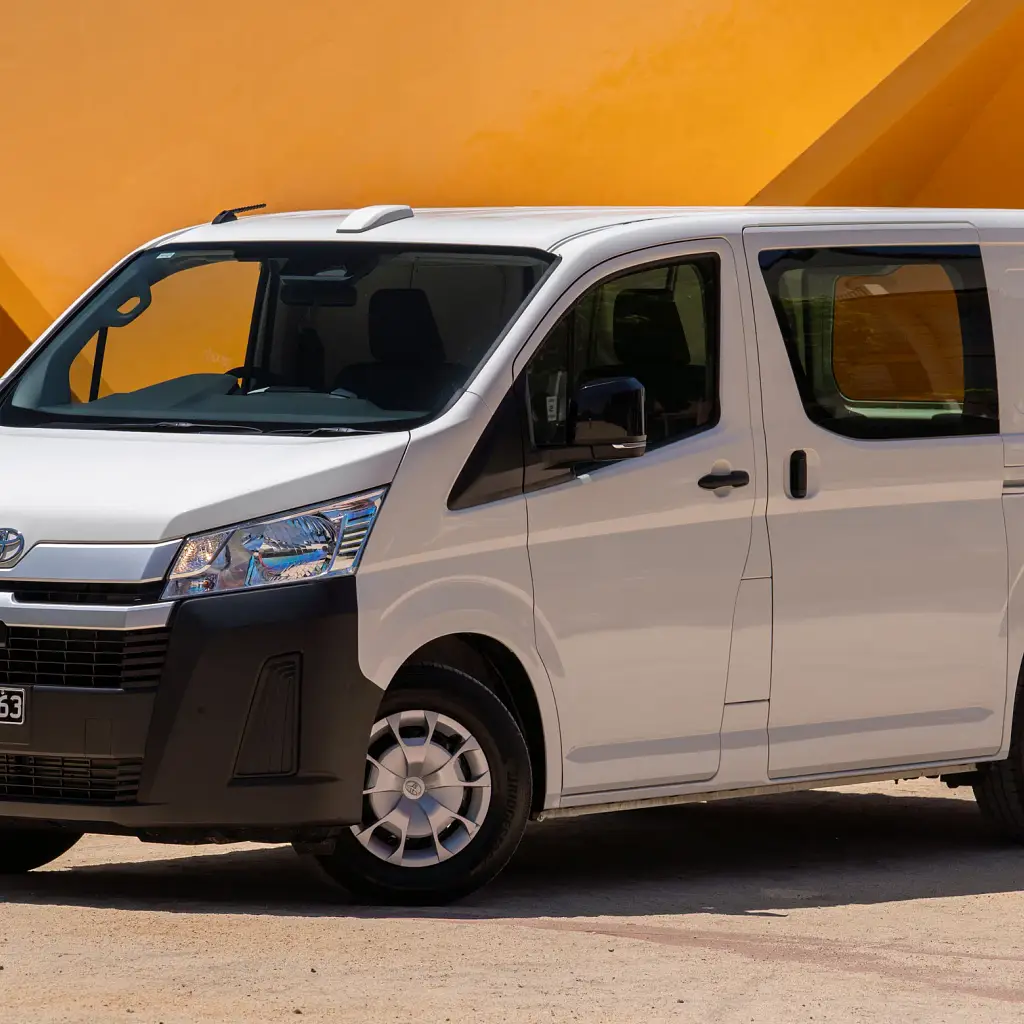
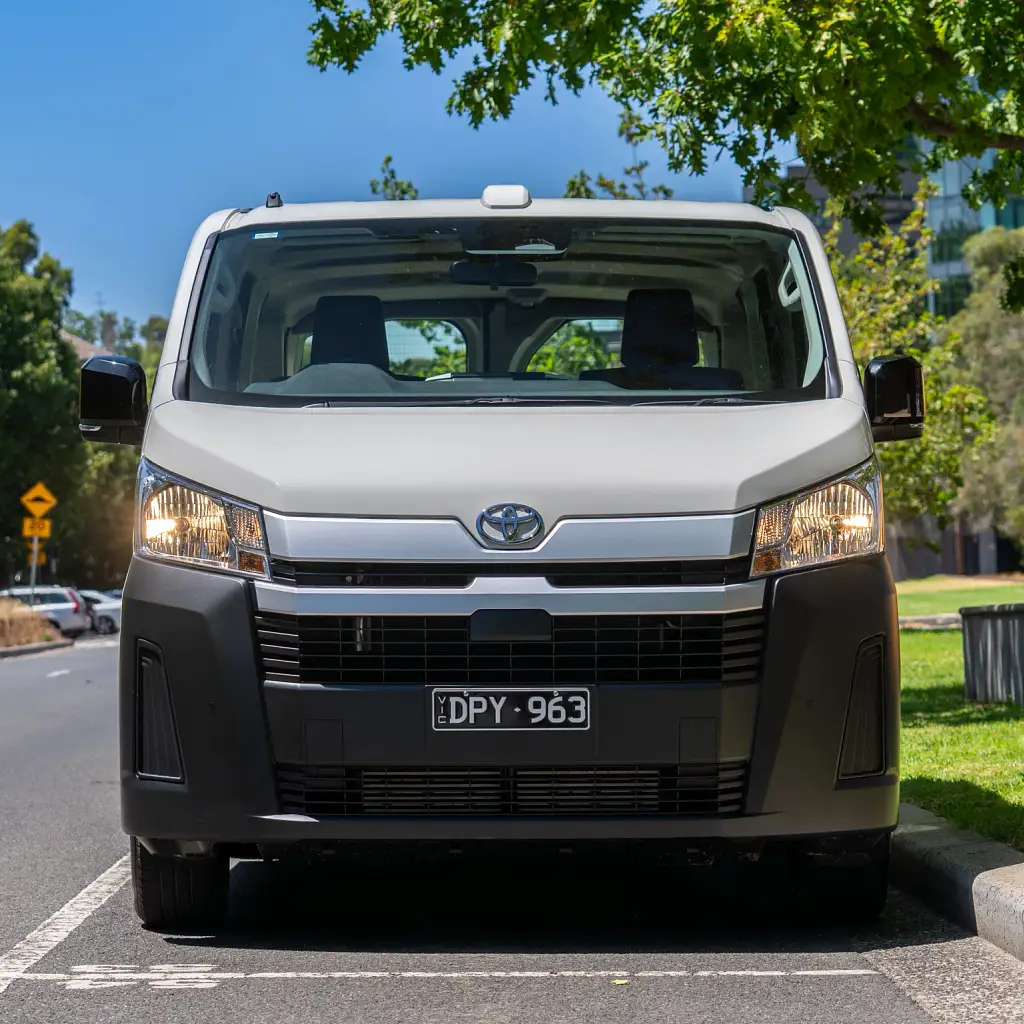
The Toyota HiAce has long been a staple in Australia’s commercial van market, and for good reason. Since its introduction in 2019, this workhorse van has remained a top choice among fleet operators and small businesses. Despite only minor updates over the years, it continues to dominate the 2.5 to 3.5-tonne segment, holding a commanding 49.7 per cent share of sales in 2025. With new competitors entering the market, including plug-in hybrids and affordable Chinese models, the HiAce is facing increasing pressure. But how does it hold up against these newer alternatives?
Pricing and Value for Money
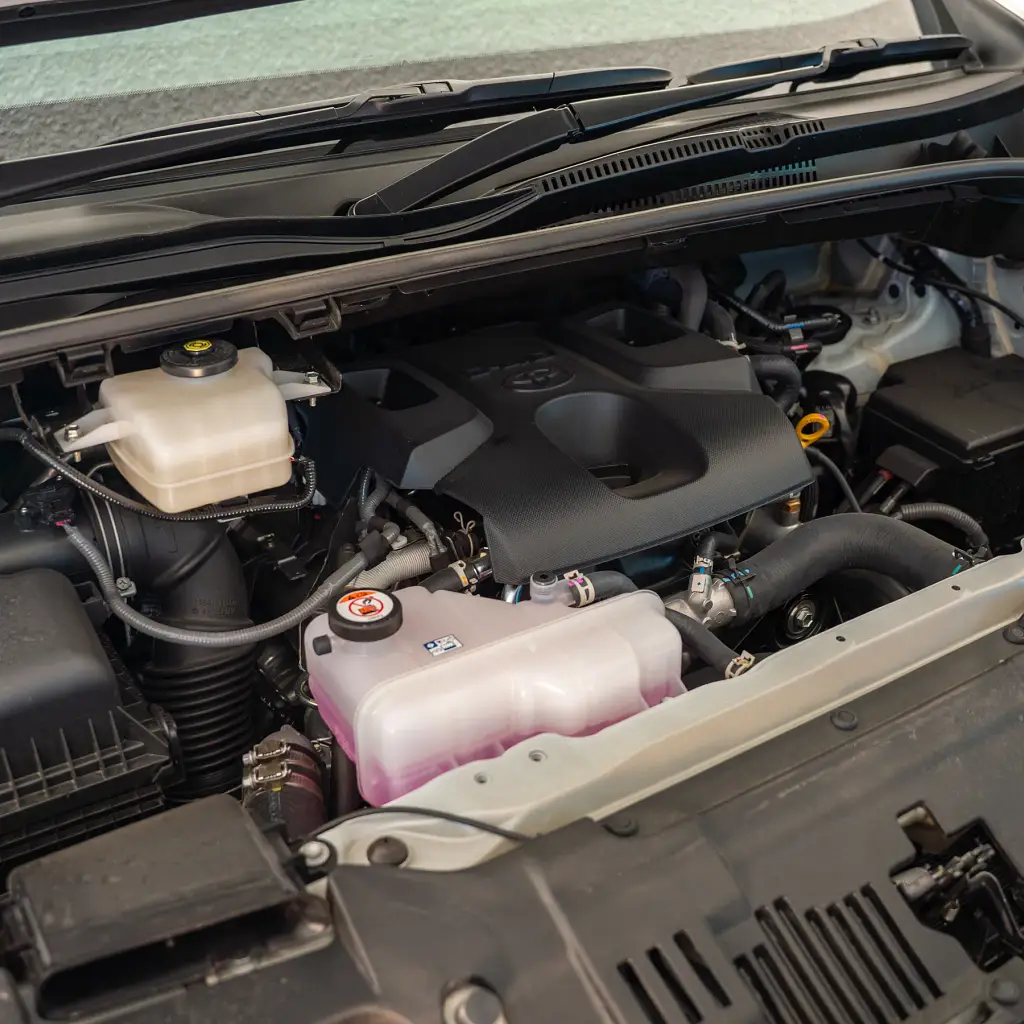
The HiAce starts at just over $50,000 for the base model, with prices climbing when additional features are added. Most buyers opt for an automatic transmission, which adds around $2,000 to the price. The LWB (Long Wheelbase) version tested here is the smaller of two body styles, while the SLWB (Super Long Wheelbase) is also available. All versions come equipped with a 2.8-litre turbo-diesel engine, shared with the HiLux but tuned slightly differently.
For the LWB manual, the base price is $51,880 before on-road costs, while the automatic version adds $2,000. Only one colour is available: French Vanilla white. Additional options such as a four-door package, rear barn doors, and the GL Package can significantly increase the cost. While the initial investment may seem high, many fleet buyers justify the price based on the HiAce’s expected longevity—up to 400,000 or 500,000 km.
Other competitors include the Ford Transit Custom, starting from $56,590, the Hyundai Staria Load, starting from $50,890, and the LDV Deliver 7, priced from $46,305. These models offer similar features and pricing, making the HiAce a strong contender in the market.
Fuel Efficiency and Range
Official fuel consumption for the HiAce LWB automatic is rated at 7.8 litres per 100 km. However, real-world performance varies depending on driving conditions and load. During testing, we recorded 9.2L/100km under light loads. The HiAce includes an idle-stop system, though it didn’t activate frequently during our test period.
With a 70-litre fuel tank, the HiAce offers a range of nearly 900 km at the official rate, or around 760 km based on our test results. This makes it suitable for long-distance deliveries, although fuel economy isn’t its strongest point compared to some newer models.
Hybrid Options and Engine Choices
Currently, the HiAce is only available as a non-hybrid turbo-diesel in Australia. While the V-Active mild-hybrid system found on some HiLux models hasn’t been introduced to the HiAce, there is no official confirmation that this will change in the future. Petrol engines, such as the 2.7-litre four-cylinder and 3.5-litre V6, are not offered in Australia either, despite being available overseas.
This lack of hybrid and petrol options may be a drawback for environmentally conscious buyers or those looking for more power. However, the diesel engine is reliable and well-suited for commercial use.
Ownership Costs and Warranty
Toyota offers a five-year or 160,000 km warranty for commercial use, with no mileage limit for private owners. Genuine accessories purchased at the time of purchase are covered by a five-year warranty, while later purchases have coverage for the remainder of the vehicle’s warranty or two years, whichever is longer.
Servicing is covered under Toyota’s capped-price program, with a six-month/10,000km interval priced at $365 per service for the first 10 visits. Over three years, this totals $2,190, with higher costs for longer periods. Competitors like Ford and Hyundai offer more competitive servicing plans, though their intervals are less frequent.
Insurance costs for the HiAce were quoted at $2,678 annually, compared to $2,515 for the Staria Load and $3,651 for the Transit Custom. These figures highlight the HiAce’s competitive position in the market.
Safety Features and Performance
The HiAce was retested in 2025 to maintain its five-star ANCAP rating. It scored highly in adult and child occupant protection, as well as safety assist technology. Recent updates include a front centre airbag, lane-keep assist, and full-speed-range adaptive cruise control. The reverse camera provides a clear view, and the exterior mirrors offer a wide field of vision.
While the lane-keeping system can be slow to react, the overall safety features are robust and effective. The HiAce is designed with fleets in mind, offering features that appeal to commercial users.
Exterior Design and Practicality
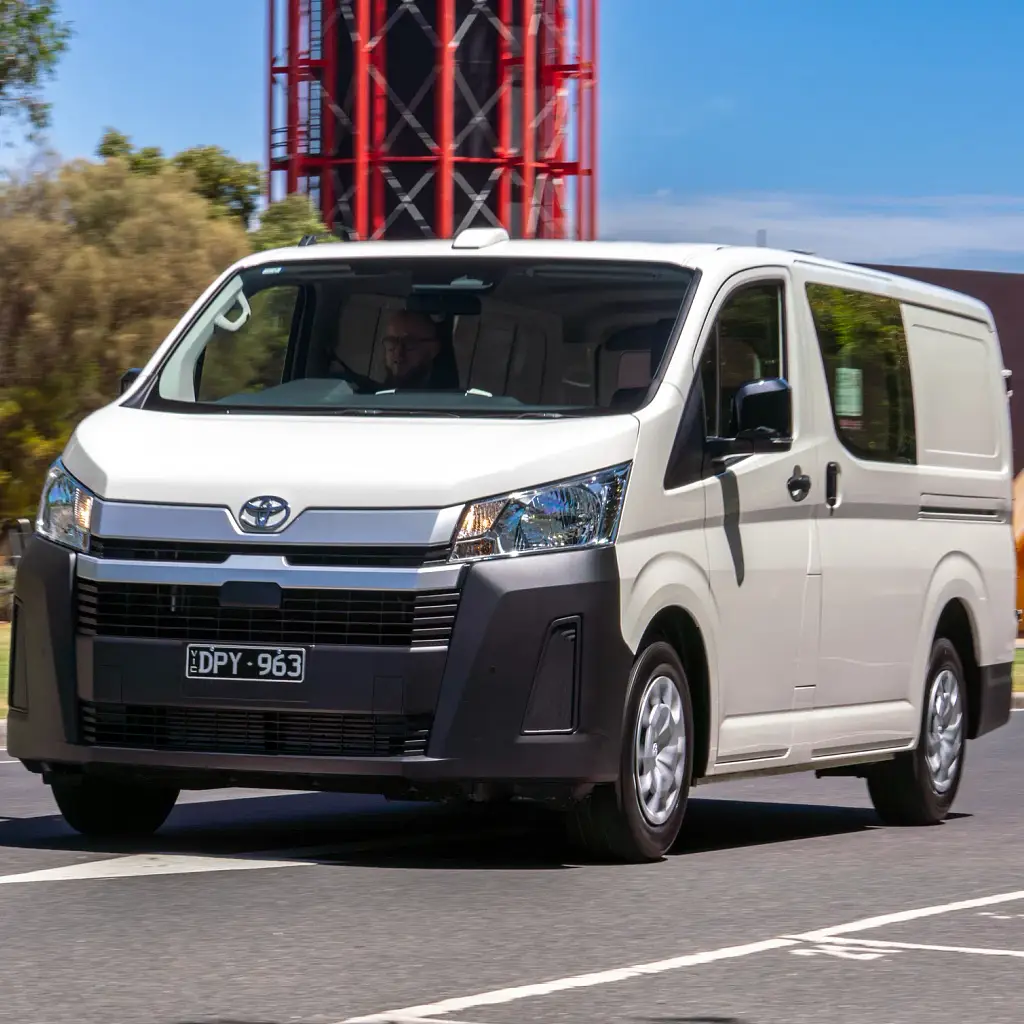
The HiAce retains its original design since 2019, featuring a stubby-bonnet shape, black bumpers, and a silver grille. Halogen headlights are still used, and the only available colour is white. While this may be limiting for fleet operators, it ensures consistency across the range.
The HiAce doesn’t offer a glazing kit for the sides, requiring customers to order spare parts if they want visibility. Rear barn doors open 180 degrees but don’t fold flat, and a lock rod is needed to keep them open at 90 degrees.
Interior Comfort and Functionality
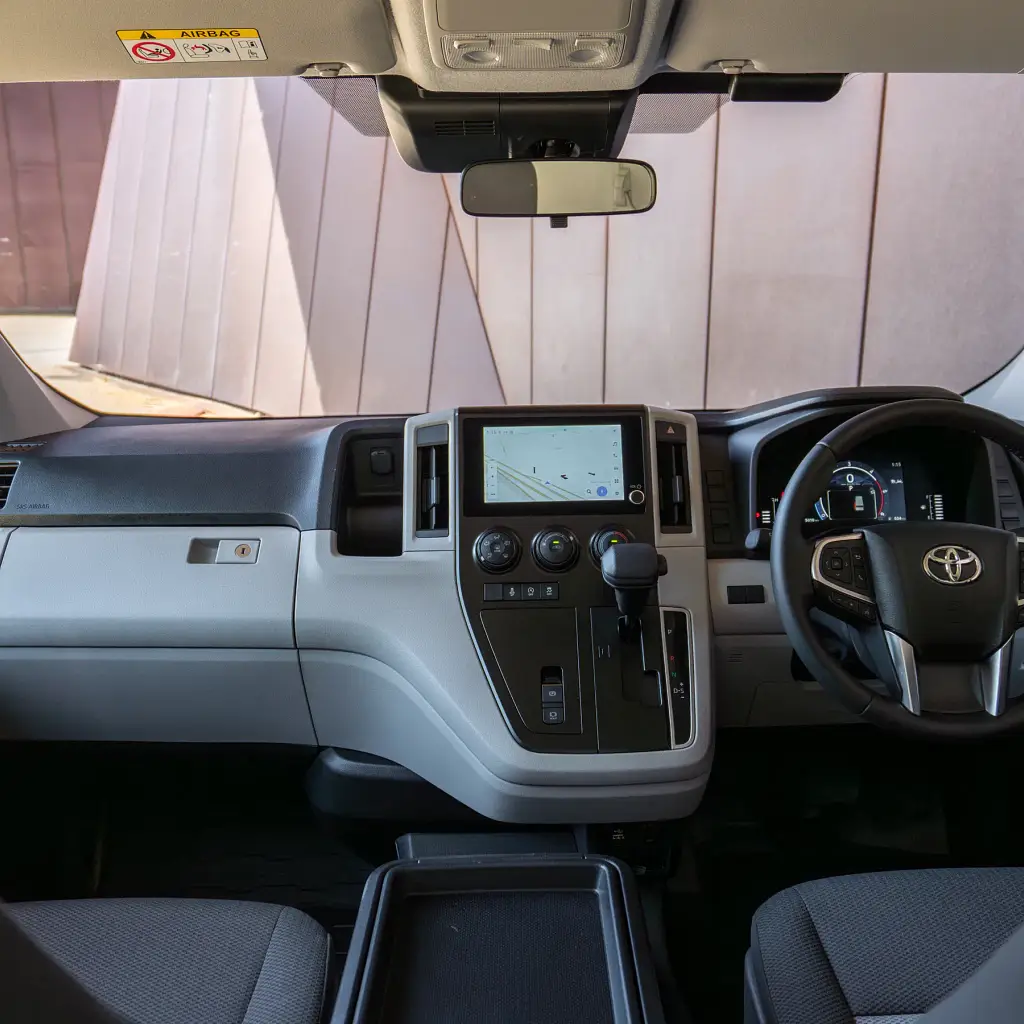
The interior is simple and functional, reflecting the HiAce’s work-first approach. The cabin features a step-in design, flat seats, and adjustable lumbar support. The dashboard is made of hard-wearing plastics, with a leather-wrapped steering wheel. Storage is limited, with cupholders and document holders placed between the front seats.
The console blocks access between the passenger area and cargo bay, unlike some European vans. The cargo area is a blank canvas, with pre-installed tie-down points and space for customisation. The HiAce can fit two Australian pallets and has a payload capacity of 1,095 kg.
Infotainment and Connectivity
The HiAce features an 8-inch infotainment screen with AM/FM/DAB radio, Bluetooth, and wireless Apple CarPlay and Android Auto. However, it lacks a wireless charging pad and only has one USB-A port. The system experienced lag and bugs, and voice-to-text functionality was difficult to use at highway speeds.
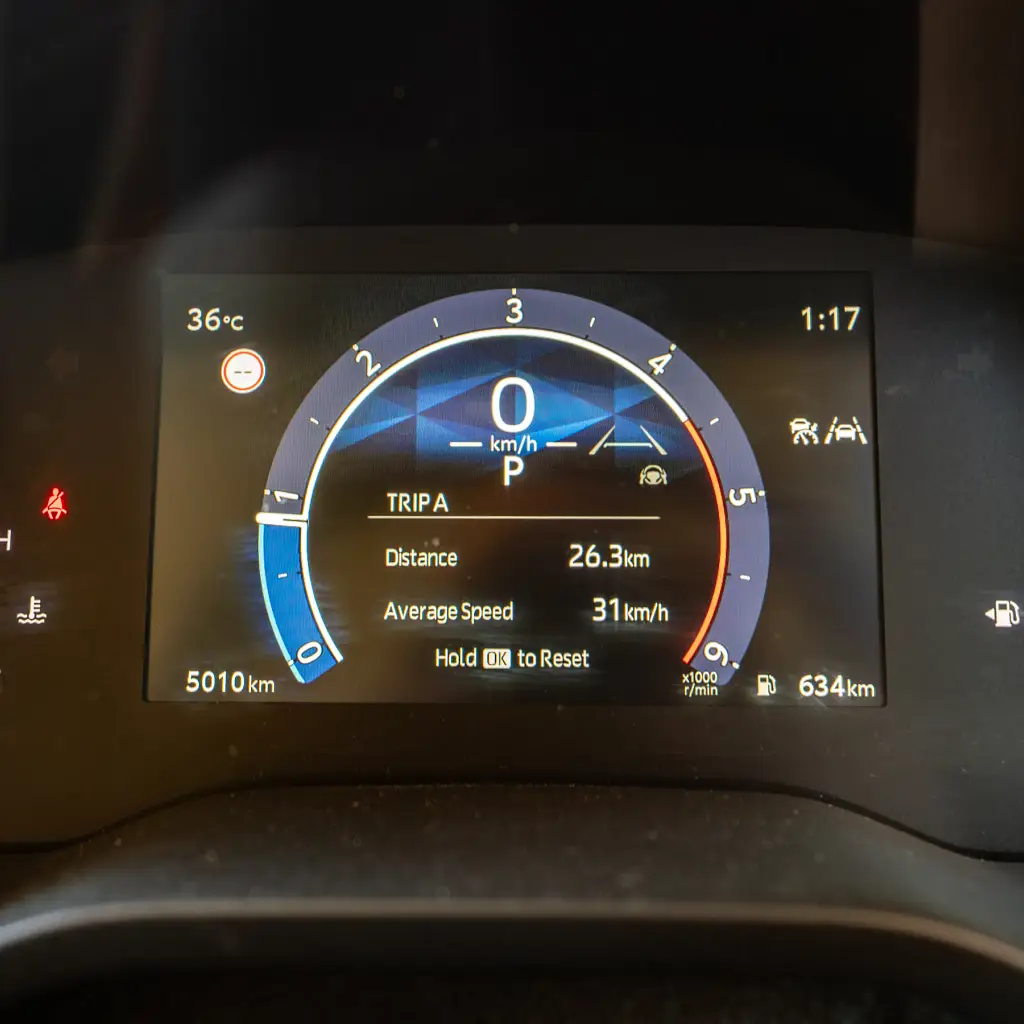
A 7-inch digital instrument display was added in 2025, along with standard Connected Services features. Fleet customers can access Toyota Halo for vehicle tracking and management tools.
Driving Experience and Handling
The HiAce is designed for ease of use, with intuitive controls and features like an electric park brake and auto hold. Manual models retain drum brakes, while automatics get disc brakes. The 2.8-litre diesel engine is powerful enough for most tasks, though it lacks refinement.
The six-speed automatic is smooth and reliable, and the low steering effort makes it easy to handle. The turning circle is tight, making parking straightforward. While the ride isn’t class-leading, the HiAce becomes more stable with a payload.
Final Thoughts and Recommendations
Despite its age, the HiAce remains a strong contender in the commercial van market. Its reliability, practicality, and value for money make it a popular choice among fleet operators. While it may not offer the latest technology or hybrid options, it delivers on key areas that matter most to commercial users.
If you’re considering a van for business use, the HiAce is definitely worth a look. It may not be the most advanced option on the market, but its proven track record and solid performance make it a dependable choice.