Deadly Suicide Bombing Rocks Islamabad Mosque, ISIS Claims Responsibility
Islamabad, Pakistan – A devastating suicide bombing at a Shiite mosque in Pakistan’s capital during Friday prayers has claimed the lives of at least 31 worshippers and left scores more injured. The attack, which occurred on the outskirts of Islamabad at the Imam Bargah Qasr-e-Khadijatul Kubra mosque, is the deadliest incident to strike the city since the infamous Marriott hotel bombing in September 2008. The death toll is unfortunately expected to climb as medical professionals continue to treat the wounded.
The extremist group known as the Islamic State (ISIS) has come forward to claim responsibility for the horrific act. The timing of the blast, during Friday prayers when mosques are typically at their most crowded, amplified the tragic scale of the casualties.
Accounts from the Scene
Eyewitnesses described a scene of chaos and terror. A security source stated that the attacker was intercepted at the mosque’s gate before detonating explosives. Muhammad Kazim, a 52-year-old worshipper, recounted the harrowing experience. “During the first bow of the namaz [prayer ritual], we heard gunfire,” he said. “And while we were still in the bowing position, an explosion occurred.”
Kazim, who hails from Gilgit-Baltistan in northern Pakistan and resides in Islamabad, managed to escape the blast unharmed. However, he was instrumental in assisting a wounded friend to a nearby hospital for treatment. He described the explosion as “extremely powerful” and noted that it caused widespread destruction. “Debris fell from the roof, and windows were shattered,” he recalled. “When I got outside, many bodies were scattered… Many people lost their lives.”
Another worshipper, Imran Mahmood, provided further details, suggesting a brief exchange of gunfire between the bomber and volunteer security personnel at the mosque. According to Mahmood, a volunteer managed to shoot the attacker in the thigh as he attempted to advance further into the mosque, before the bomber detonated his explosive vest.
Emergency Response and Aftermath
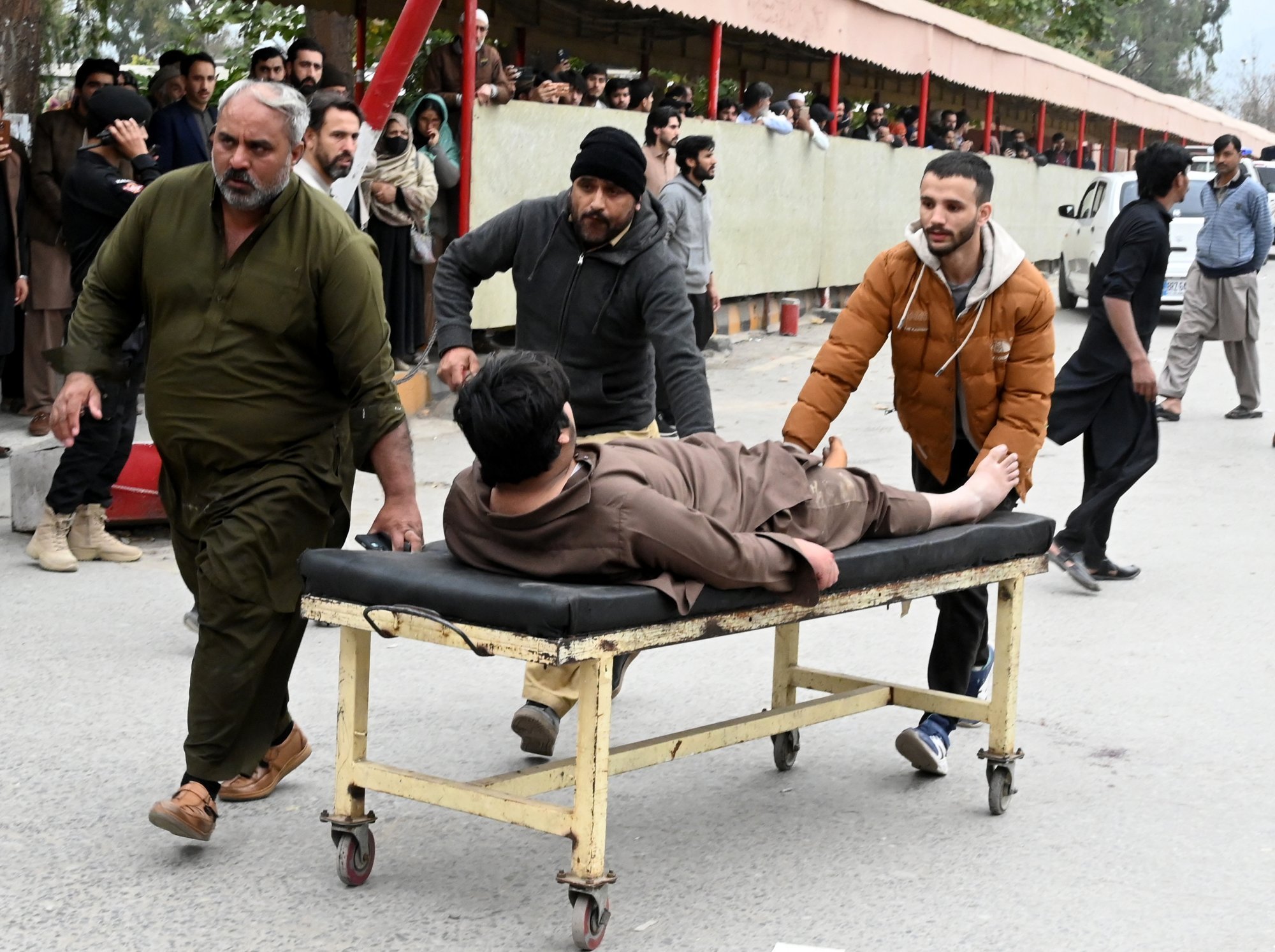
The immediate aftermath saw a frantic emergency response. At a major hospital on Friday afternoon, scenes of distress were evident, with individuals, including children, being brought in on stretchers and carried by concerned bystanders. Medics and civilians worked together to assist victims, many of whom were suffering from severe injuries and clad in blood-soaked clothing. The air was filled with the sounds of weeping and screams from relatives and friends of the wounded.
Heavily armed security forces were deployed to secure the mosque premises, where the grim reality of the attack was starkly visible, with pools of blood staining the ground. Social media platforms were flooded with distressing videos showing numerous bodies lying near the mosque’s entrance, alongside scattered debris and personal effects across the prayer hall’s red carpet.
Official Condemnation and Broader Security Context
The Pakistani government has strongly condemned the attack. Prime Minister Shehbaz Sharif issued a solemn pledge that those responsible would be identified and brought to justice. Deputy Prime Minister Ishaq Dar denounced the bombing as “a heinous crime against humanity and a blatant violation of Islamic principles.”
This attack occurs against a backdrop of escalating security challenges in Pakistan. The nation’s security forces are currently engaged in a struggle against intensifying insurgencies in its southern and northern provinces, which share borders with Afghanistan.
Pakistan is predominantly a Sunni Muslim nation, but the Shiite minority constitutes approximately 10 to 15 per cent of the population. Shiite communities have unfortunately been frequent targets of attacks throughout the region in recent history.
The last significant bombing incident in Islamabad occurred in November, when a suicide blast outside a courthouse resulted in 12 fatalities and numerous injuries. This marked the first such attack on the capital in nearly three years. In a separate wave of violence last week in Balochistan, attacks attributed to separatist insurgents claimed the lives of 36 civilians and 22 security personnel. In response, authorities reported that security forces had neutralized nearly 200 militants during subsequent counter-operations.
The bombing at the Imam Bargah Qasr-e-Khadijatul Kubra mosque stands as the most lethal attack in the Pakistani capital since the catastrophic suicide truck bombing at the Marriott hotel in September 2008, which killed 60 people and caused extensive damage to the five-star establishment.