
US Navy Poised to Escort Tankers Through Strait of Hormuz Amidst Escalating Iran Tensions
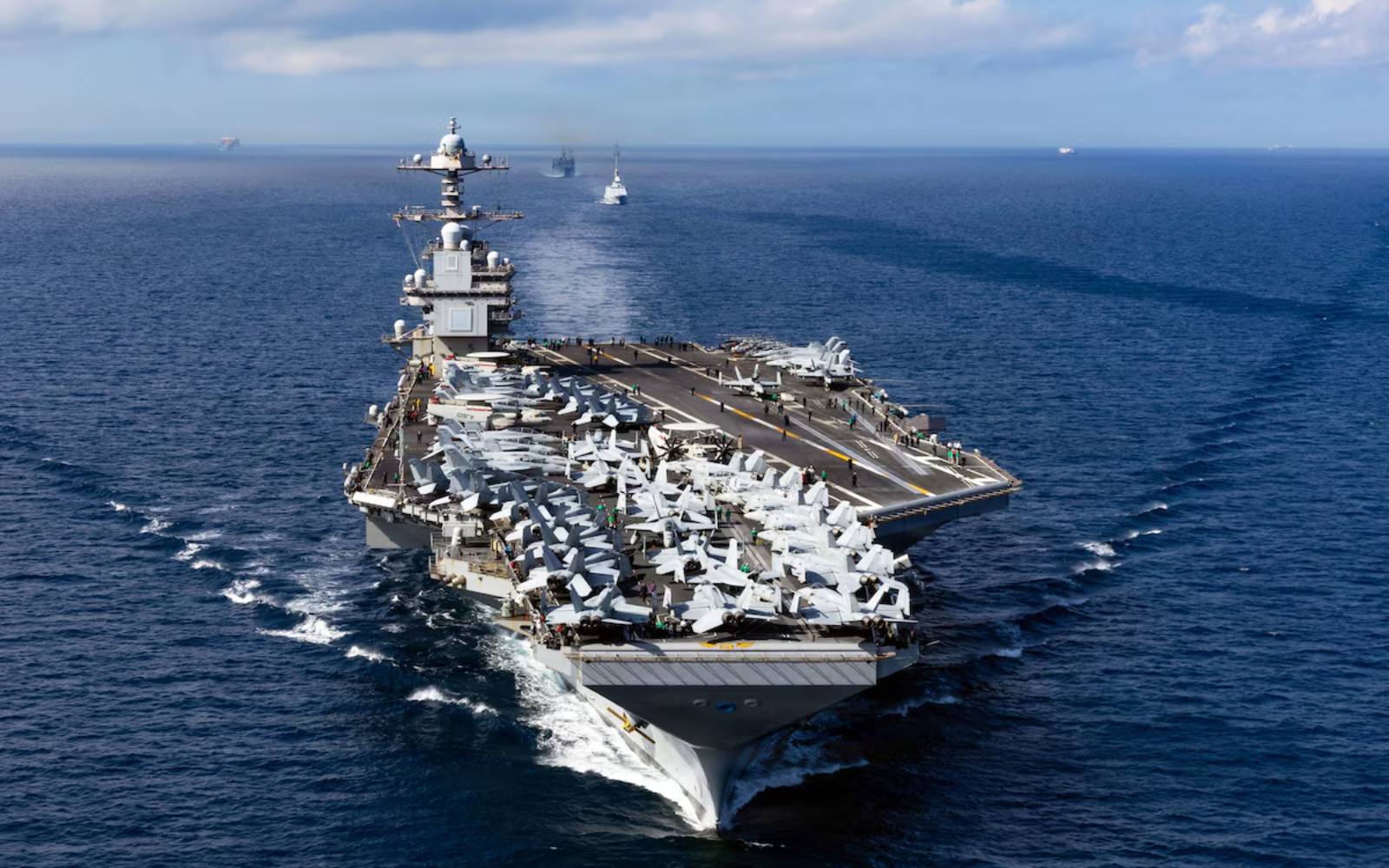
Washington D.C. – In a significant development signaling a heightened US commitment to regional stability, President Donald Trump announced that the US Navy stands ready to escort oil tankers through the critical Strait of Hormuz. This move comes as the United States grapples with the fallout from joint US-Israeli strikes on Iran, a conflict that has sent ripples through global markets and intensified geopolitical anxieties.
President Trump, who has offered a shifting narrative regarding the rationale behind the strikes, stated that he believed Iran was on the verge of launching its own offensive. This assertion aims to justify America’s most substantial engagement in the Middle East in decades, though a clear endgame for the escalating situation remains undefined. The recent military actions and Iran’s retaliatory responses have plunged the region into turmoil, with commercial shipping actively avoiding the Strait of Hormuz – a vital artery for global trade.
The President’s pronouncements were made via his Truth Social platform, where he declared, “If necessary, the United States Navy will begin escorting tankers through the Strait of Hormuz, as soon as possible.” In parallel, the administration has also directed Washington to provide insurance for commercial shipping operations, a measure intended to alleviate concerns within the industry. While US stock markets saw a slight recovery following this announcement, crude oil prices continued their upward trajectory, underscoring the delicate economic balance at play.
Justifications and Conflicting Accounts
Questions have persistently surrounded President Trump’s justifications for the US involvement. He has vehemently denied that Israel coerced him into initiating the strikes. His statements appeared to diverge from those of Secretary of State Marco Rubio, who had previously indicated that Washington’s decision was a direct response to intelligence suggesting an imminent Israeli strike.
“I think they (Iran) were going to attack first. And I didn’t want that to happen,” President Trump explained during a meeting with German Chancellor Friedrich Merz at the Oval Office. He added, “So, if anything, I might have forced Israel’s hand.”
Speaking publicly for the first time since the operation commenced on Saturday, President Trump asserted that the US-Israeli strikes had effectively crippled Iran’s military capabilities. He claimed, “Just about everything’s been knocked out,” detailing that Iran’s navy, air force, and radar systems were rendered inoperable.
Uncertainty Over Iran’s Future Leadership
Despite the assertions of significant military damage, President Trump provided no definitive plan for Iran’s future leadership. He cryptically remarked that “most of the people we had in mind are dead.” He also acknowledged the possibility that a successor to Iran’s Supreme Leader Ali Khamenei, who was reportedly killed in the strikes, could prove equally problematic.
The President’s stance on “regime change” has been notably ambiguous. Toppling the Islamic Republic was not listed among the four primary objectives for the operation, as outlined by him on Monday.
Iran’s Nuclear Ambitions and Diplomatic Stalemate
One of the stated key objectives of the operation was to halt Iran’s nuclear program. US officials sought to bolster President Trump’s narrative by alleging that Iran had been engaging in protracted and deceptive talks with Washington prior to the conflict.
“They basically could have been days or weeks away from a weapon,” a senior administration official informed reporters during a conference call. President Trump further stated that it was “too late” for Iran to pursue diplomatic channels. Confirming a breakdown in communication, US officials verified that neither negotiator Steve Witkoff nor President Trump’s son-in-law, Jared Kushner, had engaged in any back-channel discussions with Iranian representatives since the strikes on Saturday.
International Reactions and Trade Threats
German Chancellor Friedrich Merz voiced support for the US-Israeli action against Iran but expressed a strong desire for a swift resolution, noting the “damaging” impact on global economies. While commending Chancellor Merz, President Trump directed sharp criticism towards European allies, specifically Britain and Spain.
He drew a stark contrast between himself and British Prime Minister Keir Starmer, stating, “This is not Winston Churchill that we’re dealing with.” This comment followed the UK’s initial refusal to grant US forces access to British bases for the attacks, a decision later reversed. President Trump also issued a threat to sever trade relations with Spain, whose left-wing government had also denied the use of its bases for the operation, describing their stance as “terrible.”


