
PAS Reinstates Perlis Assemblymen After Ulama Council Review
KUALA LUMPUR – In a significant move that reconfigures the political landscape in Perlis, the Pan-Malaysian Islamic Party (PAS) has decided to reinstate three former state assemblymen whose memberships were previously terminated. The reversal of the earlier decision comes after a successful appeal to the party’s influential Ulama Council, signalling a commitment to reconciliation and the resolution of internal party disputes.
The three individuals who will now rejoin PAS are Saad Seman, representing the Chuping constituency; Fakhrul Anwar Ismail, from Bintong; and Mohd Ridzuan Hashim, who held the Guar Sanji seat. The Ulama Council’s endorsement of their appeals allows them to resume their roles as PAS members.
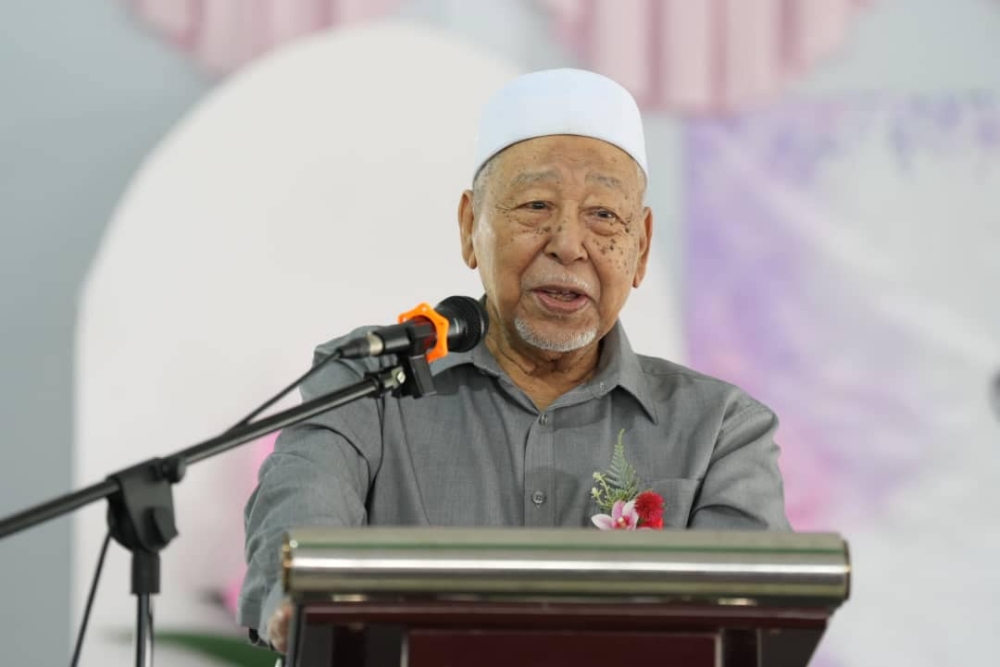
The decision was formally announced by PAS spiritual leader Datuk Hashim Jasin in a Facebook post detailing the proceedings of the Ulama Council’s second meeting for the 2026–2030 term. The meeting, which convened on January 27 at the party’s headquarters in Kuala Lumpur, saw extensive deliberation before reaching its consensus.
Datuk Hashim Jasin elaborated on the justifications behind the reinstatement, highlighting several key considerations rooted in Islamic principles and party doctrine. Foremost among these were the Quranic injunctions promoting brotherhood and compassion. The Prophet Muhammad’s teachings, which strongly advocate for repentance and forgiveness over immediate punishment, also played a pivotal role in shaping the council’s perspective.
Furthermore, the council invoked the Islamic legal principle of fiqh, which mandates the removal of harm. This principle was applied to the situation in Perlis, where the absence of three elected representatives was deemed to be causing significant public detriment. The council recognised that leaving these constituencies without functioning representatives constituted a “clear public harm” that needed to be rectified.
The concept of siasah syar’iyyah, or Islamic governance, also served as a guiding framework for the decision. This approach prioritises the preservation of unity within the party, the safeguarding of internal trust, and the effective management of disagreements without jeopardising the broader movement. Datuk Hashim Jasin emphasised that the public should not be made to suffer as a consequence of internal party conflicts.
He further articulated that the PAS Ulama Council’s intervention was aimed at upholding the party’s core principles by acting as a conciliator rather than an exacerbator of divisions. “Ulama cannot add fuel to a fire that is already burning,” Datuk Hashim Jasin stated, underscoring the council’s role in de-escalating tensions.
The initial termination of the trio’s memberships on December 24 had occurred amidst a period of significant political upheaval in Perlis, which notably saw the resignation of the state’s Menteri Besar, Mohd Shukri Ramli. At the time of the terminations, PAS president Tan Sri Abdul Hadi Awang had indicated that the decision was made in accordance with Clauses 76 and 15A(1)(b) of the party constitution, as amended in 2025. However, the subsequent review by the Ulama Council has led to a different outcome, reflecting a strategic recalibration by the party leadership.
This development is expected to have implications for the political stability in Perlis, potentially allowing for a more unified and functional state legislative assembly. The reinstatement underscores PAS’s internal mechanisms for addressing grievances and its emphasis on finding resolutions that prioritise unity and public interest, as interpreted through its religious and political doctrines. The party’s commitment to these principles will be closely watched as it navigates future challenges.


