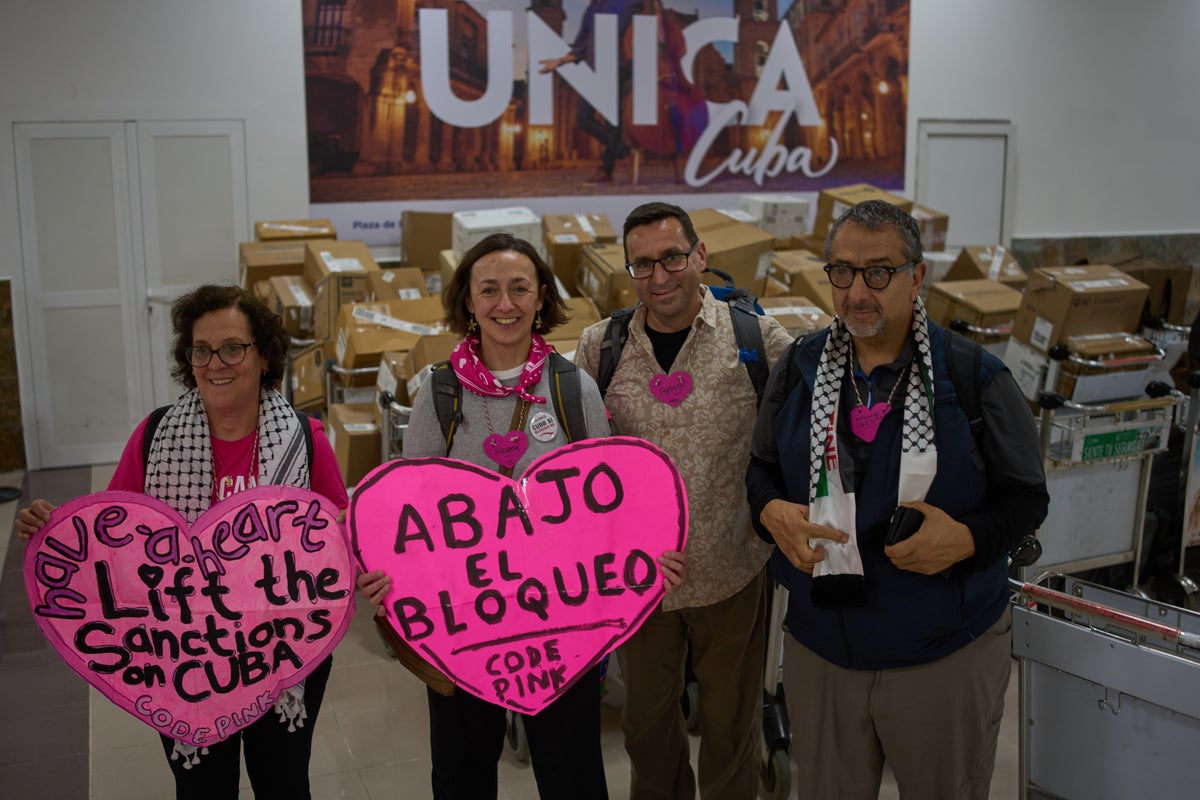
A significant number of delegates from 33 countries and 120 organizations have started arriving in Cuba on Friday as part of a solidarity caravan. This initiative is transporting approximately 20 tons of humanitarian aid to the island, which is currently facing a severe energy crisis.
Members of “Our America Convoy to Cuba” arrived by air from Italy, France, Spain, the United States, and several Latin American countries. Additional participants are expected to arrive by sea on Saturday, traveling in a flotilla of three vessels from Mexico, according to organizers.
Earlier this week, a group of activists reached Havana and delivered donations to hospitals. Their efforts highlight the growing international support for Cuba during this challenging time.
The visit occurs against a backdrop of heightened tensions between Cuba and the United States. The two governments have acknowledged holding talks following the oil embargo imposed by U.S. President Donald Trump. Recently, Trump expressed his intention to “take Cuba in some form,” stating, “I can do anything I want.”
Among the donated items are solar panels, food, and medicine for cancer treatment. These supplies are crucial for an island that has been brought to a near standstill since Trump implemented an energy embargo in January, which has worsened a five-year economic crisis. His administration has also been pressuring for changes in the political system.
David Adler, a U.S. citizen and coordinator of Progressive International, one of the caravan’s organizers, emphasized the importance of the convoy. “We are dozens and dozens of delegates, and we represent millions of people in this convoy,” he said. “We cannot allow this collective punishment. We cannot normalize it.”
Cuban Deputy Foreign Minister Carlos Fernández de Cossío addressed concerns about potential changes in the political system or the departure of Cuban President Miguel Díaz-Canel. He stated, “The Cuban political system is not up for negotiation, nor is the president, nor the position of any official in Cuba, subject to negotiation with the United States or with the government of any other country.” However, he noted that there are many areas of common interest where dialogue with Washington is possible, as has been done in the past.
Manolo de los Santos, another organizer of the caravan, highlighted that visiting Cuba at this time is not only “defying the U.S. blockade” but also preventing “another Gaza in the Americas.” Several analysts and regional leaders, including Mexican President Claudia Sheinbaum, have warned of a potential humanitarian crisis in Cuba.
Adler mentioned that both the flotilla heading to Gaza and the one going to Cuba share several supporters. In the case of Cuba, the convoy includes social activists, unions, prominent figures, and political parties, such as Morena from Mexico, the Workers’ Party of Brazil, and the Broad Front of Uruguay.
Notable figures involved include British Parliamentarian Jeremy Corbyn; Colombian Senator Clara López; former Spanish politician Pablo Iglesias; U.S. labor leader Chris Smalls; and Brazilian humanitarian activist Thiago Ávila.
After several weeks in which the only aid received by Cuba came from Mexico, which sent food and hygiene products on three occasions, activists and leaders in other countries began forming support groups and collecting donations. President Díaz-Canel expressed gratitude on social media, stating, “They bring shipments of aid to combat the attempt to suffocate us. Welcome once again to the compassion of the people. Solidarity always returns to those who practice it with no other interest than human well-being.”
Brazil announced it would send 20,000 tons of food, primarily rice, beans, and powdered milk. A group of Chilean parliamentarians also arrived with aid on Thursday, and China reported through its embassy that a ship carrying 60,000 tons of rice set sail for Cuba.