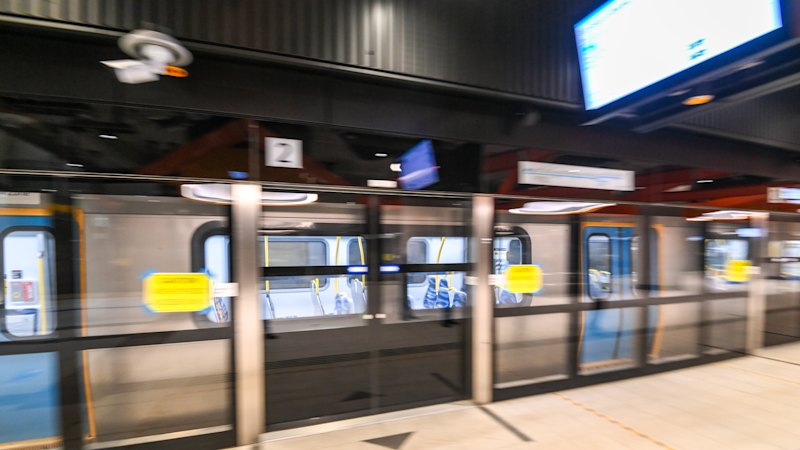
Metro Trains is currently investigating a potential defect in its newest train fleet, which operates exclusively through the city’s $15 billion Metro Tunnel. This investigation follows an incident in February that left hundreds of commuters stranded in carriages for up to two hours.
The issue involves the pantographs on the High-Capacity Metro Trains (HCMT). Pantographs are the arms mounted on top of the trains that make contact with overhead wires to draw power. Metro believes that problems with these components could lead to overhead wire entanglements.
On February 3, an HCMT caused an overhead wire to be pulled down near Armadale. Around 600 passengers were stuck onboard two trains for almost two hours without air-conditioning on a 30-degree day. Eventually, passengers evacuated the train and walked along the tracks to Malvern station.
Metro has determined that the Armadale incident was due to a pantograph fault. An alert sent to drivers and seen by The Age suggests this may be an ongoing risk.
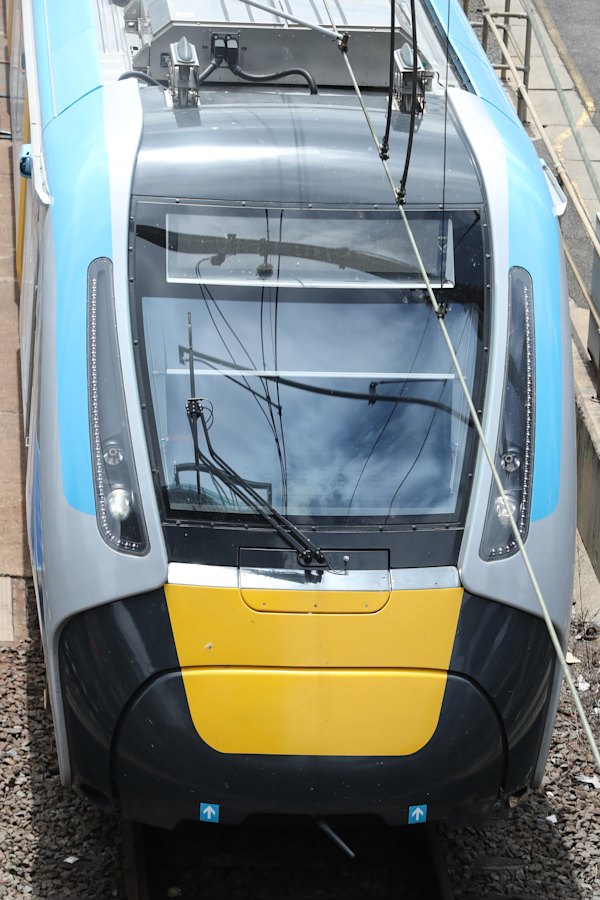
“Following recent HCMT pantograph entanglement incidents in the past few weeks, [Metro Trains Melbourne] are working with all relevant stakeholders to help identify abnormal pantograph behaviour,” the February 11 notice stated.
The notice indicated that Metro is looking for pantographs that bob up and down and arch excessively, as this was considered a potential contributing factor to recent entanglement events.
One Metro Trains driver, who spoke on the condition of anonymity to protect their employment, mentioned that overhead entanglements were unusual. They explained that it is not possible to monitor the pantographs in the HCMTs because, unlike older train models, they do not have driver cabin-side mirrors. Instead, they have rear-facing CCTV cameras focused on the train doors, which do not capture the top of the train.
“A lot of overhead issues are prevented simply by the driver seeing an issue and stopping the train, or lowering the pantograph, before something goes wrong,” they said.
HCMTs operate on the Cranbourne/Pakenham and Sunbury lines, which now form a single cross-city line connected via the Metro Tunnel. The tunnel opened to passengers on November 30.
Starting in 2017, Victoria spent $2.3 billion building 70 HCMTs and associated maintenance facilities through a public-private partnership. Under this agreement, infrastructure services group Downer is responsible for their maintenance.
Despite having the newest trains and other upgrades associated with the Metro Tunnel, the Pakenham and Sunbury lines recorded the highest number of cancellations (0.9 per cent) on the Metro’s electrified network in February and March. Cranbourne had the fifth most cancellations (0.7 per cent) out of Metro’s 15 lines.
A major incident occurred last week when an overhead wire was brought down near Clayton, suspending Cranbourne and Pakenham line trains until around 4:30 pm the following day. However, Metro stated this was not caused by a train fault.
When contacted by The Age, a Metro Trains spokesperson said: “There has been one incident this year when a faulty pantograph on a HCMT has caused disruptions on our network.”