

The Rise of the Strava Police in the Running Community
When runners complete a marathon, the first thing they often do is check their smartwatch. They want to know if they achieved a personal best (PB) or met their target time. If both answers are positive, many modern runners turn to the Strava app to share their success. Some may even take screenshots of their times and post them on Instagram, accompanied by a photo of their medal.
However, before hitting the post button, runners might want to consider the presence of the Strava police. These individuals are part of the running community who monitor social media to ensure that the times shared by influencers are legitimate. Their goal is to protect the integrity of long-distance running events.
One of the most prominent accounts in this movement is the Official Marathon Time Integrity Unit (OMTIU), also known as @officialunofficialtime. With over 30,000 followers on Instagram, OMTIU aims to restore truth, accuracy, and transparency to distance running. They believe that athletes should share their official chip times rather than their Strava times.

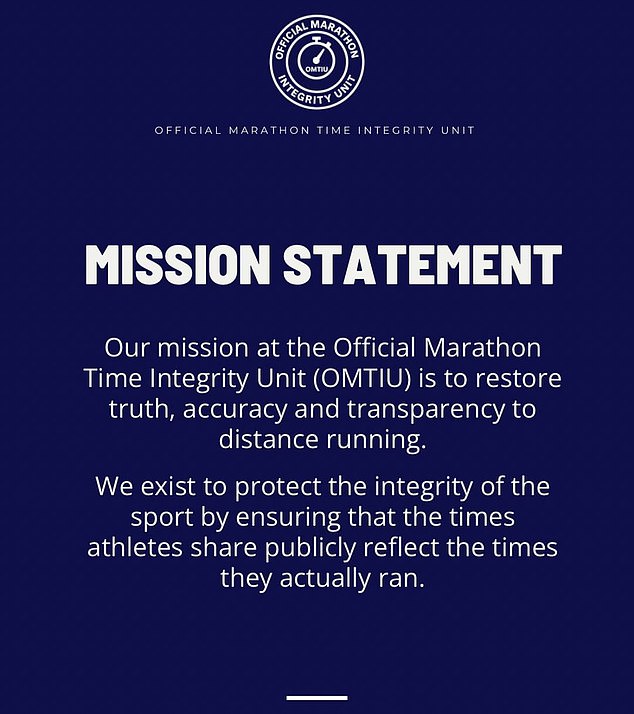
The account’s mission statement on Instagram reads: “Our mission at the Official Marathon Time Integrity Unit (OMTIU) is to restore truth, accuracy and transparency to distance running. We exist to protect the integrity of the sport by ensuring that the time athletes share publicly reflect the times they actually ran.”
One of the main issues OMTIU addresses is what they call “Strava inflation.” This refers to the discrepancy between GPS-based times from sports watches and the official chip times provided by race organizers. GPS signals can be less accurate due to factors like obstacles or crowded routes. For example, during the Valencia marathon in December 2025, winner John Korir had a GPS drift of nearly 400 meters, with his Garmin watch suggesting he ran 42.59 kilometers instead of the official course length of 42.195 kilometers.

OMTIU targets influencers, online coaches, and experienced runners who are aware of these discrepancies but still choose to post their Strava times. They argue that this helps prevent newcomers from being misled by social media stars who share “fraudulent performances.” The account publishes “case files” where they accuse content creators of using Strava times that are significantly faster than their official chip times.
“We follow a simple triage process,” says the self-proclaimed “Chief Integrity Officer” of OMTIU. “We don’t issue infringements to private individuals or inexperienced runners who are just starting their journey. Our focus is on influencers, online coaches and experienced runners, people who should understand how race timing works.”
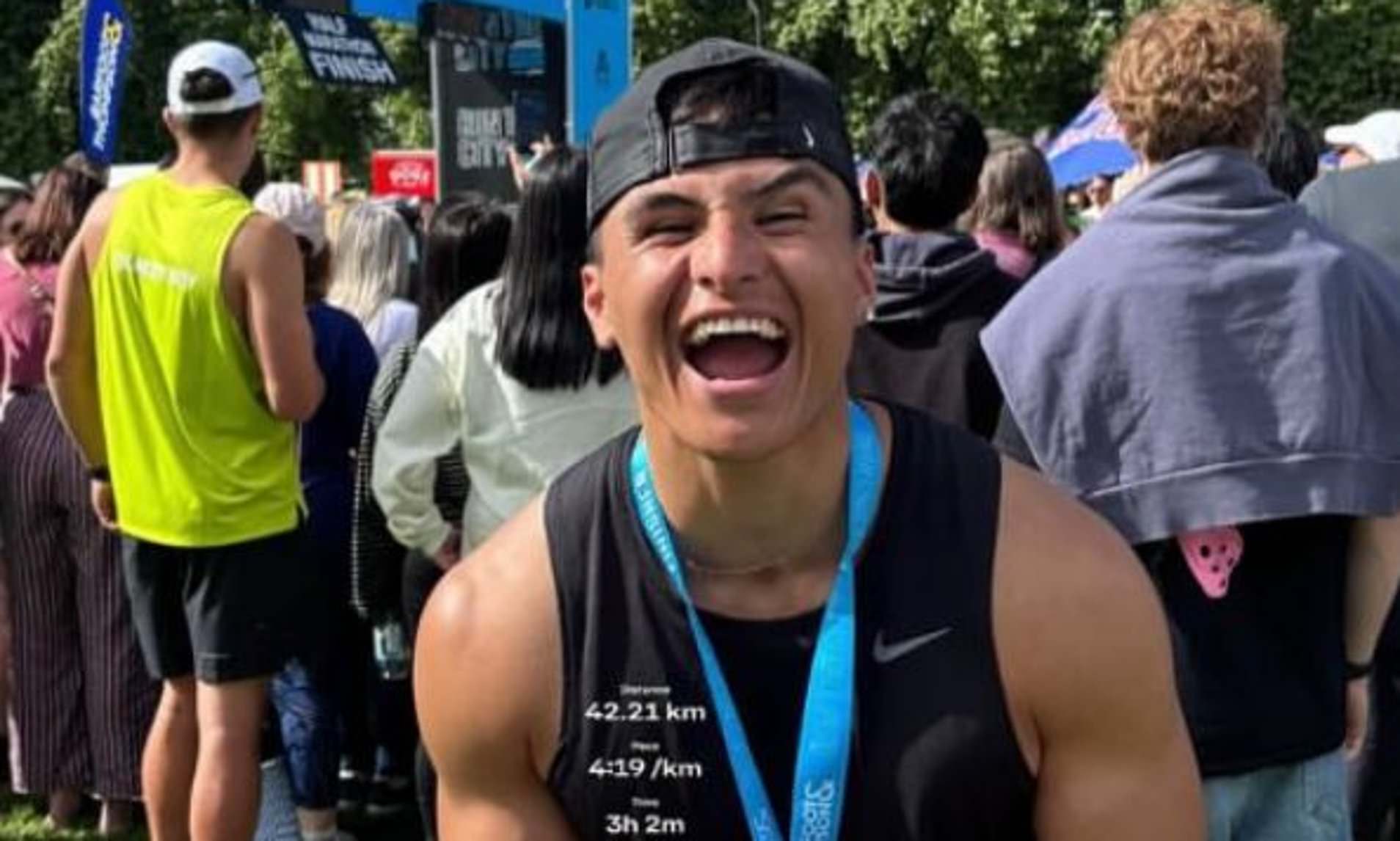
In February, OMTIU posted their top five marathon time infringements based on publicly available data and performance patterns. One of the most significant discrepancies was from Zae Mangu, a New Zealand fitness content creator. After running the Auckland Marathon, he claimed a time of 3 hours and 2 minutes. However, OMTIU believes he stopped his watch 4 kilometers before the finish line. His official chip time was 3 hours 25 minutes and 42 seconds, which he later shared on Instagram.
Holly Archer, a European indoor Championships silver medallist, praised OMTIU’s work in the comments of Zae’s case file, writing, “This is so NEEDED.”

OMTIU posts several Instagram stories each day calling out content creators, including Love Island’s Casey O’Gorman. They have six “case files” on their main grid, along with posts about their rules and regulations.
While the account focuses on larger discrepancies, they can be lenient when the differences are minor. “We typically don’t highlight minor discrepancies of a few seconds,” says the spokesperson. “For longer distances, we generally look for differences of over a minute before taking action.”
However, not everyone in the running community supports OMTIU’s approach. Some believe the account could be more sympathetic toward certain creators they call out. Recently, there has been growing “heat” on OMTIU due to a post regarding a runner who completed a marathon in honor of their deceased father.
Running influencer Jennifer Mannion, a Lululemon ambassador, asked for “better” from those who call out other creators. She shared her experience of learning about chip times after posting her Strava time, which led to a DM from someone calling her a “ugly little pig.” She questioned whether it’s always appropriate to call out creators, especially in sensitive situations.
OMTIU states that if there is any uncertainty surrounding a discrepancy, they will contact the accused creator before making a public post. However, if there is clear evidence of deliberate manipulation, they will post immediately, similar to a parking ticket.
“In many cases, individuals contact us shortly after to acknowledge the issue,” OMTIU adds. “We’re always open to discussion and resolution, and if someone corrects their result, we fully support that. The objective is accuracy, not escalation.”
If you’re training for the London Marathon or preparing for a big race soon, keep in mind the presence of the Strava police. A misstep in sharing your time could land you on an Instagram story.