Ancient Silver Goblet Unveils Earliest Known Visual Depiction of Creation
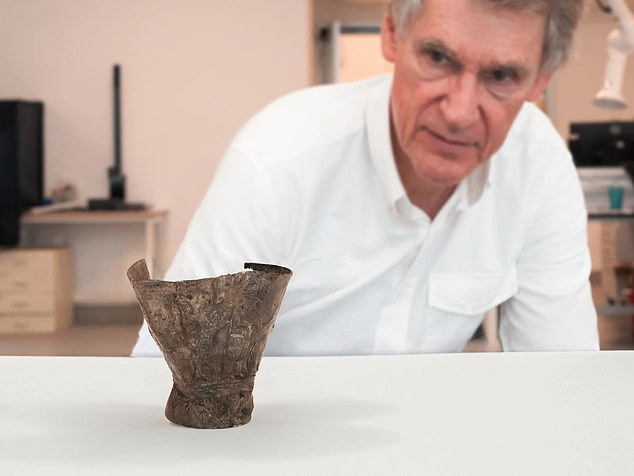
A remarkable 4,300-year-old silver goblet, known as the Ain Samiya goblet, is offering an unprecedented glimpse into the ancient world’s understanding of cosmic beginnings. This diminutive artifact, standing just three inches tall, is adorned with intricate imagery that scholars now believe represents the earliest known visual narrative of creation, exhibiting themes that bear striking resemblances to the biblical Book of Genesis.
Discovered in 1970 within a burial pit near the Palestinian village of Ain Samiya in the Judean Mountains of the West Bank, the goblet has resided at the Israel Museum for decades. However, a recent in-depth analysis has unlocked the profound meaning embedded within its detailed iconography, revealing a sophisticated visual story of the cosmos before and after its formation.
A Narrative of Chaos and Order
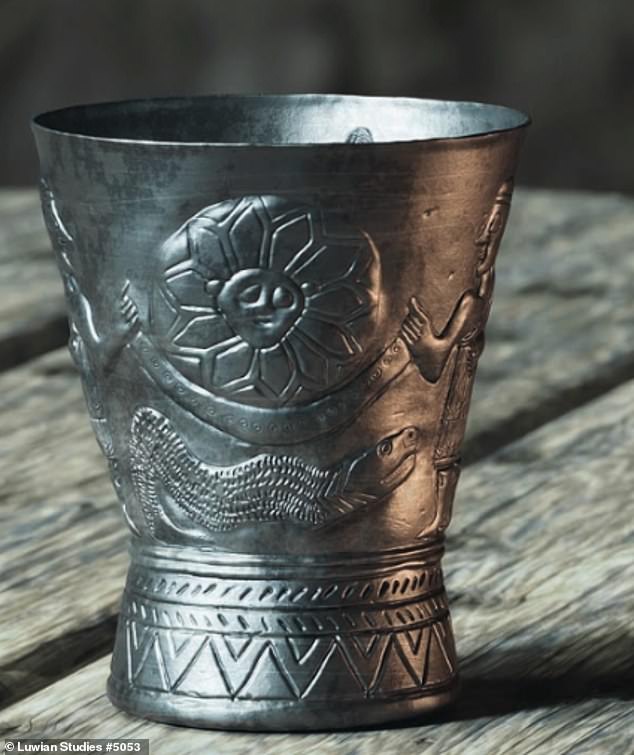
The Ain Samiya goblet is meticulously decorated with a frieze that divides into two distinct vertical mythological scenes, each occupying approximately half of the artifact’s circumference. Researchers have interpreted these scenes as a visual representation of the evolutionary stages of the universe, moving from a state of primordial chaos to one of established order.
The Left Scene: Primordial Chaos
The left side of the goblet is understood to depict the chaotic state of the cosmos before creation. This scene features a striking chimera, a mythical creature with a human torso and the lower bodies of two bulls, grasping stylized palm fronds. It is accompanied by an upright snake, elements that collectively symbolize the formless and void state described in early creation accounts.The Right Scene: The Emergence of Order
In contrast, the right scene illustrates the cosmos after order has been imposed. This depiction showcases two anthropomorphic figures holding a crescent-shaped object. This object is thought to represent a “boat of light,” symbolizing the celestial bodies, such as the sun and moon, traversing the sky. A large snake is also present, positioned between the figures, further contributing to the narrative of an ordered universe.
Parallels to Genesis and Ancient Myths
The thematic resonance of the Ain Samiya goblet with the biblical creation narrative is particularly compelling. Genesis 1:1-4 describes the initial state of the earth as “unformed and void” before God’s command, “Let there be light,” brought order and separation to the cosmos. The goblet’s visual representation of chaos giving way to light and celestial movement directly mirrors this foundational account.
Dr. Eberhard Zangger, president of the Luwian Studies Foundation and a key author of the recent study, highlights the significance of this visual depiction. “The left side of the goblet represents the chaotic state of the cosmos before creation, while the right side shows the ordered universe after,” Zangger explained. “This artifact gives us an incredibly detailed picture of how people in 2300 BC imagined the cosmos before creation.”
While written accounts of creation myths are ancient, finding such an early and detailed visual representation is exceptionally rare. This makes the Ain Samiya goblet an invaluable artifact for understanding the cosmological beliefs of the ancient Near East.
Dating and Provenance: A Journey Through Time
The Ain Samiya goblet was discovered in a tomb containing numerous ancient graves, suggesting its deposition around 2200 BC. The study indicates that the goblet’s design aligns with artistic styles of the Early Dynastic III period in Mesopotamia, which flourished between 2900 and 2350 BC. This period was a pivotal era marked by the development of writing systems and the formation of early cities and states.
Researchers speculate that the goblet itself may have been produced in northern Syria, a region known for its artistic innovation. From there, it likely traveled along established caravan routes to the southern Levant, where it was eventually interred in a tomb, serving a funerary purpose.
“The purpose of the burial object was to connect the soul of the deceased with the journey of the sun, ultimately to heaven,” the study published in the Journal of the Ancient Near Eastern Society “Ex Oriente Lux” notes.
Initially, scholars believed the imagery on the goblet was derived from the “Enuma Elish,” the Babylonian creation epic. However, the dating of the goblet suggests it predates the earliest known written forms of the Enuma Elish, which are typically dated to the late 2nd millennium BC. This suggests that the visual narrative on the goblet represents an even older tradition, which later evolved into various mythological accounts, including the Babylonian epic and the biblical Genesis. The goblet’s designer is credited with a significant achievement by incorporating new elements into existing creation narratives, resulting in this unique and historically significant vessel.