
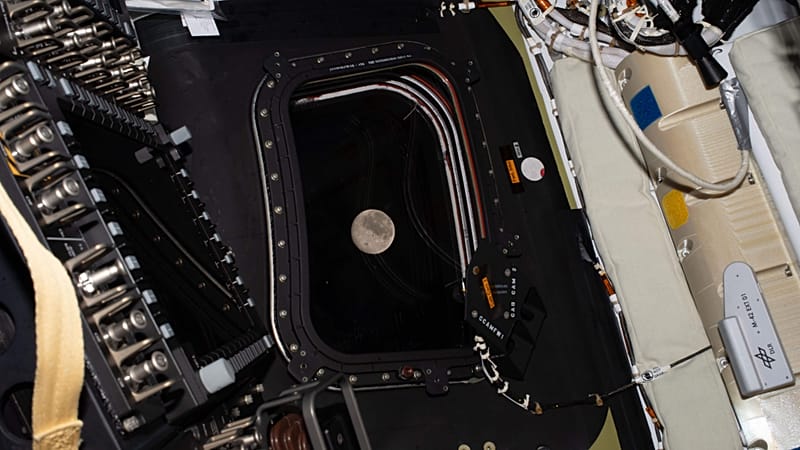
NASA’s four Artemis II astronauts are on their way back to Earth after completing a successful lunar flyby that took them further into space than any humans before them. This mission, known as a free-return lunar trajectory, used the gravitational forces of Earth and the Moon to navigate through space without needing to stop for landing. The path resembled a celestial figure-eight, ensuring the astronauts were on course for home once they emerged from behind the Moon on Monday evening.
NASA’s mission control in Houston re-established contact with the crew after a 40-minute communication blackout. This was expected as the spacecraft passed behind the far side of the Moon, temporarily losing direct line of sight with Earth.
“It is so great to hear from Earth again,” said astronaut Christina Koch, as the crew members were able to speak with people on their home planet. “We will always choose Earth, we will always choose each other.”
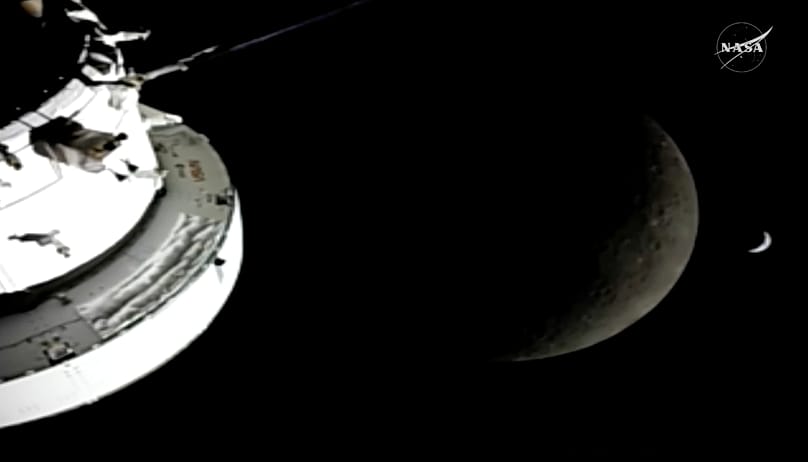
After regaining contact with mission control, the crew also witnessed a total solar eclipse. The Moon briefly blocked the Sun from their view, revealing the star’s pale outer atmosphere.
“We just went sci-fi. It just looks unreal,” said pilot Victor Glover as the astronauts observed the eclipse.
Earlier in the mission, the Artemis II team surpassed the distance record set by the Apollo 13 mission. They reached a distance of 406,778 kilometres from Earth, exceeding the previous record by 6,606 kilometres.
US President Donald Trump called the astronauts to congratulate them on making history. He told them they had “made all America really proud, incredibly proud.”
“You really are modern-day pioneers, all of you,” Trump said, before launching into a friendly interview. “You’ve got a lot of courage doing what you’re doing,” he added, praising NASA’s first lunar flyby in more than 50 years.
Lunar observations
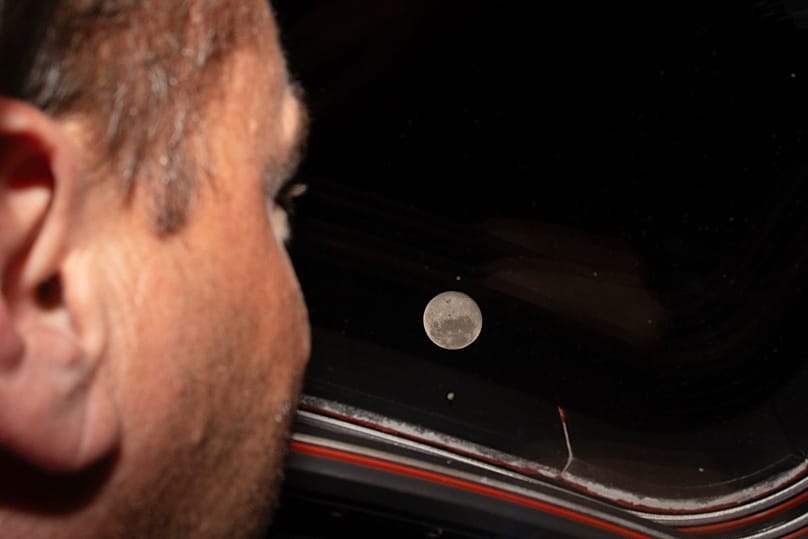
Astronauts Reid Wiseman, Victor Glover, Christina Koch, and Jeremy Hansen spent hours sending back detailed observations of the Moon as they orbited around it.
“It is blowing my mind what you can see with the naked eye from the Moon right now. It is just unbelievable,” Canadian astronaut Hansen said. He challenged “this generation and the next to make sure this record is not long-lived.”
The six-hour task of observing and documenting the lunar surface brought a human perspective to features of the Moon that are primarily known through robotic photographs.
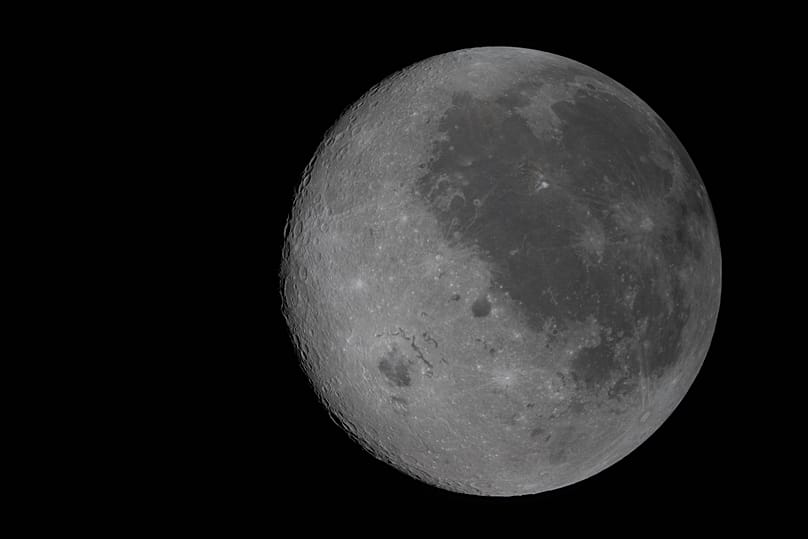
Victor Glover described the “terminator,” the Moon’s boundary between night and day. “Wow, I wish I had some more time to just sit here and describe what I’m seeing,” he said, offering a vivid description for scientists on Earth.
“But the terminator right now is just fantastic. It is the most rugged that I’ve seen it from a lighting perspective.”
Kelsey Young, the lead scientist for the Artemis II mission, responded with excitement. “Oh my gosh, that was an amazing picture you just painted,” she said. “Those types of observations are things that humans are uniquely able to contribute, and you just really brought us along with you.”
Christina Koch provided a colourful description of lunar craters. “What it really looks like is like a lampshade with tiny pinprick holes and the light shining through,” she said. “They are so bright compared to the rest of the Moon.”
Before beginning their observations, the crew requested permission to name two bright, freshly formed craters. They suggested “Integrity,” the name of their capsule, and “Carroll,” the name of commander Reid Wiseman’s wife, who passed away from cancer in 2020.
Wiseman was emotional as Hansen made the request to mission control, and the four astronauts embraced in tears.
Artemis II is NASA’s first crewed moon mission since Apollo 17 in 1972. It paves the way for Artemis III next year, which will involve another Orion crew practicing docking with lunar landers in orbit around Earth. The final Moon landing by two astronauts near the Moon’s south pole will take place during Artemis IV in 2028.


