The Australian government is mobilising six crisis response teams to the Middle East, a significant consular effort aimed at assisting thousands of Australian citizens currently stranded in the volatile region. This deployment coincides with ongoing diplomatic discussions and a somewhat guarded stance from the Foreign Minister regarding the legality of recent strikes by the United States and Israel on Iran.
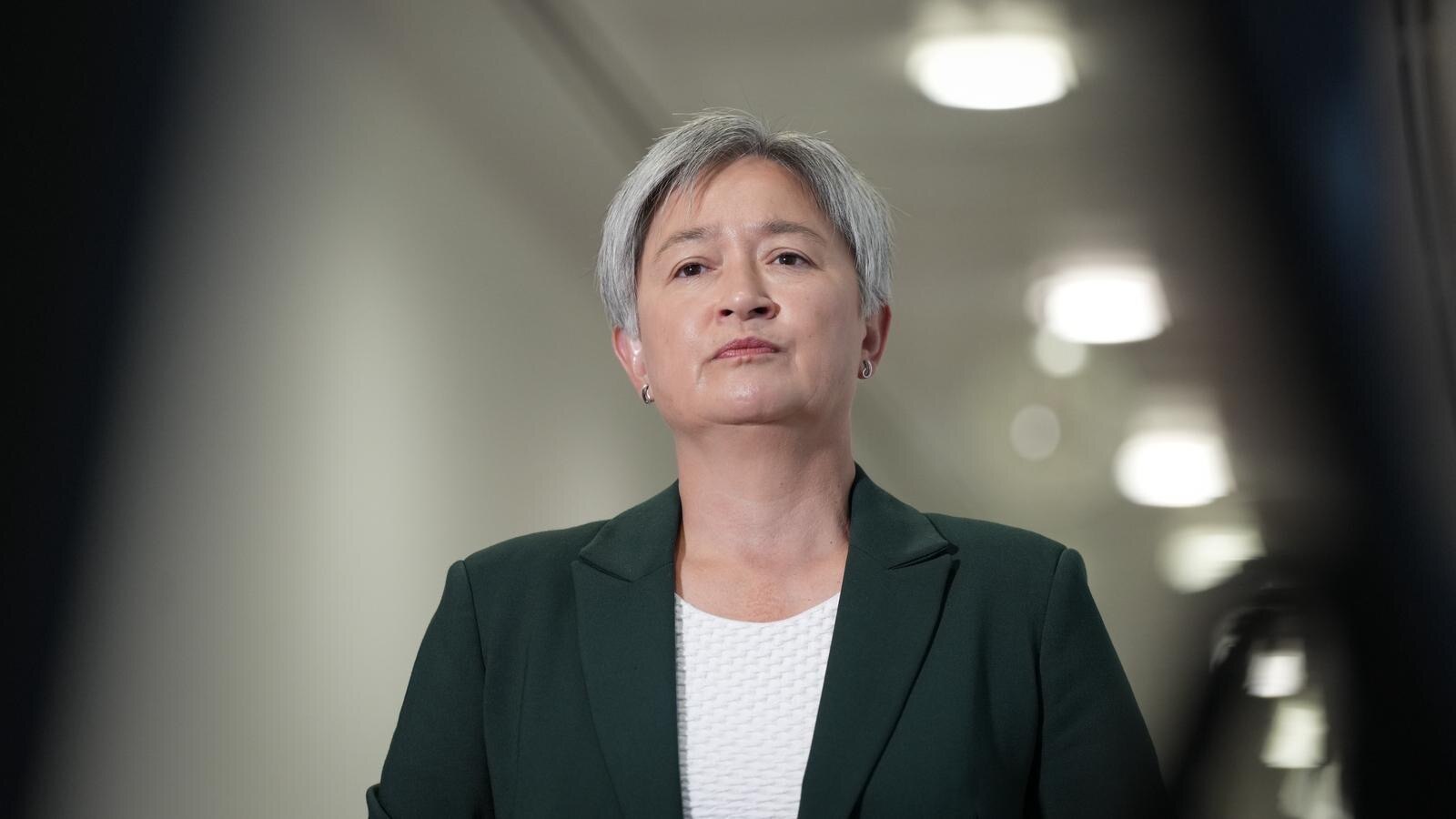
Speaking to the media in Canberra, Foreign Minister Penny Wong confirmed the deployment of these additional teams. Their primary role is to bolster the efforts of diplomats already on the ground who are working tirelessly to facilitate the safe return of Australians. Senator Wong acknowledged the sensitive nature of their operations, stating, “I’m not in a position, obviously, for security reasons, to be disclosing to you where and how they’re travelling, they’re deploying into conflict zones.” However, she reassured the public that “we are deploying additional assistance into the region.”
A glimmer of relief was shared by Senator Wong with the announcement that one flight had successfully departed from Dubai, carrying approximately 200 Australians bound for Sydney. Despite this positive development, she underscored the scale of the challenge, noting that “many thousands” of Australians remain in need of assistance across the Middle East. This situation has prompted what Senator Wong has described as the most extensive consular operation ever undertaken by the Australian government.
Legality of Strikes: A Matter for Others, Says Wong
Senator Wong faced persistent questioning regarding the legality of the initial strikes conducted by the US and Israel on Iran, and whether these actions contravened international law. The international community’s response has been mixed, with several Western nations, including allies of the United States, expressing reservations about the legal justification for the attacks. French President Emmanuel Macron, for instance, publicly stated that the strikes “were carried out outside the framework of international law, which we cannot approve of.”
Adding to this nuanced international perspective, Canadian Prime Minister Mark Carney, who had initially supported the strikes over the weekend alongside Prime Minister Anthony Albanese, clarified that his support was not an unqualified endorsement. Mr. Carney conceded that the strikes were likely not in line with international legal norms. He articulated this by saying, “Prima facie, it appears these actions are inconsistent with international law.”
He elaborated on Canada’s rationale for its initial support, explaining, “We took a position because we view the nuclear threat and the export of terrorism of Iran over decades as one of the gravest threats to international peace and security. In that limited sense we supported that aspect. That is not a blank cheque.” Mr. Carney also conveyed Canada’s regret in taking this position, highlighting that both the US strikes and the global community’s perceived failure to curb Iran’s destabilising activities represent “another example of the failure of the international order.”
Despite these international comments, Senator Wong maintained her position, deflecting questions about the legality of the strikes. She insisted that this was a matter to be addressed by “Israel and the US.” Senator Wong further stated, “As the prime minister has said, we’re not party to all the intelligence that is being referenced. It is also important to note that this did not begin with the strikes.” She reiterated Australia’s stance on preventing Iran from acquiring nuclear weapons and posing a threat to global security. “We support action to prevent Iran from obtaining a nuclear weapon and to prevent Iran from continuing to be a risk to global peace and security,” she affirmed.
Senator Wong pointed to Iran’s recent actions as evidence of its disruptive role. “The fact that Iran is a risk to peace and stability has been demonstrated in these last few days… where they have attacked no less than 10 countries, including non-participants. And can I remind all of you, Iran was also engaged in attacks on Australian soil against Australians.”
Canada Urges Ceasefire, Emphasises Middle Power Role
Canada’s Defence Minister has called for a ceasefire, signalling a shift away from unequivocal support for ongoing military actions by the US and Israel. While initially aligning closely with Australia’s position in supporting the US operation, Canada’s stance has evolved in recent days.
In an interview with the ABC, David McGuinty urged both parties in the conflict to seek a path towards peace. “It’s always better to be looking now for a cessation of hostilities, to be able to bring us to a level of dialogue that is more productive than more bombing,” he stated. When questioned about Canada’s continued support for the ongoing operation, Mr. McGuinty reiterated that it was a decision for the United States and Israel. “The Israeli and American governments are prosecuting the war as they see fit,” he commented. He clarified Canada’s non-involvement: “Canada is not involved. Canada has not been consulted. We are not providing any support. We are not engaged. And it really is now a matter of Israel and the United States governing themselves accordingly.”
The visit of Mr. Carney and other senior Canadian ministers to Australia comes at a time when Canada has been advocating for ‘middle powers’ like Australia to adopt a more assertive and independent role on the global stage. Earlier this month, Prime Minister Carney, in a notable speech at the World Economic Forum, encouraged countries such as Australia to acknowledge the persistent shortcomings of the existing rules-based international order and to collaborate in navigating a new era of great-power competition.
Responding to how middle powers might navigate the complexities of the Iran conflict, Mr. McGuinty suggested a focus on monitoring and safeguarding their citizens, while leaving the conduct of the war to the belligerents. “Middle powers like Australia and Canada should stick together,” he advised. “Our role is to cooperate, to look after our people in the region… but it really is now more a question of monitoring, of sharing information, getting our civilians out. But the American-Israeli incursion is theirs.”