
The Journey of an Unlikely Game Developer
Orlando Mee didn’t start out with the intention of becoming a game developer. As a multimedia artist based on South Australia’s Yorke Peninsula, his creative process began with experimenting with interactivity as part of his art practice. He sourced cheap electronics from discount stores for an exhibition titled “Churning The Ocean.”
“I work with lots of different weird technology and I was looking for a way to program interactive objects that I made using pieces of kind of plastic junk that you might buy at a two-dollar shop,” Mee explains.
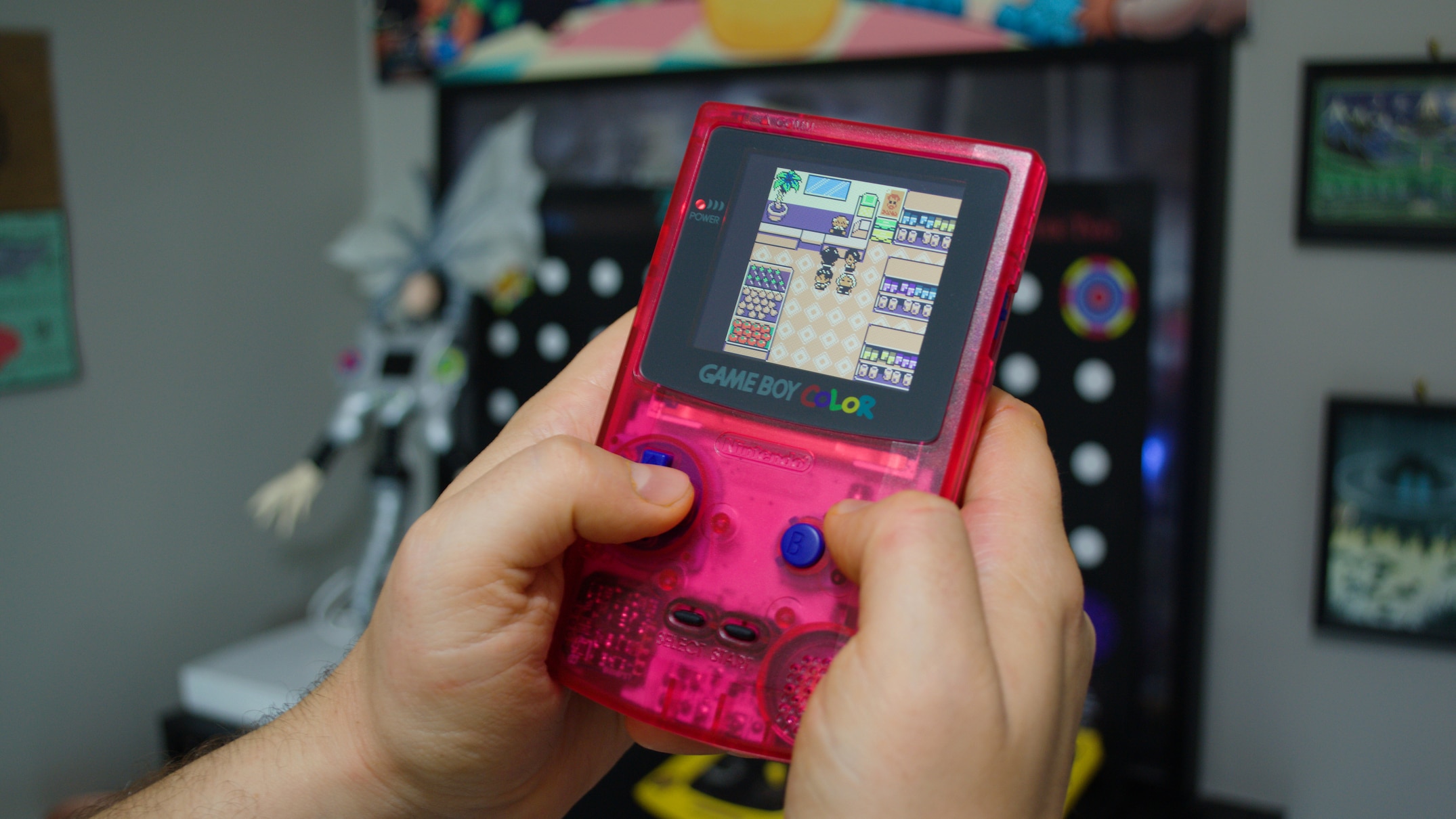
He would remove the existing electronics and replace them with a small computer equipped with a screen and buttons. The easiest way for him to program lights, sounds, and interactivity was to embed a very small game on that computer. The Game Boy became his chosen medium for this purpose.
Using a free software called GB Studio, designed for creating Game Boy games, Mee built his tiny games and embedded them within artworks. “I quickly became obsessed with exploring Game Boy games, making games that would have blown my mind when I was a 10-year-old playing with my old Game Boy Color,” he says.
Mee is now developing a brand new strategy game for the 28-year-old Game Boy Color console, which incorporates board games and his Anglo-Indian heritage. “Before it was even a video game, I thought of it as part of my arts practice where I was trying to explore my Indian heritage, and paying tribute to the often forgotten contribution of India to the world of tabletop games,” Mee explains.
“A lot of classic family games, most people don’t know originated in India, like Snakes and Ladders [and] Parcheesi. Before chess became chess in Persia (Iran), the precursor to that was a game called Chaturanga. It’s just kind of awesome to know that people have been playing them for thousands of years.”
Technical Limits Build Creativity
The Game Boy, originally released in 1989, had a simple monochromatic screen with a resolution of 160 by 140 pixels and just 16 kilobytes of memory. These specs are now overshadowed by most smart watches. Along with its more powerful but backwards-compatible successor, the Game Boy Color, which was released in 1998, Nintendo sold approximately 118 million devices globally.
Although not a powerhouse by any means, the console’s relatively cheap cost and portability made it a favorite among players worldwide and remains a key part of the thriving retro games scene. The resale of retro games and consoles skyrocketed during COVID lockdowns, leading players to rediscover these vintage devices.
Melbourne’s Tom Lockwood, who creates games under the pseudonym Gumpy Function, is another Australian developer building new games for the vintage console. He notes that the technical limits allow for interesting creative compromises.
“The first console I had was the Nintendo and the original Game Boy and I’ve always kind of been drawn to the more pick-up-and-play; retro games have always been very arcadey or gameplay-dense,” Lockwood says.
Lockwood started making games during the pandemic and doesn’t come from a game development background, having previously worked as a carpenter, auctioneer, and valuer. However, becoming a stay-at-home dad gave him the time to start developing. He finds the simpler designs of Game Boy games quicker to iterate on and complete.
“I was just kind of drawn to this process, I can only fit so much information in this scene, given that it’s Game Boy RAM,” he says. “I asked myself ‘How am I going to do that? How am I going to get more detail out of this art asset? Can I try to do some kind of palette trick here or use a sprite in a certain way that kind of makes it look like something’s more detailed when really it’s just a Game Boy game?’”
Lockwood, who has ADHD, says the short design and development cycles of Game Boy games are ideal for him. “I think the reason why, specifically, Game Boy development has been so good for me is because it’s quick turnover, you can make games kind of quickly. It really suits an ADHD type because you have an idea, it comes out, you can like produce something in a couple of months or three months or whatever it might be, and then you’re just onto the next idea.”
Lockwood has become one of the most prolific Game Boy developers, releasing multiple titles including the viral “Grimace’s Birthday” which was part of a marketing campaign for restaurant chain McDonald’s. New games are often released as downloadable ROM files, playable on specialized cartridges or software emulators.
New Art from Nostalgia
Mee is using the nostalgic designs of mostly Japanese-made Game Boy games and remixing them for his game “Yakshini Lokam,” asking the hypothetical question “what if the cultural hub of a generation of games was set somewhere else?”
“Because [Indian culture] hasn’t seen much play on the Game Boy, I really wanted to experiment with rules that had been established by countries that were making Game Boy games in that era: Japan, some European countries, and the USA, a couple from Australia as well,” Mee explains.
He says simple design changes, like using a different color palette, mean the game feels different for players familiar with commercial titles. “A lot of the colour choice in the game, it feels quite unusual to a Western audience that’s maybe more familiar with like, knights and dragons type fantasy.”
“This is still very much fantasy, but there’s a lot of colour schemes that you see in Indian art, in history, and in sort of like temples, statues, that sort of thing, very bright colours, bold pinks and turquoises. I liked to imagine this sort of alternate history where lots of countries were contributing to that, and what sort of rules can be broken, and how could you play with aesthetics in a kind of poetic way to come up with something that looks familiar but at the same time new?”


