Bad Bunny’s Super Bowl Halftime Show: A Fiesta of Pride and Defiance
In a whirlwind six minutes, Puerto Rico, vibrant and alive, burst forth from the heart of American entertainment. As the final whistle blew on Super Bowl LX and Immigration and Customs Enforcement (ICE) agents scanned the jubilant crowd, a reimagined landscape transformed the Levi’s Stadium turf. Gone was the manicured grass, replaced by a vivid sugar cane field from Salinas, teeming with life – coconut vendors, spirited dice players, powerful boxers, and energetic twerkers. Amidst this colourful, pulsating maelstrom, one man, clad in white, moved with purpose, on a mission to showcase the vivacious spirit and inherent worth of his people to a global audience of over 100 million.
This was the true battle unfolding at Super Bowl 2026: a powerful stand of pride against intolerance. Last year’s Halftime Show had already signalled a shift, transforming the traditionally A-list, cash-driven 16-minute spectacle – a known boost for artists like Usher, Beyoncé, and Maroon 5 – into the planet’s highest-profile platform for protest. Last year, Kendrick Lamar’s performance, featuring dancers arranged in a divided stars and stripes, was a direct challenge to escalating authoritarianism. This year, Bad Bunny, breaking his recent US boycott, used the same monumental stage not only to deliver his Grammy-winning 2025 album, Debí Tirar Más Fotos, but also to expose the underlying rot within contemporary America, all through the infectious medium of Latin trap.
As Bad Bunny, real name Benito Antonio Martínez Ocasio, grabbed a cocktail from a street stall, the dembow beats of “Tití Me Preguntó” filling the stadium, one might wonder how this moment of cultural defiance came to be. Just a few years prior, Bad Bunny was primarily recognized as one of the world’s most-streamed artists, seemingly an online phenomenon. However, as his accolades, including Grammys and Artist of the Year awards, accumulated, he began to leverage his platform, speaking out forcefully against corruption, displacement, and gentrification in his native Puerto Rico – themes that resonate deeply throughout his latest album.
More recently, Bad Bunny has become a symbol of America’s backlash against ICE. In 2025, he strategically cancelled all his US tour dates, a decision aimed at protecting his Latino fan base from potential persecution. His Super Bowl appearance, however, has ignited fury among MAGA supporters, who have labelled his presence “un-American” – a stark contrast to their silence when Coldplay performed in 2016. Bad Bunny’s inclusion in the Halftime Show is, therefore, an inherently political statement, a bold declaration of Hispanic defiance.
Despite the mainstream commercial pressures and a palpable sense of cultural apprehension, few anticipated a level of subversion akin to Kendrick Lamar’s from the 2026 show. Even Green Day, who, at a San Francisco pre-game party, had called for ICE to cease their operations and altered a lyric in “Holiday” to reference Jeffrey Epstein, opted for a sanitised version of their politically charged songs for their opening medley. While “American Idiot” grows more pointed with each passing week, Bad Bunny’s unapologetically Latin-infused performance was every bit as forthright and confrontational. His sole English utterance was a simple, yet loaded, “God bless America.” The effervescent, stadium-wide spectacle celebrating Puerto Rican culture was a powerful assertion of its fundamental place within the identity of a nation once proclaimed the “land of the free.”
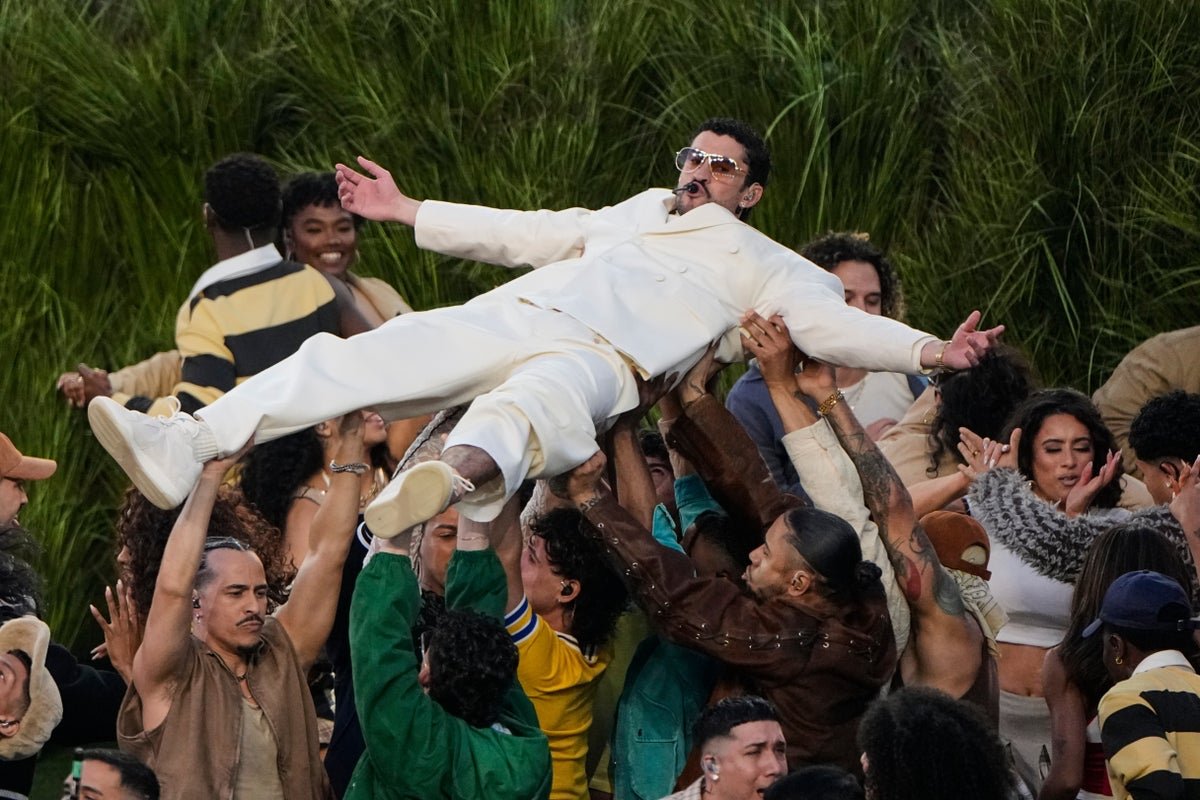
The performance was a dizzying, captivating journey. After a visual of sugar cane fields, Bad Bunny ascended to the roof of a trap club, only for it to dramatically collapse around him. In a blink, he was immersed in the vibrant salsa dance floor of a traditional Puerto Rican wedding, with Lady Gaga making a special appearance to perform her hit, “Die With a Smile.” This was followed by a dramatic backwards fall into a lively margarita street party, complete with mariachi trumpeters. While the translated lyrics might speak of love, sex, and tequila, the overarching message was unmistakable: a choice between a vibrant, multicultural celebration and a more insular, less inspiring alternative.
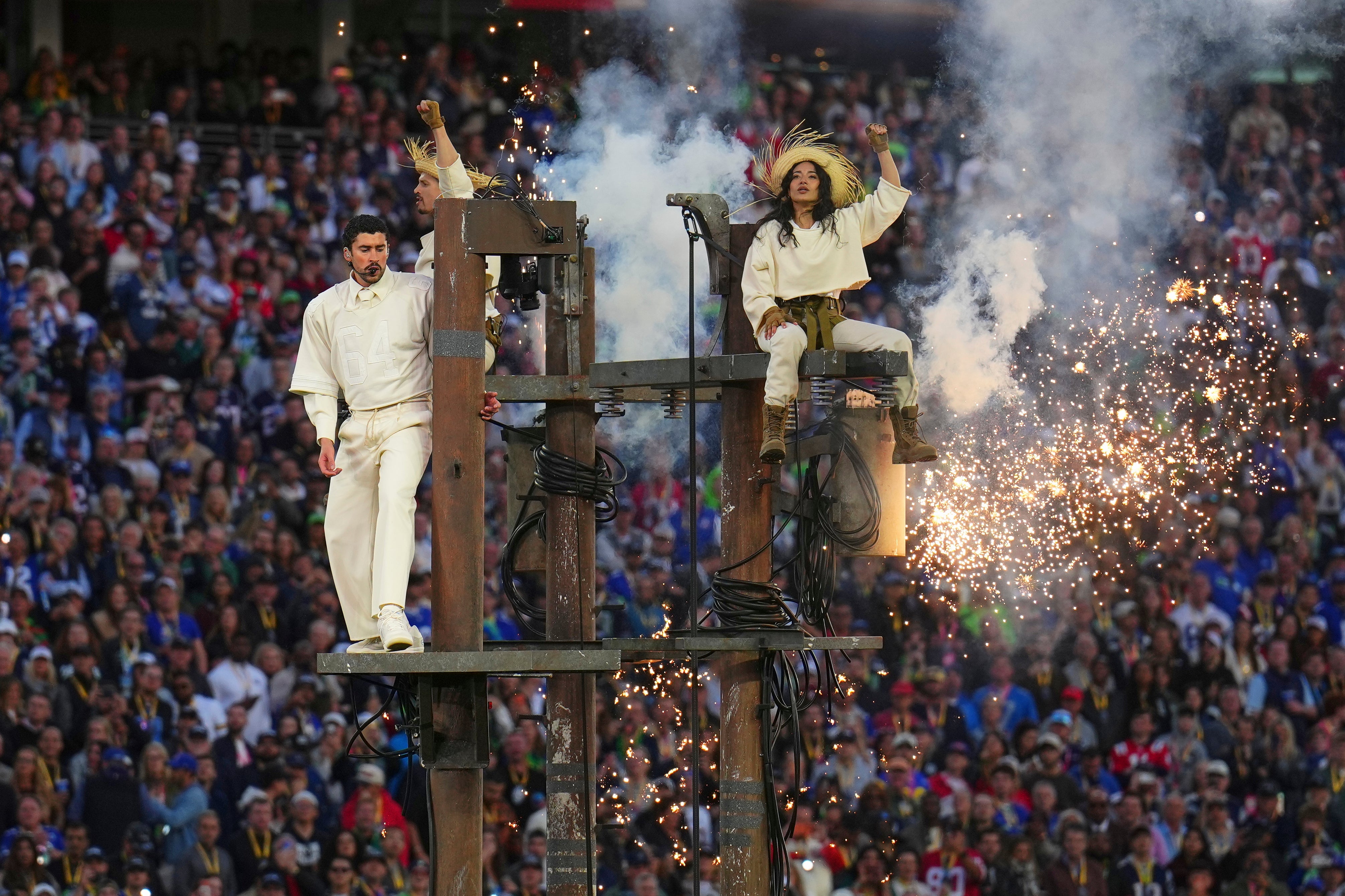
As the show progressed, its message sharpened. The appearance of Ricky Martin for the song “LO QUE LE PASÓ A HAWAii” served as a poignant reminder of Latin pop music’s deep-rooted influence on American culture. Ocasio paused to present a Grammy to a child actor, presumably portraying a younger version of himself, a symbolic passing of the torch. He was later seen waving a Puerto Rican flag amidst a grove of sparking electricity pylons, a powerful image of pride in the resilience of his homeland, despite its challenges.
The grand finale featured a flag parade carnival for the song “DTMF,” a joyous celebration of the diverse tapestry of Central and South American countries and their increasingly influential presence in American life. This performance might well mark the moment when the global musical zeitgeist shifts decisively towards the Latin world, away from a nation seemingly consumed by its own internal divisions. Did the ICE agents stand by, powerless, as Bad Bunny became an icon of defiance and unity? Or did they, perhaps, feel a subtle urge to move to the rhythm, even if only internally? Because what unfolded on that field – this wild, inclusive fiesta – was, in many ways, the spirit of America at its very best.