
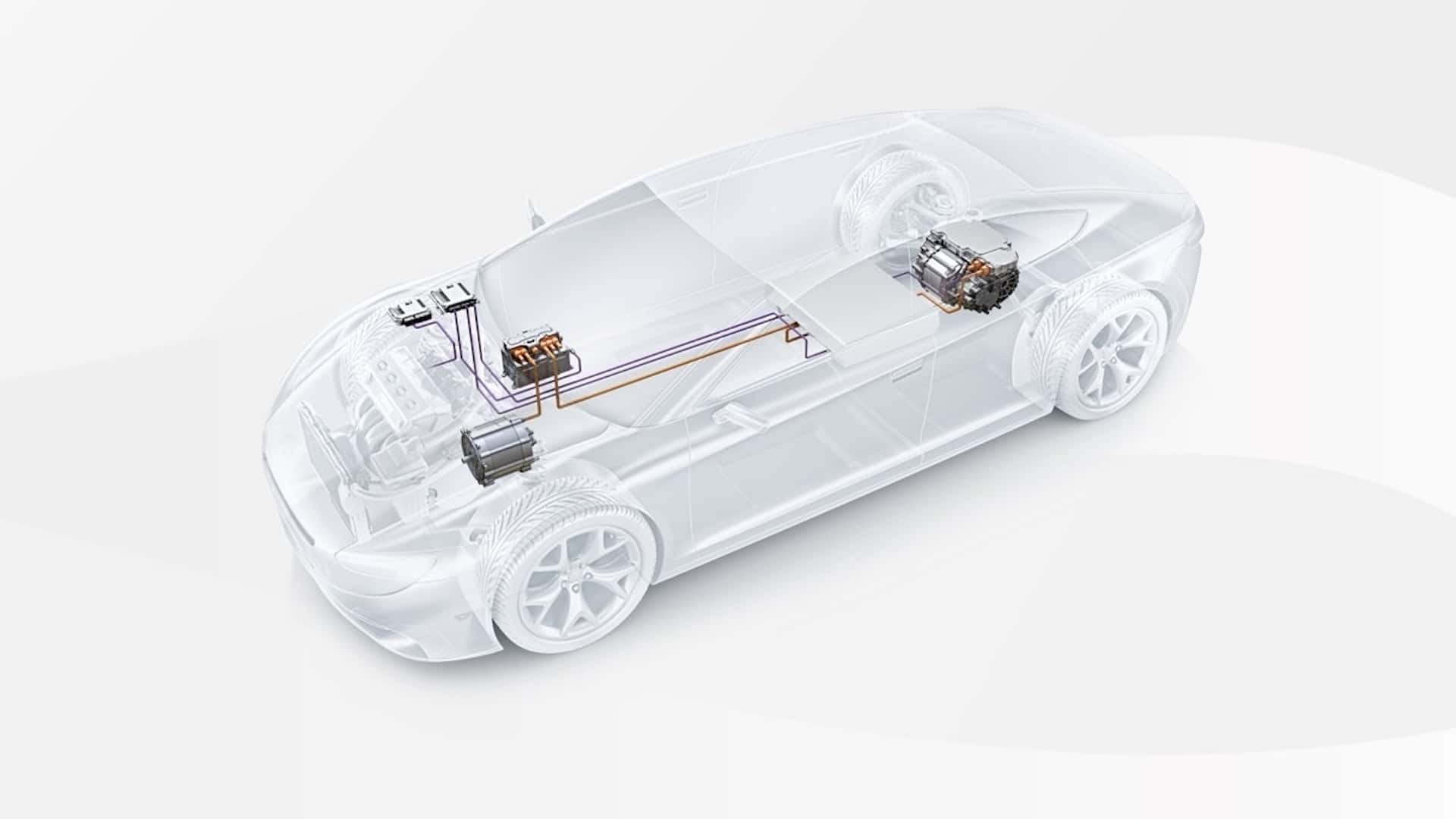
The automotive industry is at a pivotal crossroads, with the future of vehicle propulsion being a subject of intense debate. While the allure of fully electric vehicles (EVs) continues to grow, a prominent voice from the world’s largest auto supplier suggests a more nuanced and prolonged transition. Bosch, a global powerhouse in automotive technology, forecasts that internal combustion engine (ICE) vehicles will remain a significant part of the market for years to come, particularly in North America.
The Enduring Reign of the Internal Combustion Engine?
According to Paul Thomas, President of Bosch North America and local head of its mobility business, approximately 70% of vehicles sold in North America will still feature an internal combustion engine by the year 2035. This projection, shared at CES, acknowledges the evolving political landscape and its impact on automotive policy and consumer adoption of electric vehicles.
However, Thomas was quick to clarify that this figure doesn’t imply a simple continuation of traditional gasoline engines. Instead, he anticipates that these ICE vehicles will encompass a variety of advanced configurations.
- Hybrid Electric Vehicles (HEVs): These vehicles combine a traditional engine with an electric motor and battery, offering improved fuel efficiency.
- Plug-in Hybrid Electric Vehicles (PHEVs): Similar to HEVs, PHEVs have larger batteries that can be charged by plugging into an external power source, allowing for a significant all-electric driving range.
- Extended-Range Electric Vehicles (EREVs): In these vehicles, a small internal combustion engine acts as a generator to recharge the battery, extending the overall range of the electric powertrain.
Bosch’s diversified approach underscores its commitment to a multi-faceted electrification strategy. While the company is a key supplier for both hybrid and EV components, it also continues to invest in and develop advanced ICE technologies.
Shifting Market Dynamics and Bosch’s Strategic Response
The automotive industry has experienced considerable volatility in recent years. Early in the decade, electrification saw rapid growth, leading many companies, including Bosch, to expand their EV-related operations. However, a cooling-off period in EV demand, coupled with economic factors and policy shifts, has prompted a reassessment of market trajectories.
Bosch itself has navigated these changes, experiencing periods of rapid growth in the electrification sector followed by necessary adjustments, including workforce reductions, as EV demand fluctuated. In 2024, Bosch had predicted that purely electric cars would constitute 40% to 50% of the market in North America and China.
However, recent developments have presented a more complex picture:
- China’s EV Dominance: Last year, China significantly surpassed Bosch’s earlier estimates, with EVs already accounting for half of new car sales in the country.
- US Policy Reversals: In the United States, a retreat from pro-EV policies implemented under the previous administration, including the rollback of EV tax credits and fuel economy rules, has demonstrably slowed market growth.
- Automaker Strategy: Facing increased costs due to new tariffs and a desire to maximize profitability, automakers are increasingly leaning into more profitable gasoline-powered models. They are also awaiting further reductions in battery costs to support the development of a new generation of more affordable EVs.
In response to this dynamic environment, Thomas stated that Bosch has adopted a balanced strategy, maintaining a presence across various powertrain technologies. “We’ve been very balanced on our approach to electrification, to hybrids and and to, let’s call it ‘natural propulsion’,” he explained, referring to gasoline-powered vehicles. He emphasized that advanced hybrid technologies and extended-range EVs are expected to drive progress in the near to medium term.
The Future Outlook: EVs at 30% by 2035 in the US
Bosch’s projections suggest that by 2035, EVs are expected to represent approximately 30% of the total U.S. market. This forecast aligns with a broader trend of recalibration in the automotive sector, where ambitious EV targets are being tempered by practical market realities.
Even as regulatory landscapes shift, with the U.S. easing fuel economy rules and the European Union reconsidering its 2035 ban on internal combustion engines, Bosch remains committed to advancing ICE technology.
“We’re still 100% investing in the right technology to keep the engines moving in the right direction related to emissions,” Thomas affirmed. He stressed the importance of continuous improvement, stating, “The worst thing that I believe could happen is that suppliers rest on their laurels and don’t keep improving the internal combustion engine.”
These comments stand in contrast to the views of many EV advocates and all-electric vehicle manufacturers, who posit that as battery technology advances and costs decrease, consumers will naturally gravitate towards EVs as superior products, irrespective of incentives.
For instance, Rivian CEO RJ Scaringe expressed a different perspective in December, telling Fortune, “I really think the constraint isn’t the demand side. I think it’s the supply side. I do think that the existence of choice will help drive more penetration, and it actually creates a unique opportunity in the United States.”
While the pace of electrification may be debated, Bosch’s outlook highlights the complex and evolving nature of the automotive industry. The company’s forward-looking strategy, which embraces a diverse range of powertrain technologies, suggests that the internal combustion engine, in its various advanced forms, will continue to play a significant role in the global automotive landscape for the foreseeable future.


