

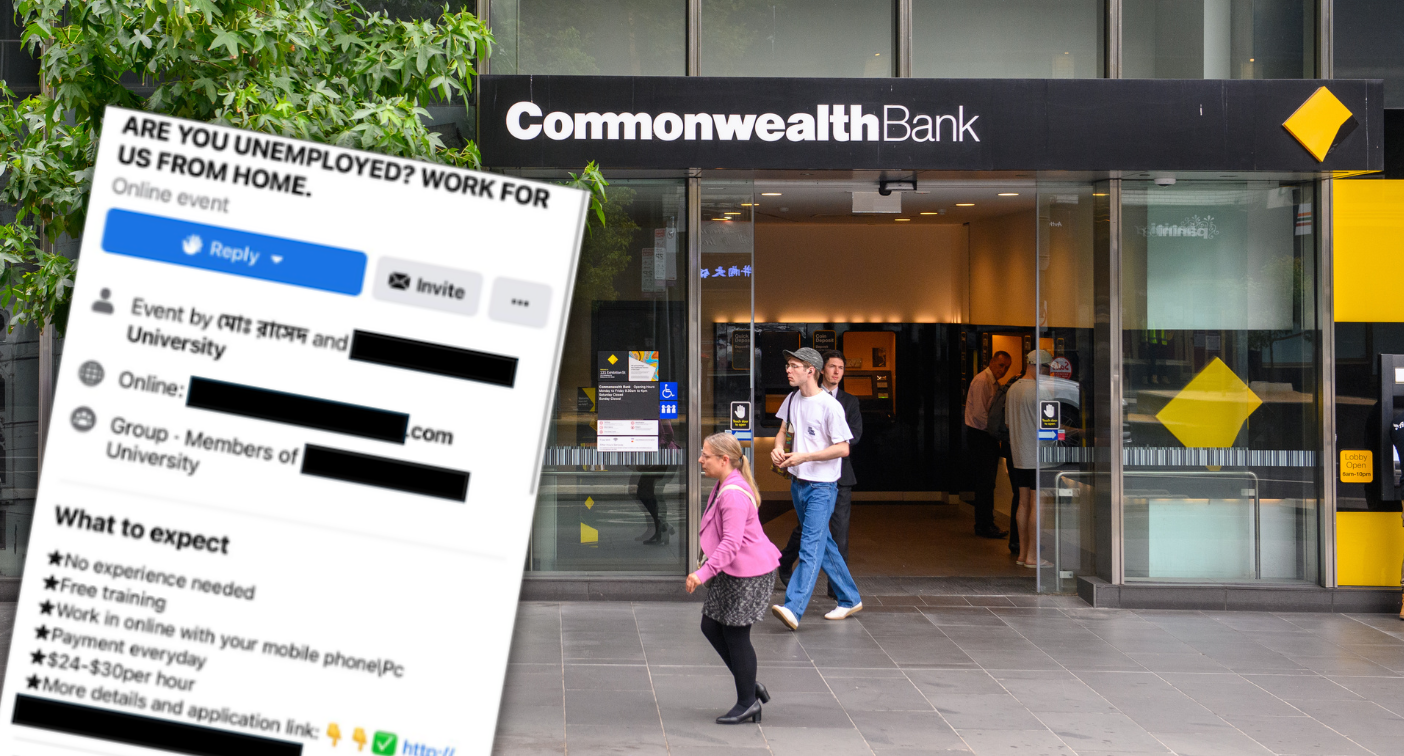
Warning Issued Over Surge in Job Scams Targeting Young Australians
Australians are being put on high alert due to a significant increase in job and employment scams, with students frequently falling victim, particularly at the commencement of the new academic year. The Commonwealth Bank (CBA) has issued a stark warning, highlighting that these fraudulent offers are a common tactic employed by criminals to gain access to individuals’ bank accounts and subsequently exploit them as “money mules.”
The prevalence of job and employment scams among Australians aged 24 and under has more than doubled in the past year compared to the preceding one. According to data from the National Anti-Scam Centre, this type of scam has now become the second-highest contributor to financial losses, with victims collectively losing over $2.2 million.
James Roberts, CBA’s Executive General Manager of Fraud and Scams, explained that fraudsters specifically target students at the beginning of the semester. This is because they understand that many students are actively seeking flexible employment opportunities to supplement their studies or living expenses.
“These fabricated job advertisements are meticulously crafted to ensnare young individuals, effectively turning them into money mules. Their primary objective is to channel stolen funds through the personal bank accounts of these unsuspecting victims,” Roberts stated.
How the Scams Unfold
Scammers typically initiate contact through online platforms or direct text messages. The fraudulent schemes are designed to unfold gradually, often leading individuals to believe they are performing legitimate tasks for a genuine employer.
The supposed employer will then instruct the victim to receive or transfer funds as part of their “job duties.” Unbeknownst to the victim, their bank account is being used to launder the proceeds of criminal activities, which can encompass funds derived from other scams, extortion rackets, and even illicit drug trafficking operations.
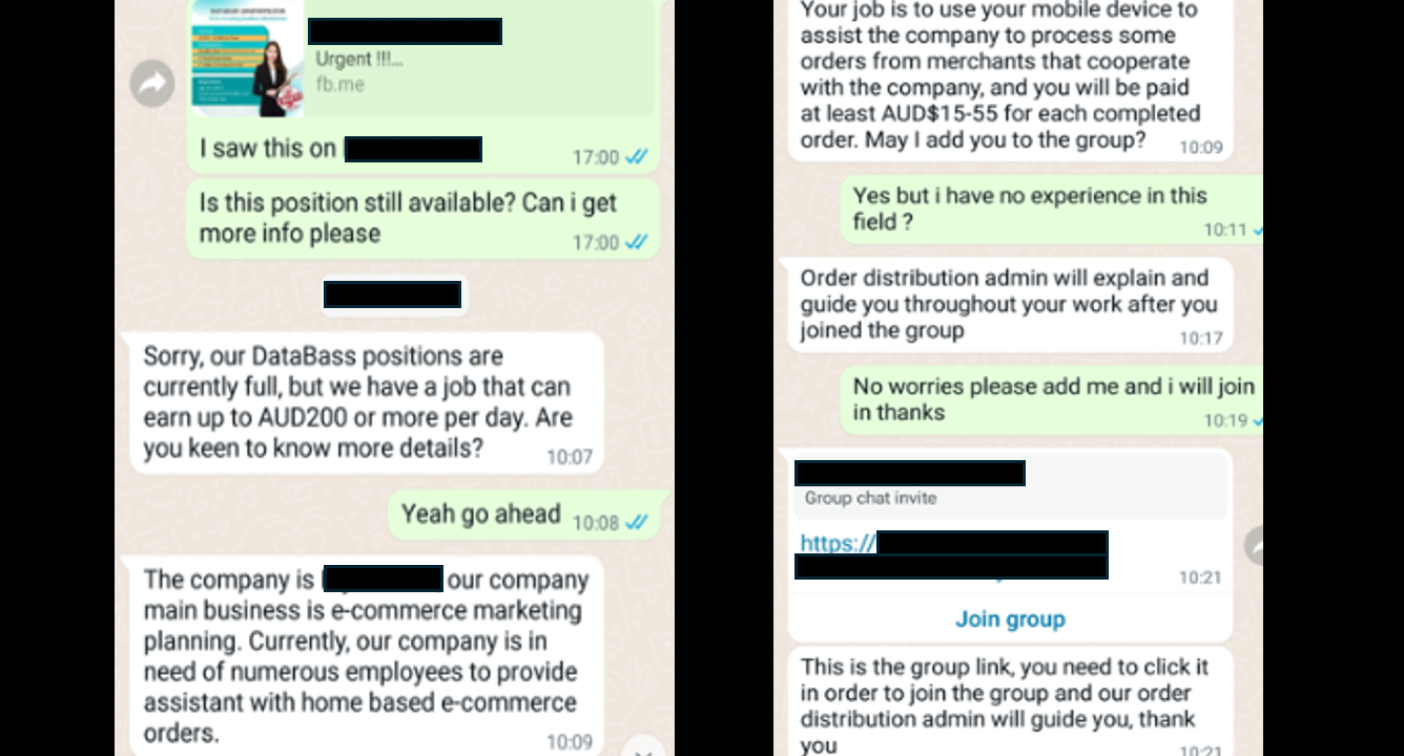
“A major red flag to watch out for is any job offer that requires you to receive or transfer money using your own bank account,” Roberts cautioned. “Legitimate employers will never ask you to move money on their behalf through your personal accounts.”
Other significant warning signs include requests for personal banking details, login credentials for online banking, or any form of account access.
The Serious Consequences of Moving Cash
Scammers are increasingly leveraging social media platforms, such as Facebook, to identify and target potential victims. They often post enticing advertisements or share messages in community groups, promising “quick and easy money” in exchange for access to an individual’s bank account.
Investigations by the Australian Federal Police have revealed that criminal syndicates are actively targeting international university students. These syndicates have been observed offering students preparing to return to their home countries sums ranging from $200 to $500 to utilise their bank accounts, with the added incentive of a potential 10 per cent commission on the funds processed.
CBA’s internal monitoring uncovered a staggering 1,825 Facebook groups dedicated to offering the rental or purchase of Australian bank accounts. These groups were identified and reported between August 8 and October 7 of the previous year.
Roberts emphasised that the repercussions of allowing one’s bank account to be used for moving illicit funds can be severe, even if the individual was unaware of the true nature of the activity at the time.
Potential Repercussions and What to Do
The consequences can include significant restrictions on banking services or even the outright closure of bank accounts. Furthermore, financial institutions are obligated to report any suspicious activity to AUSTRAC (the Australian Transaction Reports and Analysis Centre) and relevant law enforcement agencies.
“If an individual knowingly participates in money mule activities, they could face criminal charges. This is not a harmless act; it carries substantial long-term consequences,” Roberts warned.
He strongly urged anyone who believes they have been tricked into participating in such activities to contact their bank immediately. Prompt reporting can help mitigate the damage and potentially limit the legal ramifications.
Australians are encouraged to remain vigilant, scrutinise job offers carefully, and be wary of any requests that seem unusual or involve the transfer of money through personal accounts. Protecting your financial identity and bank accounts is paramount in the face of these evolving scam tactics.