Iran’s Theocracy Faces New Leadership Amidst Escalating Regional Conflict
The leadership of Iran’s theocratic regime has undergone a significant shift, with Mojtaba Khamenei, son of the late Supreme Leader, reportedly appointed to succeed his father. This development comes as Iran finds itself embroiled in an escalating conflict with the United States and Israel, a confrontation that has now entered its tenth day and is sending shockwaves through global energy markets.
Ayatollah Hosseinali Eshkevari, a member of the clerical council responsible for selecting a new leader, was quoted in Iranian media stating, “The name of Khamenei will continue.” The 56-year-old cleric, who has remained largely out of the public eye since the hostilities commenced, has long been a speculated contender for the top position. While he has not held official government appointments, Mojtaba Khamenei is known to maintain close ties with the powerful Islamic Revolutionary Guard Corps (IRGC), the paramilitary force actively engaged in missile and drone strikes against Israel and Gulf Arab states.
Global Ramifications of the Conflict
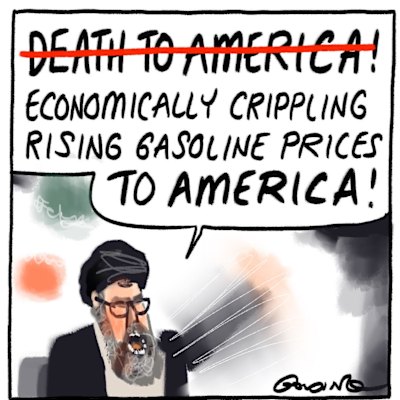
The ongoing conflict has had a dramatic impact on international oil prices, pushing them above $US100 a barrel. US President Donald Trump, speaking from Washington, acknowledged the price surge, describing it as “a small price to pay” for the dismantling of Iran’s nuclear program. He expressed confidence that prices would stabilise once the conflict concluded, stating on his Truth Social platform that “Short term oil prices, which will drop rapidly when the destruction of the Iran nuclear threat is over, is a very small price to pay U.S.A., and World, Safety and Peace.”
The appointment of Mojtaba Khamenei has also drawn sharp criticism from President Trump, who believes the US should have a voice in Iran’s leadership selection. Trump has publicly labelled the late Supreme Leader’s son as “unacceptable,” warning, “If he doesn’t get approval from us, he’s not going to last long.” Israel has echoed a similar sentiment, vowing to “continue to pursue every successor” to the former ayatollah.
As the IRGC answers directly to the Supreme Leader, Mojtaba Khamenei’s ascension places him at the centre of Iran’s war strategy. Furthermore, he is understood to have gained control over Iran’s substantial stockpile of highly enriched uranium, a material with the potential to be used in the construction of nuclear weapons.
Intensified Military Operations Across the Region
Meanwhile, the conflict has seen a significant escalation in military actions. Israel confirmed a strike on a hotel in central Beirut, resulting in the deaths of five senior IRGC commanders who were reportedly “hiding in a civilian hotel.” The Lebanese Ministry of Health reported ten individuals wounded in the attack.
With the conflict widening, Israel has issued a stern warning to Lebanon, stating the country would face “a very heavy price” if it failed to restrain Iran-allied Hezbollah militants. Israeli forces have intensified airstrikes on Hezbollah strongholds and conducted a deadly airborne raid in eastern Lebanon. The death toll from Israeli operations in Lebanon since Monday has reportedly climbed to approximately 300.
The IRGC commanders killed in Beirut were identified by Israel as serving in the Guards’ Quds Force’s Lebanon and Palestine corps, and were allegedly involved in financing, arming, and providing intelligence to Hezbollah and Hamas. The Israel Defence Forces also announced the destruction of military command centres within Iran, including the headquarters of Iran’s regional corps, its internal security forces command centre, and the IRGC police headquarters. Rocket engine production facilities and ballistic missile launch sites were also reportedly targeted.
Tehran Under Fire: Civilian Infrastructure Hit
Tehran’s residents awoke to a grim scene on Sunday, with the skyline obscured by black smoke and acid rain clouds following Israeli airstrikes that ignited key fuel depots. This appears to mark the first instance of civilian industrial facilities being targeted in the ongoing war.
Iran’s Foreign Minister, Abbas Araghchi, alleged that a US airstrike had damaged an Iranian desalination plant on Qeshm Island, asserting that “the US set this precedent, not Iran.” Concurrently, neighbouring Bahrain reported damage to one of its desalination plants from an Iranian strike. These facilities are crucial for providing drinking water in the arid Gulf region.
Saudi Arabia, Kuwait, and the United Arab Emirates also reported Iranian drone attacks over the weekend, with a substantial fire engulfing a government office block in Kuwait. In Europe, the US embassy in Oslo, Norway, sustained minor damage from an explosion early Sunday, though no injuries were reported. The cause of the blast and those responsible remain unclear.
Questions Surrounding Civilian Casualties
Adding to the grim toll, a newly released video has provided further evidence suggesting a US missile may have struck an Iranian elementary school, an incident reportedly resulting in the deaths of 175 people, many of them children. The video, uploaded by Iran’s semiofficial Mehr News Agency and verified by The New York Times, shows a Tomahawk cruise missile impacting a naval base adjacent to the Shajarah Tayyebeh elementary school in Minab on February 28. The US military is the sole force involved in the conflict known to employ Tomahawk missiles. The school building suffered severe damage concurrently with attacks on a Revolutionary Guard naval base. The Pentagon has stated the incident is under investigation, while President Trump has attributed the strike to Iran, citing their alleged “inaccuracy” with munitions.
Diplomatic Stalemate and Future Scenarios
President Trump has expressed disinterest in negotiating with Iran and has alluded to the possibility of the conflict concluding only when Tehran’s military and leadership are entirely incapacitated. Speaking to reporters aboard Air Force One, he remarked, “At some point, I don’t think there will be anybody left maybe to say, ‘We surrender’.”
Reports from the news website Axios, citing individuals familiar with the discussions, suggest that the US and Israel have explored the possibility of deploying special forces into Iran to secure its highly enriched uranium stockpile at a later stage of the war. When questioned about the potential deployment of ground troops to secure nuclear sites, President Trump indicated it was a possibility for “later on.”
According to Iran’s UN ambassador, Amir Saeid Iravani, the US-Israeli attacks have resulted in the deaths of at least 1332 Iranian civilians and wounded thousands. Conversely, Iranian attacks have claimed the lives of 10 people in Israel. The US military has also reported the death of an American service member from injuries sustained during an Iranian attack on Saudi Arabia, bringing the total number of US service members killed in the conflict to seven. This particular service member died on Saturday from injuries incurred during a March 1 attack on the kingdom. Iran announced on Sunday that it had struck US bases in Kuwait.
The conflict continues to disrupt air travel and has visibly weakened Iran’s leadership in the face of sustained Israeli and American airstrikes. Israeli Prime Minister Benjamin Netanyahu has promised “many surprises” for the upcoming phase of the conflict. Israel also confirmed targeting senior Iranian figures, including Abolqasem Babaian, the recently appointed head of the military office of the supreme leader, who was killed in a strike on Saturday.