

Ireland secured their fourth Triple Crown in five years with a commanding 43-21 bonus-point victory over Scotland in Dublin. However, their quest for the Guinness Six Nations title was cruelly denied by France in a nail-biting finish to the tournament.
Under the guidance of head coach Andy Farrell, Ireland continued their impressive decade-long dominance over the Scots, marking their 12th consecutive win in the fixture. This triumph temporarily propelled them to the top of the championship standings. Yet, Ireland’s aspirations of reclaiming the ultimate prize and igniting a St Patrick’s Day celebration were ultimately dashed. Defending champions France clinched the title with a dramatic 48-46 win over England, secured with the final kick of the tournament on “Super Saturday,” pushing Ireland into the runner-up position.
Scotland, meanwhile, concluded the championship in third place, falling short of their long-held ambitions of securing a Triple Crown for the first time since 1990 and achieving their maiden Six Nations title.
A Frenetic Start in Dublin
The match at a packed Aviva Stadium kicked off at a furious pace. Ireland’s full-back, Jamie Osborne, and Scotland’s wing, Darcy Graham, both notched their fourth tries of the tournament within the opening exchanges. Further scores from Ireland’s hooker Dan Sheehan and winger Robert Baloucoune established a solid 19-7 lead for the hosts by halftime.
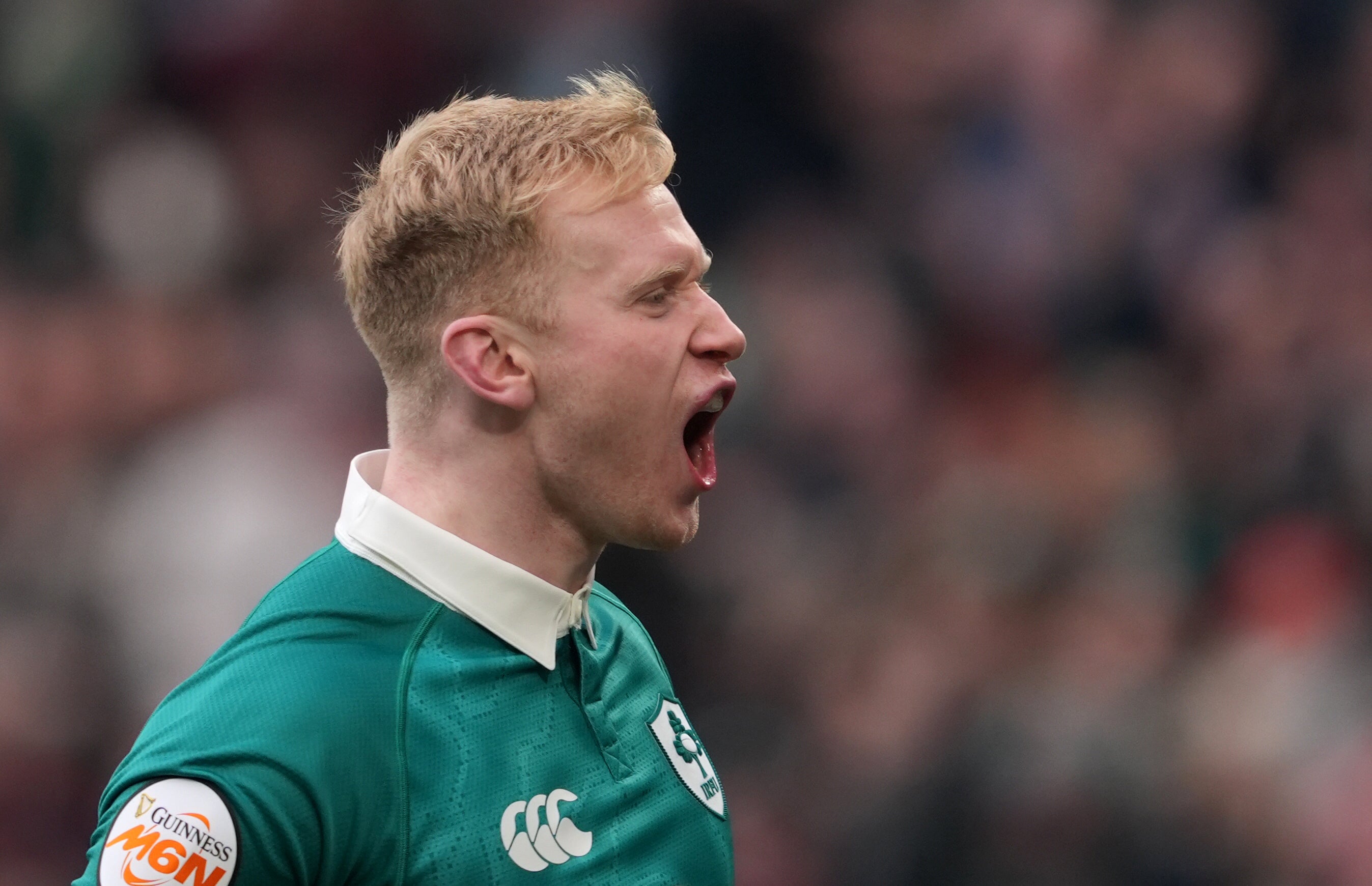
Scotland arrived in Dublin with significant confidence, buoyed by their stunning 50-40 victory against France in the previous round, a result that had ignited a three-way title race. Their belief was tested early, however, as they conceded within three minutes. Osborne dotted down under the posts for his fourth consecutive match with a try, but Scotland quickly responded. A well-worked move saw Blair Kinghorn send Graham over in the right corner to level the scores.
The hosts swiftly regained the advantage in the 11th minute. Hooker Sheehan finished off a powerful lineout maul, restoring Ireland’s lead as the breathless opening continued.
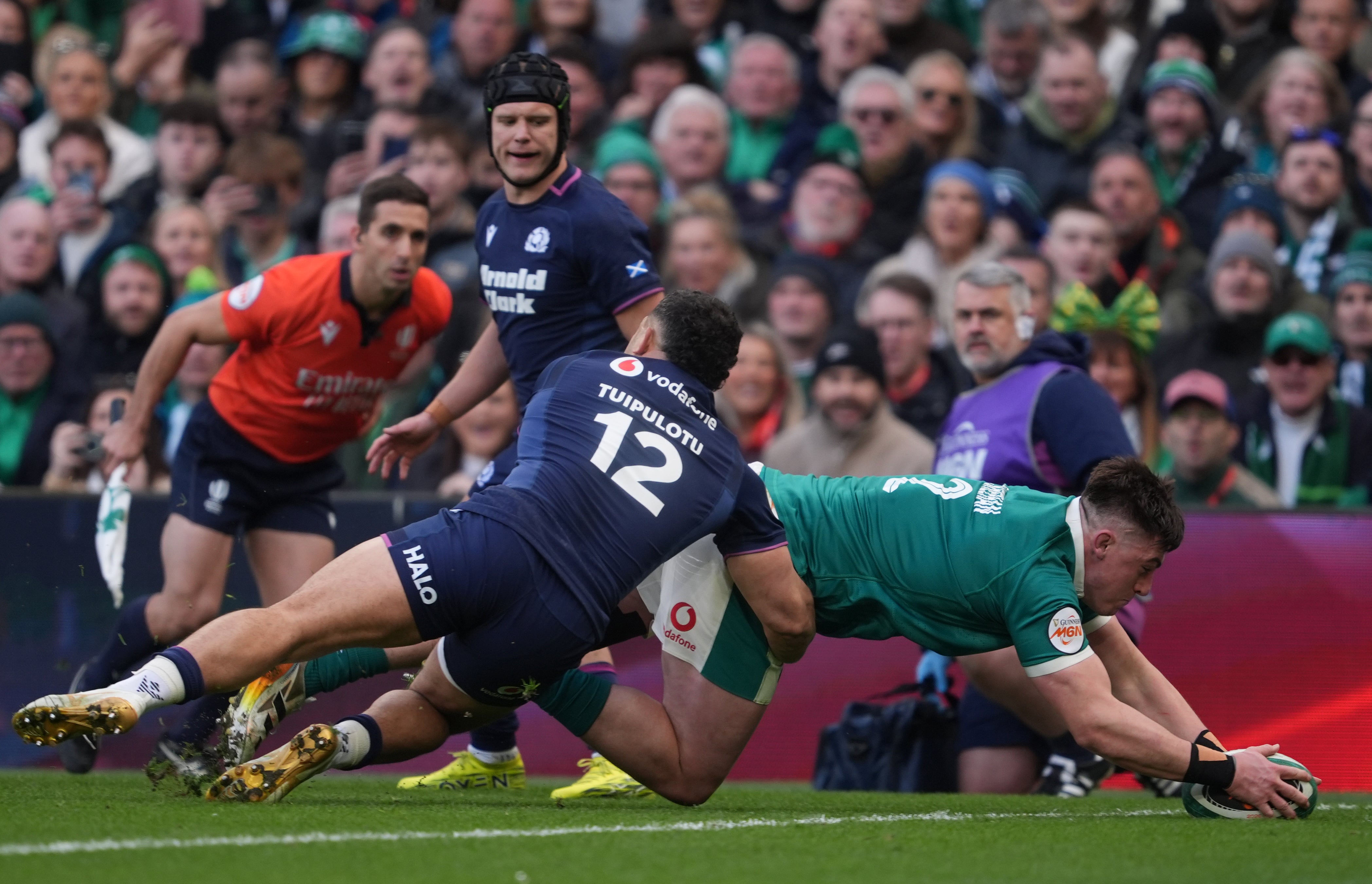
Ireland’s dominance at the set-piece proved crucial. They extended their lead when quick ball from a scrum on the left touchline allowed the dynamic Baloucoune to dart to the right corner. Under immense pressure from Graham, he bravely stretched out to score.
Following this explosive first 20 minutes, the remainder of the first half descended into a more scrappy and error-strewn affair, with both teams struggling to maintain their attacking rhythm.
Scotland’s Second-Half Surge and Ireland’s Response
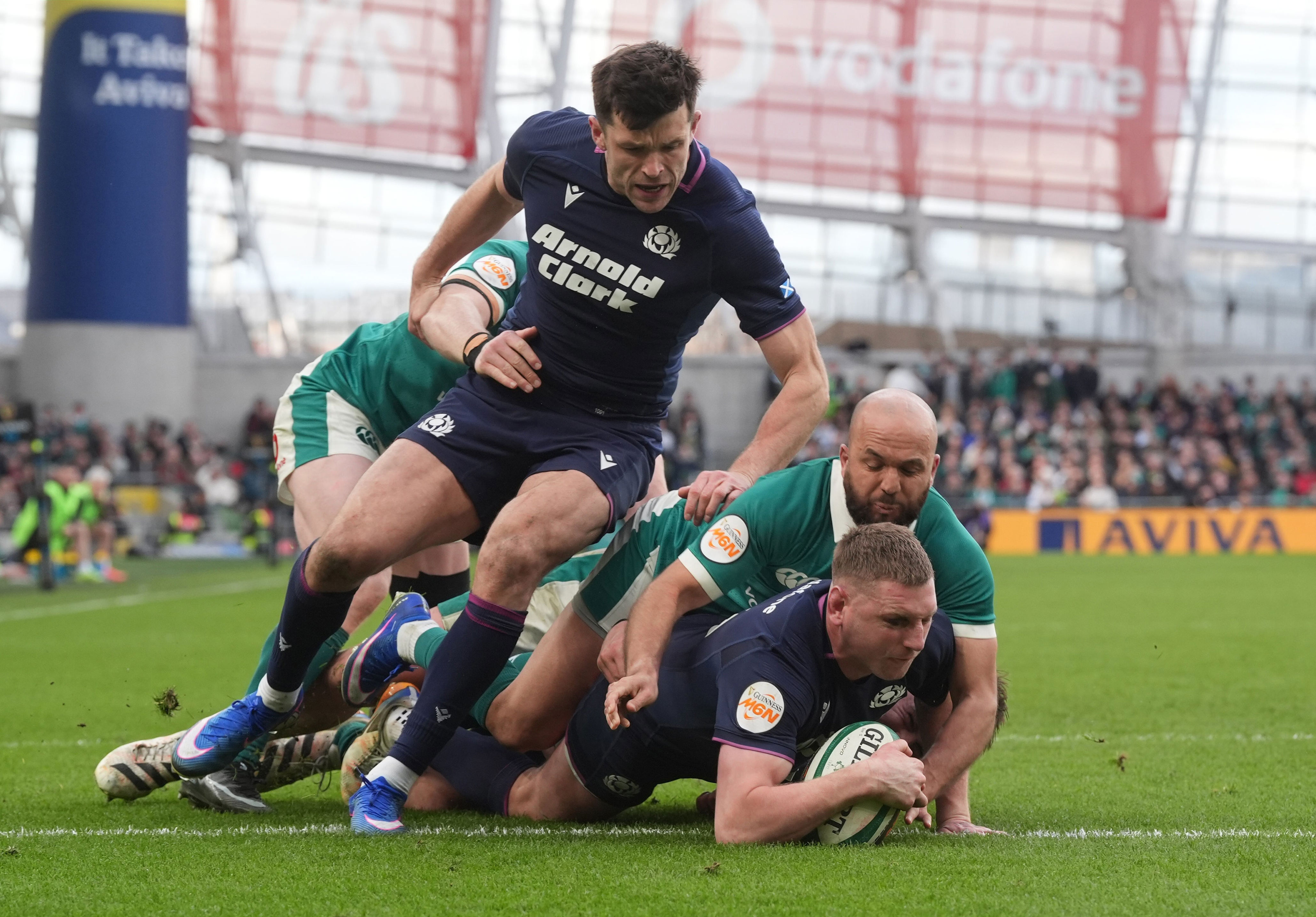
Returning to the field trailing by 12 points, Scotland faced a monumental task to secure silverware. Fly-half Finn Russell, who had been relatively quiet in the first period, injected new life into the contest. In the 52nd minute, he expertly snuck over the line for a try and added the conversion, rewarding persistent Scottish pressure.
However, momentum swiftly swung back in Ireland’s favour. Connacht lock Darragh Murray, making his Six Nations debut, marked the occasion with a powerful bulldozing try to secure Ireland’s bonus point. Jack Crowley converted the score, his third successful conversion of the match, extending Ireland’s lead.
Scotland managed to narrow the deficit to five points when Russell converted Darragh’s try, which was set up by quick hands from Grant Gilchrist.
With just 15 minutes remaining, Ireland head coach Andy Farrell made a significant tactical move, introducing six new players simultaneously. Among these was centre Bundee Aki, making his first appearance of the tournament after serving a suspension.
These substitutions proved to be inspired. Winger Tommy O’Brien raced clear onto a pass from Ciaran Frawley to score, and Crowley followed up with a penalty, adding to his 13-point haul and providing the home side with a much-needed cushion.
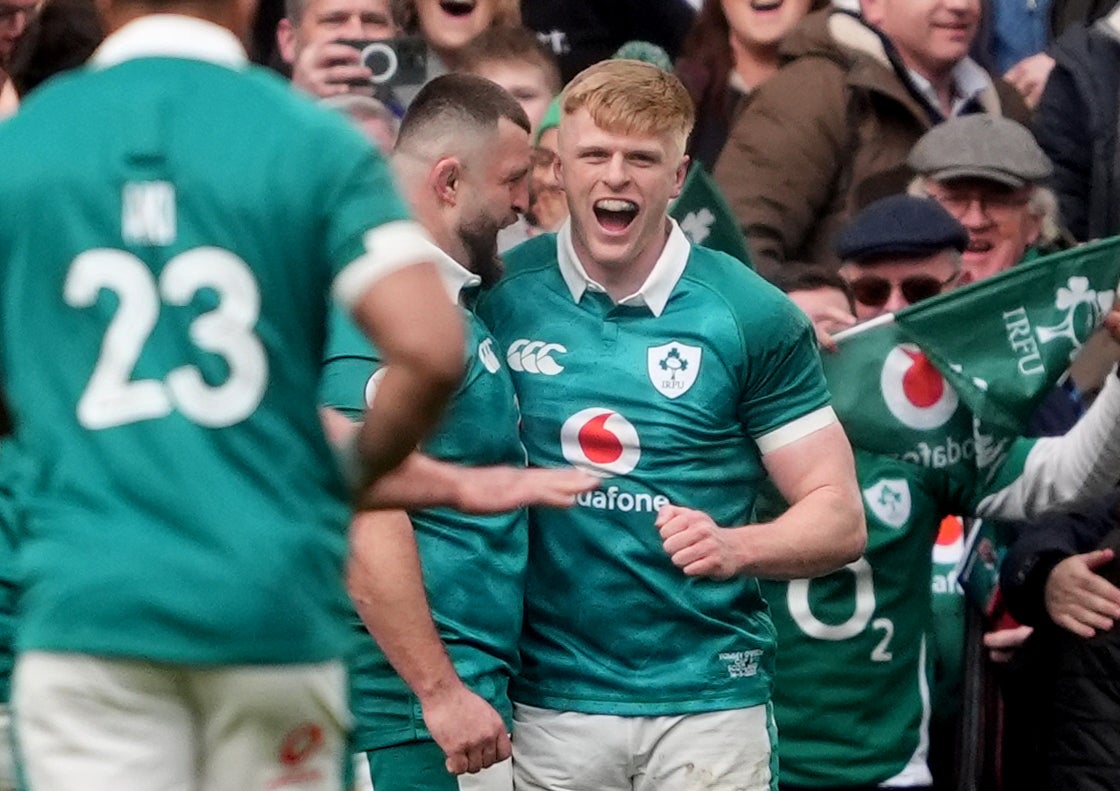
As the iconic ‘Fields of Athenry’ echoed around the stadium, the capacity crowd was further delighted in the final minute. O’Brien broke away down the left flank, completing a superb individual performance and sealing a memorable victory for Ireland, inflicting further disappointment on Scotland.
The Triple Crown triumph, while a significant achievement, was overshadowed by the agonising loss of the Six Nations title to France. Ireland demonstrated their class and resilience throughout the championship, but ultimately, France’s superior points difference secured them the ultimate prize. Scotland, despite their spirited efforts, will look back on the tournament with a mixture of pride and regret, falling short of their historic goals.


