When the spotlight falls on critical minerals, names like lithium and copper often dominate the conversation, having been prominent on the ASX and in global trade throughout the 2020s. However, highly specialised elements, such as rubidium – essential for GPS systems, atomic clocks, and night vision technology – remain largely under the control of foreign suppliers. This reliance creates a significant, albeit often overlooked, vulnerability in the North American supply chain for advanced technology and national defence, particularly at a time when secure domestic sourcing is paramount.
While traditional exploration efforts are frequently hampered by lengthy and capital-intensive permitting processes, the imperative to onshore these vital assets has never been more pressing. It is within this dynamic landscape that IRIS Metals (ASX:IR1) is strategically pivoting. Operating in the western United States, IRIS is evolving from a focused lithium explorer into a diversified, multi-commodity critical minerals platform. The company possesses a clear strategic direction, a unique opportunity in rubidium, and a tangible pathway towards near-term production and revenue generation.
Disrupting Foreign Monopolies
The United States government has placed a clear emphasis on securing domestic supply chains for commodities crucial to defence, energy storage, and advanced technological applications. Currently, the North American supply chain for highly specialised minerals faces considerable fragility, with the US often finding itself at a disadvantage due to imports from foreign jurisdictions, most notably China.
IRIS Metals has built its value proposition around addressing this macro-level vulnerability. The company is assembling a portfolio of strategic assets designed for rapid advancement, incorporating exposure to lithium, rubidium, and tungsten. This diversified approach allows IRIS to tap into multiple high-interest critical mineral themes while remaining closely aligned with US supply chain initiatives. This strategy directly targets the broader US critical minerals framework, establishing a presence that is intrinsically linked to defence and energy security supply chains.
A Unique Rubidium Opportunity
To make a substantial impact, a significant asset is required, and IRIS possesses precisely that with its flagship Beecher Project. Situated in the Black Hills of South Dakota, USA, Beecher is an advanced exploration and resource growth asset. IRIS has confirmed the presence of both lithium and rubidium mineralisation within the same pegmatite system.
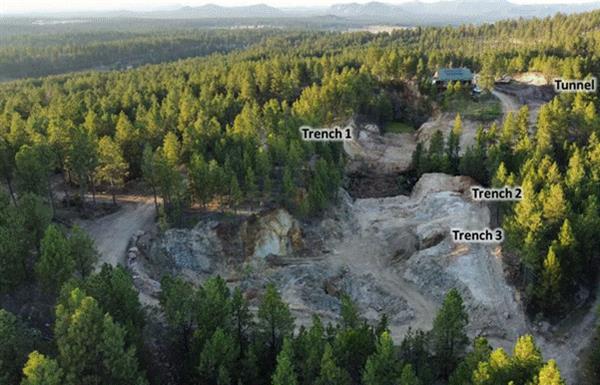
The substantial rubidium potential at Beecher is a key differentiator. IRIS’s most recent update on the Beecher project includes what management believes to be “the only mineral resource estimate in the U.S. to include rubidium.” Rubidium, while operating in a relatively niche market, is indispensable for GPS systems, atomic clocks, night vision equipment, and defence-related technologies. The United States has a clear objective to onshore the production of all these critical components.
“We arguably have one of the better-grade deposits out there for rubidium, certainly within the States,” stated Mart Hartmann, IRIS’s President for U.S. Operations, in a recent discussion. “While the market isn’t enormous, it is highly specialised, and the demand is constant. We believe that being the only resource in the States that incorporates rubidium will be a significant point of differentiation for us and could provide us with a highly marketable material in the very near term.”
The Rare Path to “Very Near-Term” Production and Revenue
Beecher is demonstrably on a fast track towards production. While many of its peers in the US face distant production horizons requiring substantial capital investment and extensive infrastructure development, IRIS is actively executing a well-defined strategy. The company’s operational momentum is further bolstered by Beecher’s existing mine permit, offering a rare regulatory advantage that facilitates a rapid restart of operations.
Furthermore, IRIS has already proven its capability to produce crushed direct shipping ore (DSO) material from the asset. In 2025, the company successfully completed test mining and mobile crushing operations at the site, mining and crushing approximately 40 tonnes of spodumene-mineralised pegmatite. Of this quantity, 15 tonnes were set aside for metallurgical testing, while the remaining crushed material was stockpiled on-site as a DSO pile.
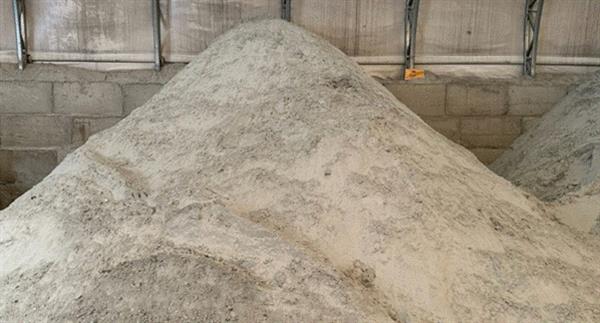
“We demonstrated last July that we could mine and crush material and immediately supply direct shipping lithium ore to the market,” explained Mr. Hartmann. “We have the capacity to recommence mining operations at our discretion, provided it is commercially justified.”
As IRIS Metals progresses towards production, its management is actively engaged in commercial discussions regarding potential direct shipping ore contracts and future offtake agreements. Securing such contracts could provide the company with early cash flow and a self-sustaining funding mechanism, validating its development strategy well ahead of the typical junior mining timeline.
Beyond Beecher: Expanding the Portfolio
To complement the lithium and rubidium assets at Beecher, IRIS has expanded its operational footprint through a farm-in agreement for the Finley Basin tungsten project. This agreement, finalised in March, grants IRIS the right to earn up to a 100% interest in the Montana-based project. This aligns perfectly with the company’s overarching strategy of identifying and advancing assets with clear development potential and existing advantages.
“We are very focused on overlooked assets,” Mr. Hartmann elaborated. “This opportunity came to us late last year. It was an underappreciated, high-grade asset, and we had the chance to acquire it on what we believe are very favourable terms.” He added that the Finley Basin project “fits with the strategy” that IRIS has been building. The basin offers significant upside and structural value, largely due to its drill-ready status and a historical high-grade tungsten mineral resource previously defined by industrial operator Union Carbide. “We intend to advance this project relatively quickly,” Mr. Hartmann noted, targeting late CY26. A prior exploration permit is being reactivated, and the proximity of contract processing infrastructure presents potential near-term development advantages.
What to Watch Next with IRIS Metals
IRIS has a busy six to twelve months ahead, marked by a series of clear, high-impact milestones. The initial focus will be on the market’s reaction to Beecher’s updated Mineral Resource Estimate, followed by intensified discussions regarding potential direct shipping ore (DSO) contracts. If these offtake agreements are successfully secured, IRIS will have achieved a significant catalyst that could fast-track a near-term production and revenue scenario at Beecher.
Concurrently, the company will initiate early-stage activities at the Finley Basin. A drilling program is scheduled to commence during the North American summer months, spanning July and August. This campaign is designed to verify, expand, and advance the historical high-grade tungsten reserve into a modern, JORC-compliant resource.
While drilling is underway at Finley, the leadership team, under Mr. Hartmann’s guidance, will remain focused on operational execution. The strategy prioritises a pragmatic, fast-tracked approach over protracted exploration cycles. Consequently, investors can anticipate a consistent flow of positive news. IRIS continues to actively seek other overlooked, permitted, or infrastructure-rich critical mineral assets across the United States to integrate into its expanding exploration platform.
“We have a multitude of activities progressing simultaneously,” concluded IRIS Metals’ exploration chief. “I have a highly capable team supporting me, ensuring we act on all these fronts in a very timely manner.” By directly addressing US import challenges, IRIS Metals is positioning itself less as a conventional explorer and more as a company on the cusp of production. The entire team is “genuinely excited to witness the results of their hard work unfold in the coming months.” The outlook is optimistic, with the company anticipating being in a “truly excellent position six months from now.”