Outback Queensland Looks to Texas for Renewable Energy Blueprint
A delegation of energy experts from Texas, a US state renowned for its significant oil and gas industry and a leading force in wind energy production, is offering valuable insights to regional councils in outback Queensland. The visit, orchestrated by a consortium of local government bodies and the state’s local government association, aims to equip Queensland communities with the knowledge to navigate the burgeoning renewable energy sector.
Three prominent energy lawyers from Texas, including Rod Wetsel, a wind energy specialist and rancher from Sweetwater, Nolan County, are sharing their experiences. Texas has consistently topped the US in wind energy generation for the past two decades, boasting approximately 240 wind-related projects and supporting around 27,000 jobs.
Mr. Wetsel highlighted that there are crucial lessons for local governments and landowners in western Queensland who are currently forging partnerships with wind energy companies. “What we can help do is to help the Australians overcome some of the problems that we encountered because we didn’t know they were coming,” he stated.
Lessons from the Texas Wind Boom
The “Lone Star State” offers a compelling case study in the rapid expansion of wind energy. The industry has generated substantial economic activity, but it has also presented challenges related to waste disposal and landholder negotiations. These are precisely the areas where Queensland can benefit from Texas’s hard-won experience.
Key areas for consideration include:
- Decommissioning Turbines: A critical question is how to manage the end-of-life for wind turbines. Councils need to understand the costs involved and ensure financial provisions are in place for decommissioning, especially in scenarios where a company might go bankrupt or cease operations in the region. This proactive planning is essential to avoid environmental liabilities and ensure a clean slate after a wind farm’s operational life.
- Landholder Negotiations: Mr. Wetsel emphasized the significant bargaining power that local landholders possess when entering into agreements with energy companies. Understanding this leverage is paramount to securing favourable terms and ensuring long-term community benefits.
The Flinders Shire Council, in collaboration with the Local Government Association of Queensland and the Remote Area Planning and Development Board, invested $30,000 to bring the Texan delegation to Queensland. Their itinerary included visits to Hughenden, Townsville, Mackay, and Brisbane.
Mayor Kate Peddle of Flinders Shire Council expressed her hope that the visit would significantly raise awareness among landholders and state government officials regarding the substantial economic opportunities presented by renewable energy development in rural shires. “This isn’t, for our community, about reducing emissions, this is about capitalising on the development and the opportunities that come to north Queensland,” she explained.
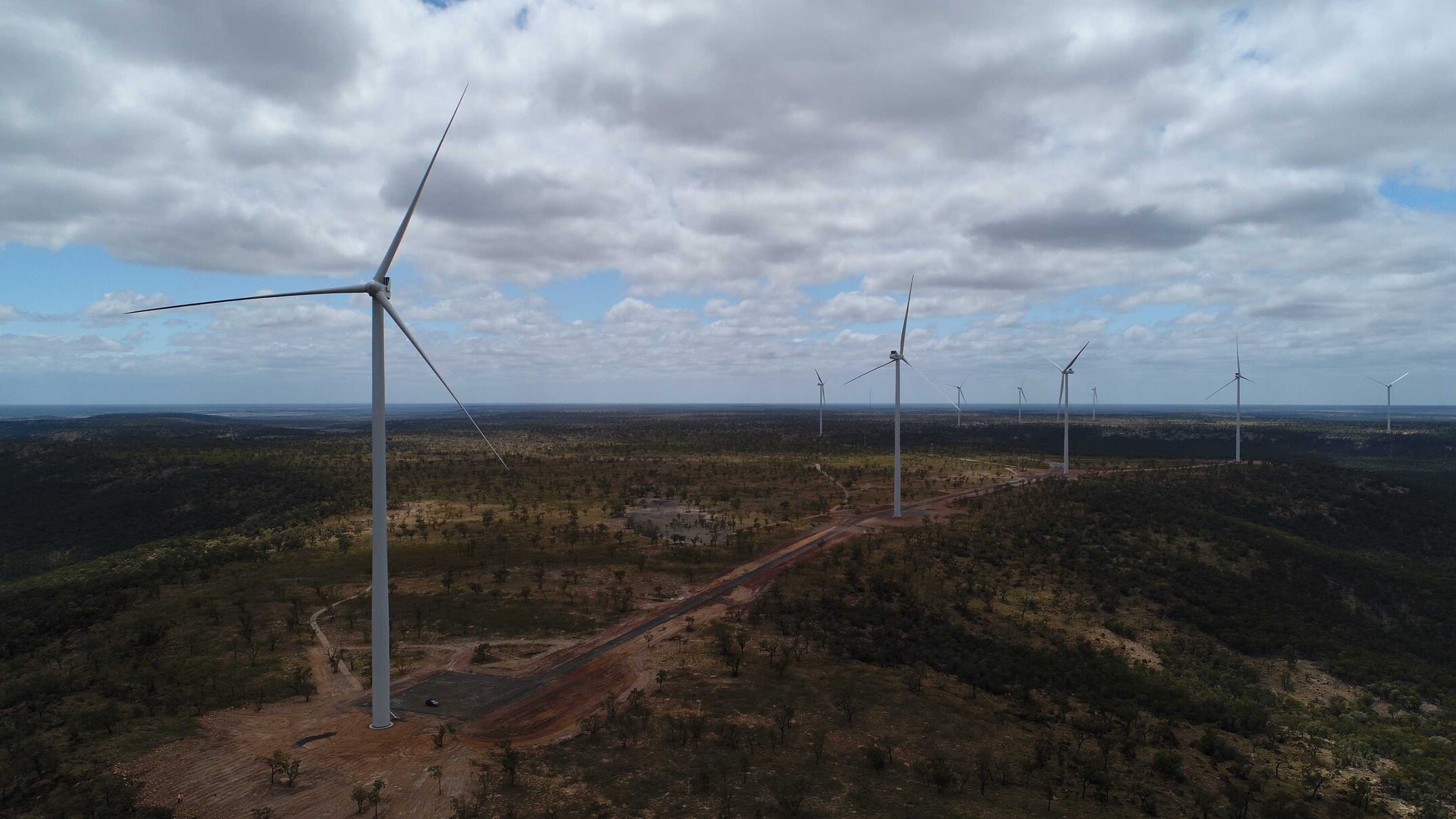
Hughenden, a town of 1,000 residents located about five hours south-west of Townsville, served as the initial stop on the tour. This community, a vital hub for surrounding cattle properties, has already seen the tangible impact of renewable energy. Over the past five years, 12 wind turbines have been erected in the area, contributing to the Kennedy Energy Park. Since commencing operations in May 2024, these turbines have supplied an impressive 166,699 megawatts of power to the regional grid.
Negotiating Community Benefit Agreements
Local councils in Queensland are keen to foster further development in the renewable energy sector. Recent amendments to state planning laws now require proponents of wind, solar, and battery storage projects to establish community benefit agreements with local councils before submitting development applications.
Mayor Peddle indicated that her shire is currently engaged in preliminary discussions with energy companies that are considering future project applications. Meanwhile, several significant projects, including the North Queensland Super Hub, backed by mining magnate Andrew Forrest, are progressing through the necessary approval processes.
“It’s very early days still, and I think that’s why it’s important that we have these three gentlemen out here that can not only advise us, but educate the community on what the benefits could be,” Mayor Peddle commented.
Tony Wood, Director of the Grattan Institute’s Energy Program and a former executive at Origin Energy, offered a pragmatic perspective. He acknowledged the value of seeking advice from international counterparts but stressed the importance of adapting such guidance to the local context. “I certainly would not rule out the idea of getting advice from other places that have done things differently, that is always useful,” Wood said. “But then you’ve also got to have a very good filter to make sure that you’re not convinced that just because it worked somewhere else, it will work perfectly in north Queensland, for example.” He underscored that differences in planning and taxation legislation between regions, such as between Texas and Queensland, must be carefully considered when drawing comparisons.
The Critical Role of Transmission Infrastructure
Mr. Wetsel emphasised that robust supporting infrastructure is indispensable for outback Queensland to successfully scale up its renewable energy capacity. “I think they need to get the politicians on board to create the transmission that’s necessary in order to have the development,” he advised.
Mayor Peddle echoed this sentiment, identifying the multi-billion-dollar CopperString 2032 project as a crucial enabler. This proposed 800-kilometre transmission line is designed to connect mines and renewable energy projects to the national electricity grid, making any projected economic windfalls a tangible reality. “The transmission line is very important and that’s integral to us to become generators, and welcome in the wind farms to the development,” she stated. “We’re at the very beginning of our journey through the energy transition.”