
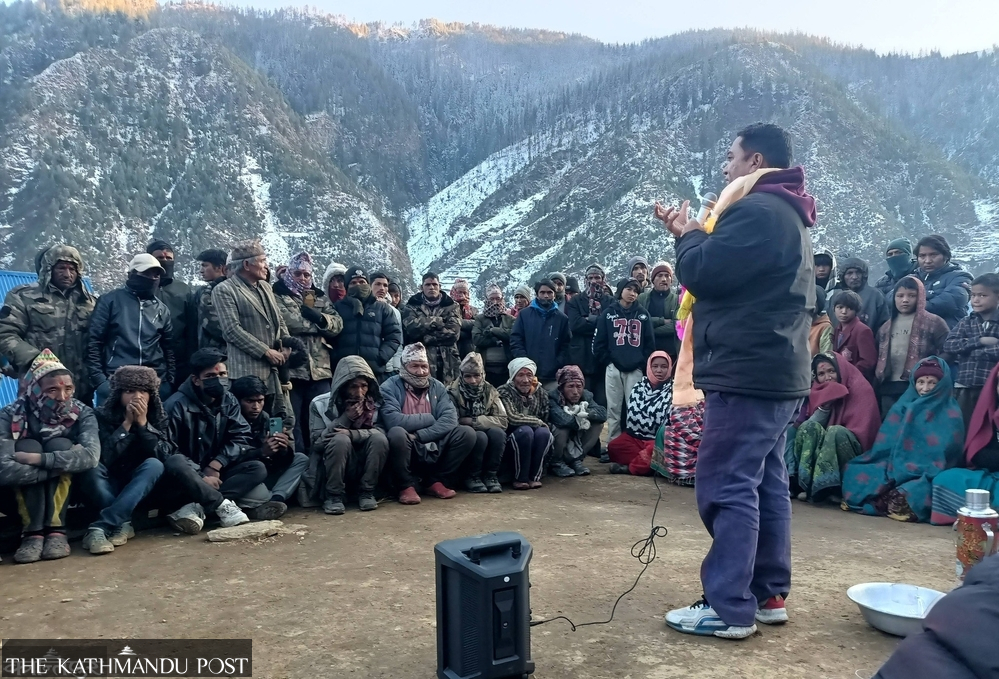
The biting cold and relentless snow have transformed Jumla’s landscape into a winter wonderland, blanketing forests and rivers in white. Yet, as election day draws nearer, political aspirations are undeterred by the harsh elements. Party leaders and dedicated cadres are braving the frigid temperatures, donning layers of jackets, hats, gloves, and masks, all in a determined effort to connect with voters.
The challenging weather conditions necessitate unconventional campaign strategies. With many residents away from their homes during daylight hours, candidates are opting for early-morning visits, commencing their outreach efforts even before the sun fully crests the horizon. The snowfall, while an inconvenience for campaigning, is viewed differently by various political figures. Some highlight its benefits for agricultural prosperity, recognizing its crucial role in nurturing winter crops, while others leverage the picturesque snowy scenery to underscore the potential for winter tourism.
Villagers often express surprise at the arrival of campaign teams in such severe weather. Jumla has experienced significant snowfall on multiple occasions this month, intensifying the winter chill. Despite this, political activity remains remarkably fervent, demonstrating the commitment of candidates to engage with their constituents.
The impact of the snow is most pronounced in the higher elevations, where vast areas remain covered in a thick layer of snow. Connectivity is largely limited to the lower regions accessible via the Karnali Highway, which experiences more regular traffic. The unpaved village roads have accumulated substantial snow, and some pathways have become treacherous and slippery, leaving walking as the sole viable mode of transportation to reach remote voters.
Campaigning Amidst the Snowfall
Despite the adverse conditions, candidates from various political parties are pressing forward with their campaigns. Naresh Bhandari, a candidate for the Nepali Communist Party, has been diligently visiting homes in Pategaun, ward 2 of Patarasi Rural Municipality. His early-morning rounds, conducted amidst heavy snowfall, are focused on meeting with farmers ahead of the March 5 parliamentary elections. Bhandari has also used his platform to advocate for a fair and secure voting process, urging the government to ensure its integrity.
Gyanendra Bahadur Shahi, a candidate for the Rastriya Prajatantra Party and its spokesperson, has undertaken extensive tours, visiting all eight local units within Jumla. His campaign narrative centers on promoting Jumla as a compelling winter tourism destination. Shahi shared his vision on social media, remarking, “Jumla-Khalanga, Rara Lake, Patarasi Mountain and Sinja Valley-look stunning under snow. It benefits farmers and will attract visitors from across the country and abroad.”
Binita Kathayat, representing the Rastriya Swatantra Party, has also been engaging with households. She draws a parallel between the essential role of snowfall for winter crops and the vital importance of elections for national development. Kathayat believes that the stark beauty of the snowfall can serve as an inspiration for voters to make informed and judicious choices.
Candidates from established parties such as the Nepali Congress and the CPN-UML, along with other political factions, are facing challenges in accessing more remote villages. Consequently, their campaign efforts are concentrated on areas closer to district administrative centers. A notable shift in voter engagement is being observed, with citizens now openly sharing their concerns and feedback, moving beyond the one-way delivery of speeches that characterized previous election cycles.
A New Era of Voter Engagement
The evolving campaign landscape reflects a more interactive and responsive political environment. Candidates are actively seeking to understand the needs and aspirations of the electorate. Bhandari commented on this shift, stating, “We listen to voters’ feedback before presenting our election agenda.” This approach signifies a departure from traditional campaigning, where party manifestos were often presented without prior consultation.
Currently, all candidates are undertaking their home visits with a palpable sense of hope and unwavering commitment. They are actively engaging with voters, listening intently to their concerns, and offering promises to address the issues that have been raised. This period of intense campaigning, even in the face of a formidable winter landscape, underscores the democratic spirit and the dedication of those seeking to represent their constituencies.


