

Democratic Party Leader Signals Push for Merger Amid Internal Dissent
The Democratic Party of Korea is navigating a complex internal debate surrounding a potential merger with the Rebuilding Korea Party. Jung Chung-rae, a prominent leader within the Democratic Party, has indicated his intention to proceed with discussions and consultations with lawmakers to gauge opinions on the proposed unification. This move comes despite vocal opposition from within the party’s Supreme Council, with some members urging a halt to the merger talks.
Representative Jung, however, has emphasized his commitment to seeking the party members’ collective will. “I will seek the opinions of party members,” he stated, signaling a democratic approach to a decision that could significantly reshape the political landscape. During a Supreme Council meeting at the National Assembly, he confirmed that lawmakers have indeed put forward proposals for discussions and meetings concerning the merger, and he intends to adhere to the established schedule for these proceedings.
The push for dialogue has seen support from various factions within the party. A group of first-term lawmakers, known as ‘The Democratic First,’ formally proposed a meeting with Representative Jung. Concurrently, five-term lawmaker Park Ji-won has also called for a senior lawmakers’ meeting to deliberate on the matter.
Representative Jung expressed a desire for transparency throughout the merger process. “I believe it is right to broadcast the entire discussion process live, and party members should watch the process,” he suggested. However, he acknowledged potential reservations from lawmakers who might prefer a more private deliberation. “Since lawmakers are reluctant to have the entire process publicized, if they prefer it to be non-public, I will accommodate their wishes in any way they desire,” he conceded, demonstrating flexibility in his approach. Ultimately, he reiterated that the success and direction of the merger hinge entirely on the collective will of the party’s membership, urging for “keen interest and active discussions.”
Opposition Mounts from Pro-Myung Faction
The proposed merger has ignited significant opposition from within the Democratic Party’s Supreme Council, particularly from members aligned with Lee Jae-myung. Supreme Council members Lee Un-ju, Hwang Myeong-seon, and Kang Deuk-gu have publicly voiced their strong objections, urging Representative Jung to cease the merger discussions.
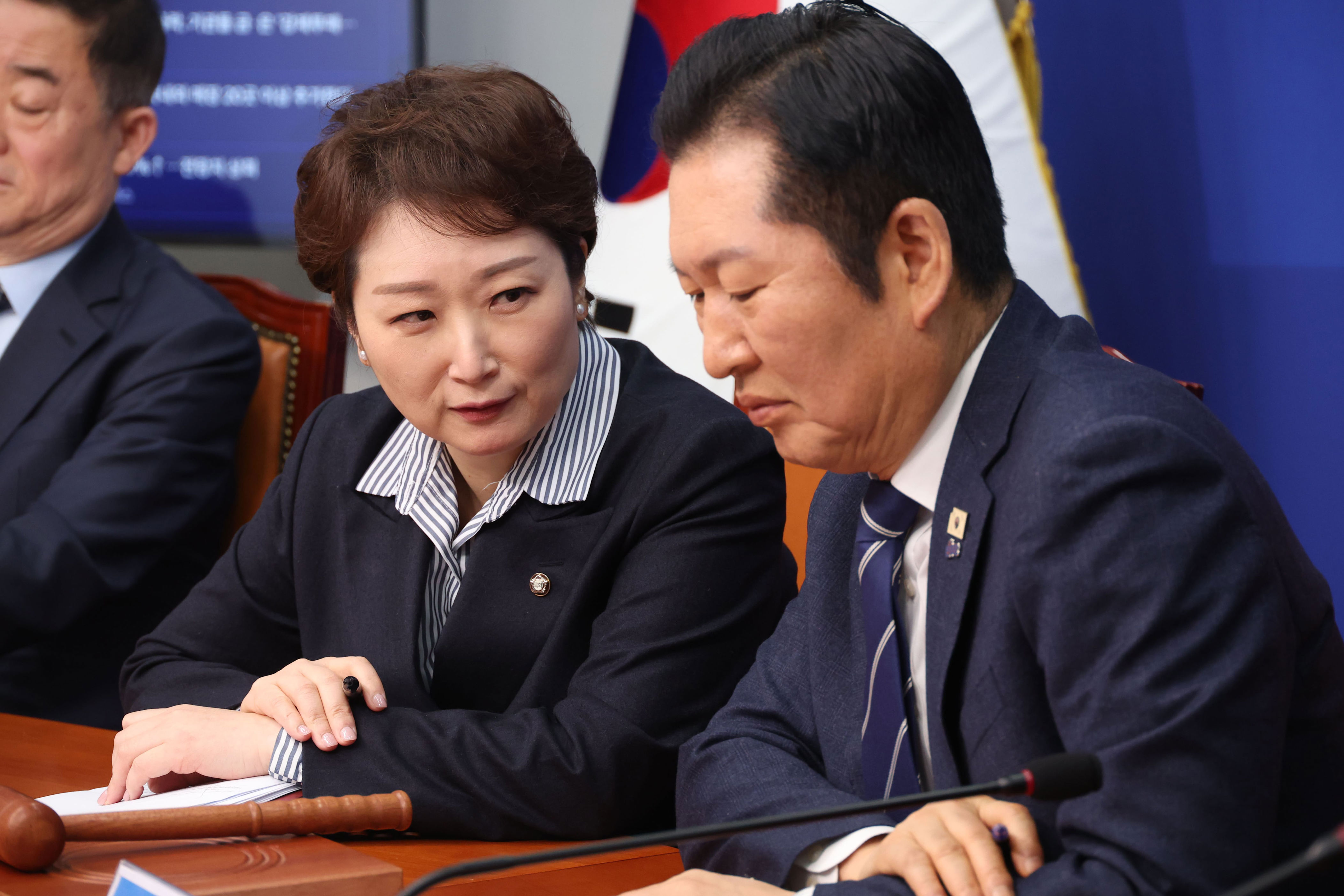
Supreme Council member Lee Un-ju articulated concerns that the merger is being driven by a desire to elevate a specific individual to the presidency. “There are talks that the merger is necessary to make a specific person president, centered around certain YouTube channels and communities,” she stated. She further expressed apprehension that the Democratic Party might be viewed as a mere stepping stone for Rebuilding Korea Party leader Cho Kuk’s presidential ambitions. Lee emphasized that the current political climate is “Lee Jae Myung’s time,” not a period for prematurely pushing for the next presidential candidate. She found it particularly perplexing that such discussions are surfacing while the ruling party holds a legislative majority and the president’s approval rating is nearing 60%.
Lee also highlighted the growing unease among Democratic Party supporters. “Democratic Party supporters are already questioning whether a specific person is using our party as a host for their presidential bid or starting to secure their position for the next election,” she noted, cautioning, “We must be careful not to be misunderstood in this way.”
Supreme Council member Hwang Myeong-seon directly appealed to Representative Jung to halt the discussions. “Representative, we urge you to make the decision to stop the merger discussions,” Hwang implored. While acknowledging the sincerity behind the merger proposal and agreeing with its potential necessity, Hwang lamented that it had become a catalyst for “internal conflict and division” and had generated “unnecessary disputes with the Rebuilding Korea Party.” He called for the leadership to adopt a “responsible attitude,” apologize to party members and the Rebuilding Korea Party, and cease the merger talks rather than escalating the debate.
Focus on Livelihood and Reform Over Merger
Supreme Council member Kang Deuk-gu, while acknowledging the eventual need for a unified democratic front, argued against an immediate merger. “In the larger framework of unifying the democratic camp, merging with the Rebuilding Korea Party is a path we must take someday,” Kang conceded. However, he stressed that the immediate priority should be to “unite our strength under the larger framework of people’s livelihood and reform, not merger.”
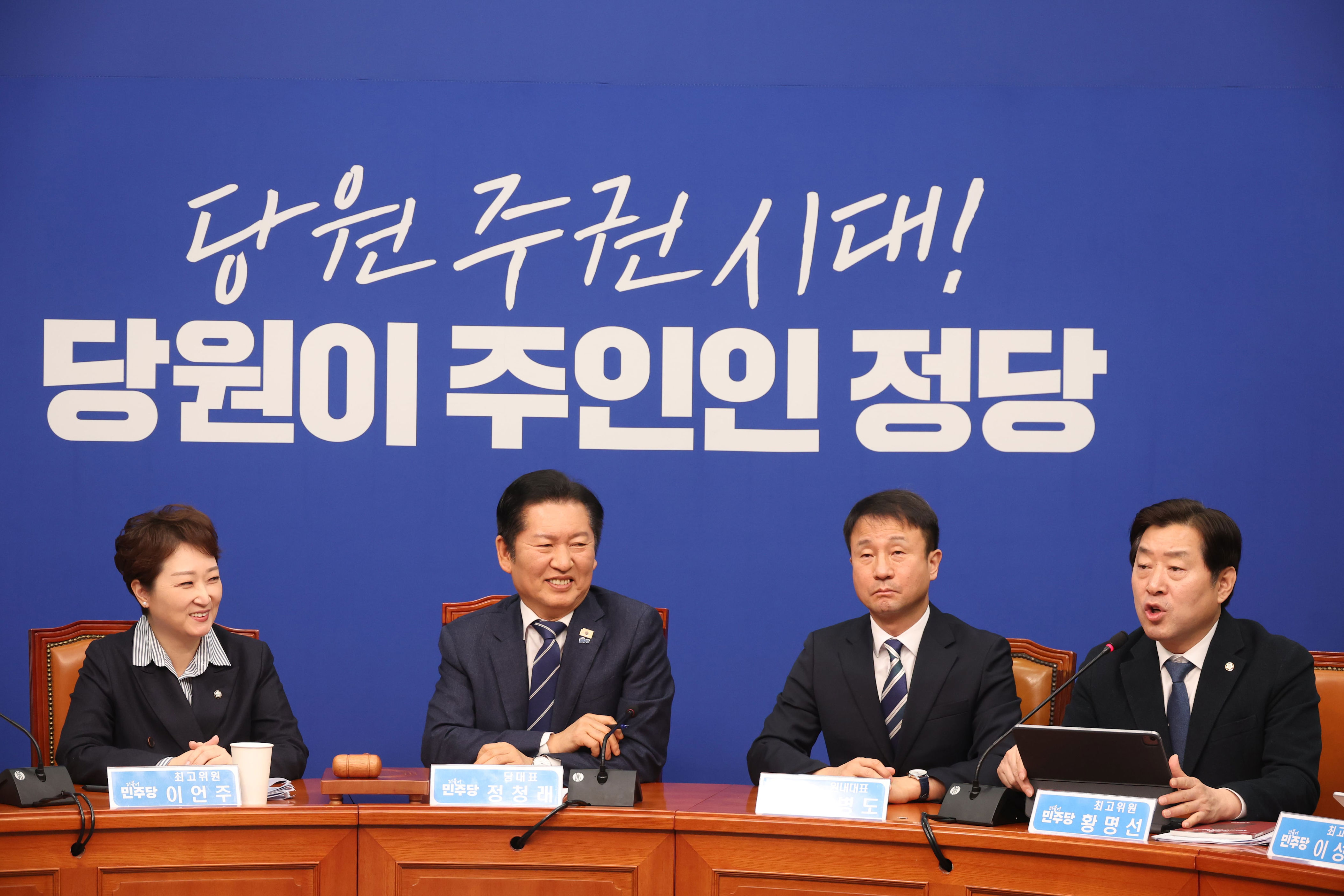
Kang expressed concern that the ongoing merger discussions are distracting from the Democratic Party’s crucial role in supporting the Lee Jae Myung administration. “The Democratic Party, which should support the success of the Lee Jae Myung government, is diverting public attention with merger talks and overshadowing the government’s achievements,” he stated. With local elections just commencing, Kang insisted that pushing for a merger at this juncture would only “increase confusion” and called for an immediate cessation of merger discussions.
Following the pronouncements from the Supreme Council members, Representative Jung offered further remarks. He observed that while many advocated for discussion, a critical element was missing: “the discussion with the actual owners of the party, the party members.” He proposed that the current situation present an opportunity to “activate discussions with party members.”
Jung also floated the idea of conducting a poll among all party members regarding the merger, even before a formal party vote. “Even before a full party vote, wouldn’t it be good to conduct a poll among all party members on whether to proceed with the merger? I will discuss this with the Supreme Council members,” he suggested. He concluded by reinforcing the principle of equality within the party, stating that “Lawmakers and party members are all equal members of the party” and should be guaranteed “equal speaking rights and equal discussion rights.”


