
The recent release of Donald Trump’s medical records has sparked considerable debate, with commentators suggesting that his fervent supporters are subscribing to a “health fantasy.” This perspective posits that the MAGA movement operates less like a conventional political entity and more akin to a cult centred around a charismatic, strongman figure.
A report from The Wall Street Journal late Sunday highlighted that Trump’s medical records appear to be lacking the specific details that physicians typically expect from a comprehensive physical examination. This has fuelled scepticism about the assertions of perfect health.
The Cult of Personality and Health Claims
Columnist Amanda Marcotte, in a recent piece, argued that the reason MAGA supporters readily accept Trump’s pronouncements, even on matters of his well-being, is the inherent nature of the movement as a cult. Following his latest physical, Trump himself declared that “everything checked out perfectly.”
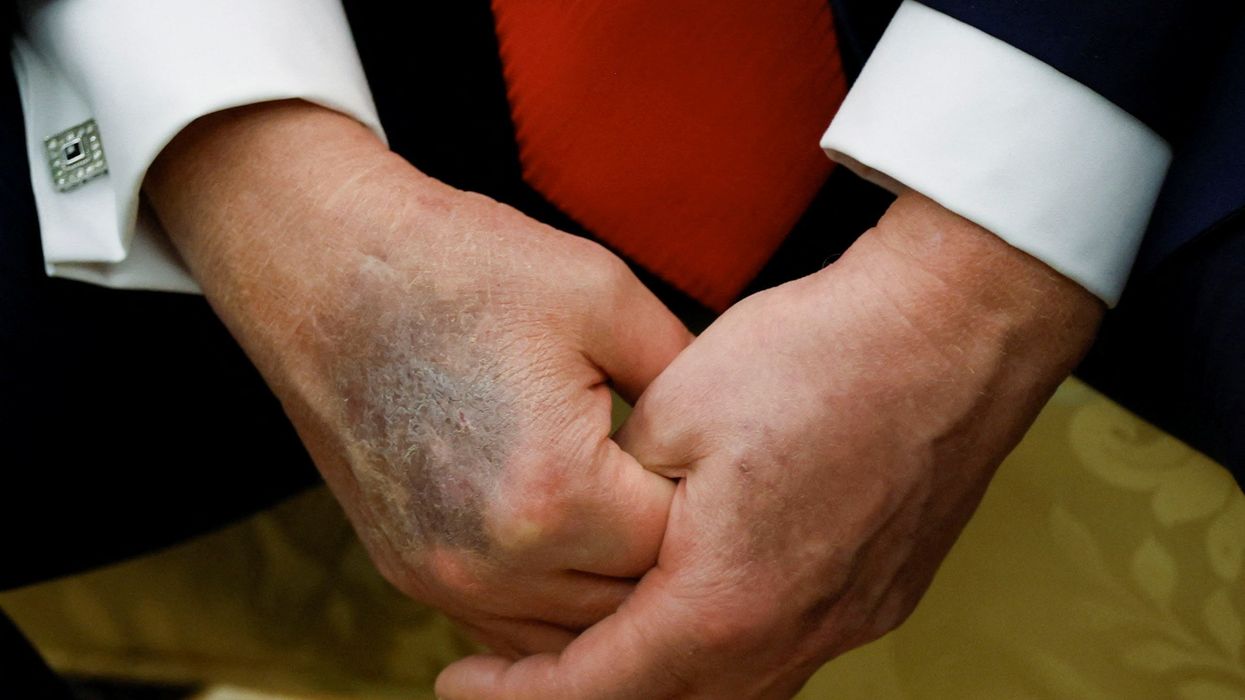
However, Marcotte expressed strong doubts about this claim. “This is almost certainly a lie, though how big of one remains to be seen,” she wrote. “People in perfect health don’t have swollen and bruised hands or the water balloon-sized ankles Trump sometimes sports.” She pointed out that even individuals within Trump’s own staff have, at times, alluded to his health issues. These explanations often attribute any perceived problems to chronic venous insufficiency, a condition Trump was reportedly diagnosed with after experiencing leg swelling.
A Pattern of Distrust
Marcotte’s analysis underscores a broader concern about the credibility of Trump and his administration. “There is zero reason to trust Trump or his staff; they lie constantly about nearly everything,” she stated. This alleged pattern of deception extends to explanations regarding the former president’s health. Marcotte cited the example of the White House’s insistence that Trump was merely blinking in photos with his eyes closed, when video evidence, she contends, shows his eyes shut for extended periods, not fleeting moments.
The columnist further elaborated that individuals in robust health typically do not exhibit the same medical concerns that Trump appears to have, such as a rash on his neck, persistent leg swelling, and bruising on his hands. These observations, coupled with his public appearances, continue to fuel speculation.
Social Media and Insomnia Concerns
In recent times, Trump has been actively posting on social media, a behaviour that has prompted some to question whether he is experiencing insomnia. This behaviour, while seemingly innocuous, adds another layer to the ongoing discourse surrounding his well-being and public persona.
The “Daddy-Like Figure” and the Appeal of a Savour
Marcotte also delved into the psychological dynamics at play, describing Trump as a “life-long con artist” who excels at portraying a “Daddy-like figure.” According to this viewpoint, his supporters are driven by a deep-seated, almost “childish impulse” to believe that he will always be their saviour. This desire for a protector figure, it is argued, makes them susceptible to his pronouncements, including those related to his health.
Trump’s Political Acumen and the Cult Leader Role
Marcotte’s assessment suggests that Trump’s political success is largely attributable to his profound understanding of this psychological need. Furthermore, she posits that he has been more willing than previous leaders, such as Ronald Reagan or George W. Bush, to fully embrace the role of a cult leader. This willingness to inhabit such a persona, it is argued, has been instrumental in galvanizing his base.
Narcissism, Ignorance, and the Republican Party
Concluding her analysis, Marcotte acknowledged that past presidents have possessed substantial egos. However, she differentiated Trump by highlighting his “level of narcissism and ignorance of history.” This combination, she believes, allows him to “half-convince himself that he’s a great man.” This self-perception, in turn, influenced his political trajectory, leading him to choose the Republican Party over the Democratic Party when he decided to run for office.
Marcotte’s theory is that, as a “lifelong con artist,” Trump recognised the Republican Party as a fertile ground for exploitation. He perceived it as a group of individuals who were “marks” willing to be exploited indefinitely, provided he maintained the facade of the “almighty prophet-leader” they craved. This strategic alignment, she suggests, has been a cornerstone of his enduring political influence.


