Asian Markets Tumble Amidst Middle East Tensions and Oil Price Surge
KUALA LUMPUR, Malaysia – A wave of selling pressure swept through Asian stock markets on Wednesday, as investors aggressively unwound positions, particularly in the lucrative semiconductor sector. The escalating conflict in the Middle East has sparked fears of an oil price shock, potentially fuelling inflation and pushing back anticipated interest rate cuts.
The ripple effects were starkly evident in Seoul, where the KOSPI index triggered a circuit breaker, plummeting over 11%. Over a two-day period, the index saw a staggering 17% decline, marking its most significant downturn since 2009. The South Korean won also felt the brunt, slumping to a 17-year low against the US dollar.
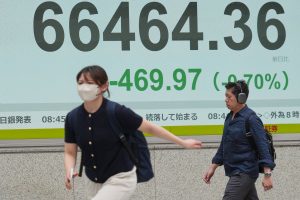
Japan’s Nikkei index fared little better, shedding 4.3%, while Taiwan’s stock market experienced a 3.6% drop. These declines underscore a rapid shift in investor sentiment, as participants flee from what have been some of the most profitable bets in recent months: semiconductor manufacturers.
The unease extended to futures markets. S&P 500 futures saw a modest decline of 0.6%, and European futures, after an initial attempt at recovery, slipped back below the flat line.
“There are simply too many negative factors at play for investors to maintain bullish positions,” commented Christopher Forbes, Head of Asia and Middle East at CMC Markets.
Oil Prices Spike as Geopolitical Risks Mount
Benchmark Brent crude oil futures have been on an upward trajectory, climbing more than 13% for the week to trade at US$82.08 a barrel. While prices have retreated from their peaks, this surge follows a period of heightened tensions. Earlier interventions, including a US President’s order for an insurance guarantee on Gulf shipping and a statement that the navy might escort oil tankers through the Strait of Hormuz, had provided some temporary relief.
However, the situation has intensified. Reports indicate that US and Israeli forces have engaged in strikes against Iran for four consecutive days. In retaliation, Iranian drones and missiles have targeted oil refineries in the Gulf region, as well as US embassies in Saudi Arabia and Kuwait.
Damien Boey, a portfolio strategist at Wilson Asset Management in Sydney, noted the evolving nature of the conflict. “It appears the conflict is likely to persist for longer than initially anticipated,” he stated. “There has been an escalation, with the war now broadening to encompass allies of the United States.”
Boey further elaborated on the implications for energy infrastructure. “Oil infrastructure seems to be under attack, prompting investors to consider the potential duration of these disruptions and their wider economic impact.”
Energy Importers and Tech Hubs Bear the Brunt
Countries heavily reliant on energy imports, such as Japan, South Korea, and Taiwan, are facing a double whammy. Not only are they grappling with the immediate threat of higher energy costs, but their equity markets, which have seen significant gains recently, are now experiencing considerable selling pressure as global investors seek to lock in profits and adopt more defensive strategies.
The impact of this risk-off sentiment is also visible in other asset classes. Gold, which had been a strong performer earlier in the year, saw a notable decline of approximately 4.5% overnight. The Australian dollar, which had been on an upward trend, also hit a roadblock, sliding below the 70 US cent mark on Wednesday.
On Wall Street, major indices managed to pare back some of their earlier steeper losses. However, the S&P 500 ultimately closed 0.8% lower, reflecting ongoing investor apprehension about the prospect of sustained elevated oil prices.
Chuck Carlson, CEO of Horizon Investment Services, highlighted the central concern for many market participants. “The most significant issue investors are trying to assess is the intricate relationship between inflation and interest rates,” he explained. “The key question is whether energy prices will remain at these elevated levels for a prolonged period, and if so, how that will translate into broader inflationary pressures.”
The euro remained under pressure, trading around US$1.16, as investors anticipate that Europe will be particularly vulnerable to the economic fallout from higher energy costs. This concern is amplified by the fact that benchmark European natural gas prices have surged by approximately 65% in just two days.