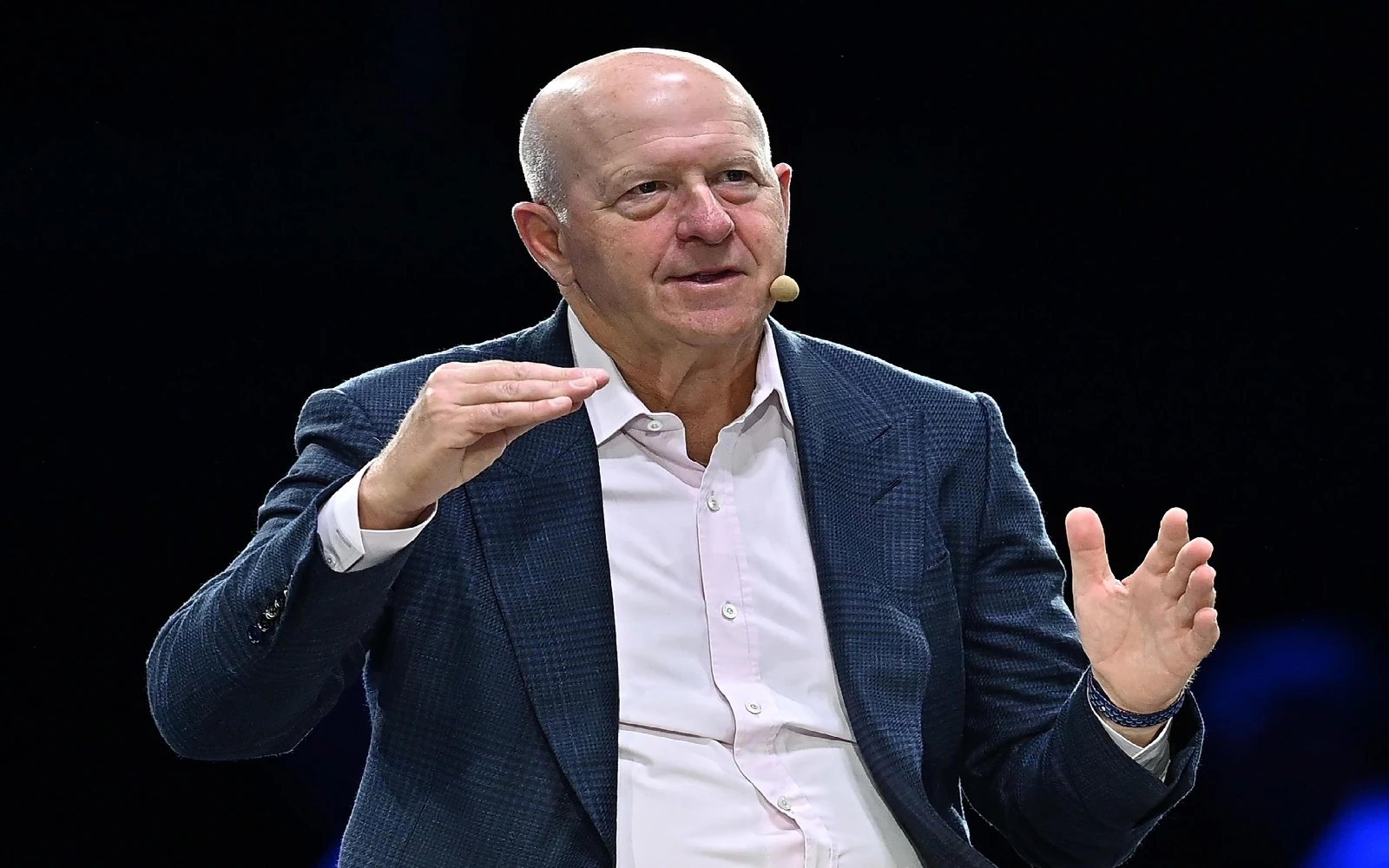
Goldman Sachs CEO Expresses Surprise at Muted Market Reaction to Middle East Conflict
Goldman Sachs CEO David Solomon has voiced his astonishment at the relatively subdued response from financial markets concerning the escalating conflict in the Middle East. Speaking at a business summit in Sydney, Solomon indicated that it might take approximately two weeks for investors to fully comprehend and process the broader implications of the geopolitical turmoil.
“I look at the market reaction, and I’m actually surprised that the market reaction has been more benign given the magnitude of this as you might think,” Solomon remarked. He elaborated that financial markets typically exhibit a muted reaction to geopolitical events unless these events directly threaten economic growth.
Solomon observed that while there’s a cumulative effect from ongoing global events, a significantly harsher market reaction has not yet materialized. “Up to this point, we haven’t seen that cumulative effect,” he stated, acknowledging the inherent difficulty in making definitive predictions due to the numerous unknowns. “I think it’s gonna take a couple of weeks for markets to really digest the implications of what has happened both in the short term and medium term, and I can’t speculate as to how that would play out.”
The conflict has understandably triggered a surge in oil prices, intensifying concerns about inflation as supply chain worries mount. This has led to a downturn in global stock indexes and a strengthening of the US dollar, as investors shift away from riskier assets towards traditional safe-haven investments. Despite these trends, losses on Wall Street have remained relatively modest. For instance, the S&P 500 has seen a dip of less than 1% this week, having recovered some of its earlier declines by the end of trading sessions.
US Economy’s Resilience: A Confluence of Favourable Factors
Solomon attributed the robust state of the US economy to a combination of factors, including a monetary easing cycle and a substantial relaxation of regulatory practices. “Let us put aside what’s going on in the Middle East at the moment,” he urged, highlighting the underlying economic strengths. “We have a confluence of strong macro tailwinds that make the economic growth trajectory of the United States, I think, quite compelling.”
He further suggested a reasonable probability that the US economy might experience a period of overheating this year. This scenario could potentially lead to inflation figures exceeding current consensus expectations. “There is definitely a reasonable probability this year that the US economy runs a little bit hot. And with that, is it possible that inflation can wind up being slightly higher than the consensus expectation? Yes.”
The economy’s inherent resilience has also contributed to generally positive performance in private credit portfolios across the United States. However, Solomon expressed a degree of concern regarding potential weakening of lending standards. He noted that during periods of economic slowdown or recession, a more transparent view of these weakened lending standards would emerge. This concern stems from the competitive pressure to deploy capital, which can sometimes lead to a relaxation of underwriting criteria. “Lending standards come down because there’s a competition to deploy capital,” he explained. “I’m a little concerned about that … when we do have a slowdown, if we do have a recession, you’ll have more visibility on some of those places where lending standards have weakened.”
Artificial Intelligence: A Complex Impact on Bank Headcount
Turning his attention to the transformative power of artificial intelligence (AI), Solomon predicted that it would significantly disrupt the labour market in the short term, particularly impacting white-collar professions. However, he tempered these predictions by stating that AI is unlikely to create a long-term “labour gap.”
Goldman Sachs has already taken steps to integrate AI into its operations, exemplified by a partnership with AI company Anthropic. This collaboration aims to develop AI-powered agents designed to automate various processes, including client onboarding.
Solomon acknowledged that the immediate effects of AI on the bank’s workforce would be “complicated.” He refrained from speculating on precise headcount figures, stating, “I’m not going to sit here and speculate and say the headcount numbers are going to look exactly like this, because we don’t put that out publicly.” Instead, the focus is on enhancing productivity and capacity. “But what we’re trying to do is create more capacity to move people to different places,” he clarified. “The headcount won’t necessarily be that different. It’ll just be more productive.” This suggests a strategic reallocation of talent and an emphasis on leveraging AI to augment human capabilities rather than simply replacing them.