Nagdhunga-Sisnekhola Tunnel Nears Completion, Operational Readiness Hinges on Service Provider Selection
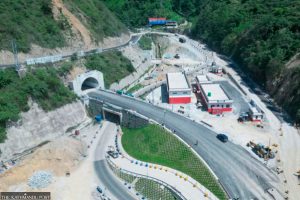
The much-anticipated Nagdhunga-Sisnekhola tunnel road project in Nepal has reached a remarkable 98 percent completion, signaling a significant milestone in the nation’s infrastructure development. However, the tunnel’s official opening remains contingent upon the selection of a qualified service provider tasked with its ongoing management and operation. Authorities have indicated that the operational date will be formally announced only after this crucial selection process concludes.
The intricate process of identifying a suitable operator is currently underway, with ten companies actively participating in the tender. The Nagdhunga Tunnel Construction Project is meticulously evaluating these entities through a technical assessment phase. While an initial target of January 29 for the completion of this technical evaluation was set, the process has extended slightly. Project Director Saujanya Nepal expressed optimism that the assessment would be finalized within the coming week.
“At present, we do not know how many companies will be shortlisted. This will be clear only after the technical evaluation ends,” Nepal stated. “Only then will we open the financial proposals and begin evaluating them.”
Following the technical evaluation, a 15-day public notice will be issued to list the companies that have successfully passed this stage before their financial proposals are opened for review. Nepal explained that due to the international nature of this tender, a 15-day notice period is mandated, a departure from the usual seven days for domestic tenders. The financial proposals are slated to be opened on the sixteenth day after the notice, with the subsequent evaluation expected to take approximately four to five days.
Only those companies that demonstrate technical proficiency and pass the initial evaluation will have their financial bids considered. Upon signing the contract, the selected service provider will be responsible for deploying its personnel to manage the tunnel’s operations.
“Because there are many companies, the technical evaluation has taken some time,” Nepal elaborated, highlighting the complexity of assessing numerous international and local firms. The project initially solicited international tenders for the service provider role on November 2 of the previous year. The original submission deadline of December 17 was subsequently extended to December 31, following requests from both international construction conglomerates and domestic contractors who sought more time for preparation and clarification.
During this extension period, some contractors sought further clarity on specific provisions within the tender documents, leading to another deadline adjustment, this time to January 14. A notable aspect of the current bidding landscape is that all ten foreign companies vying for the contract have established joint venture partnerships with Nepali firms. This requirement is designed to foster knowledge transfer and build local capacity in tunnel management.
“By the last week of March, the company selected to operate the tunnel will be finalised,” Nepal projected. “After that, personnel training will be conducted. During training, the tunnel will operate in test mode so staff can learn to manage it.”
A dedicated period of two months has been earmarked for the comprehensive training of approximately 150 personnel who will be involved in the tunnel’s day-to-day operations. The specific training modules and duration will be tailored based on the chosen service provider’s operational plan and the diverse roles required.
“It depends on which service provider is chosen and how they plan to operate. Different types of work require different staff, and training is arranged accordingly,” Nepal added.
While the Japanese government, a key financier of the project, has stipulated that companies with Chinese government ownership or those on international blacklists are ineligible for selection, a significant portion of the competing firms are indeed Chinese. The current pool of contenders includes six Chinese companies, three from India, and one from Turkey.
Upon the completion of all construction activities by the appointed contractor, the tunnel infrastructure will be formally handed over to the Department of Roads. The mandatory inclusion of Nepali joint venture partners in foreign-led bids is a strategic move to ensure that Nepali technical staff acquire invaluable experience, empowering them to manage such complex infrastructure independently in the future.
The selected service provider will be entrusted with the comprehensive management and operation of the tunnel for a period of five years. Their responsibilities will encompass a wide array of critical functions, including routine maintenance, sophisticated traffic management systems, prompt emergency response and rescue operations, efficient toll collection, and the overall upkeep of both the main tunnel and the 2.8-kilometre access roads that seamlessly connect Kathmandu and Dhading. The operator is mandated to ensure the tunnel’s continuous operation, 24 hours a day, 365 days a year. While the government will bear the operational costs, the operator is obligated to deposit all collected toll revenue daily into the designated account of Road Board Nepal, which will maintain oversight of the tunnel’s performance.
At present, the remaining tasks before the tunnel can be opened to the public include the finalization of the service provider selection, the construction of the toll plaza, and the implementation of robust landslide management measures on the Dhading side of the project. The project authorities have indicated their intention to seek an additional loan from the Japan International Cooperation Agency (JICA) to cover funding shortfalls for landslide management, consultancy services, and other emergent construction requirements.
This proposed additional loan, which necessitates approval from both the government of Nepal and JICA, is still under negotiation. The request amounts to approximately Rs5.5 billion. If approved, the total financial assistance from Japan for the project will escalate to Rs21.5 billion, augmenting the government’s contribution of Rs6 billion to the existing Rs16 billion already provided through concessional loans.
Construction of the Nagdhunga-Sisnekhola tunnel commenced on October 21, 2019, with an initial projected completion timeline of 42 months. The main tunnel spans an impressive 2,688 metres, complemented by an emergency tunnel measuring 2,557 metres. The construction works are being executed by the esteemed Japanese firm, Hazama Ando Corporation.