The Unseen Struggle of a Hostage
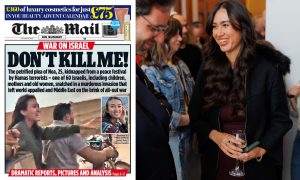
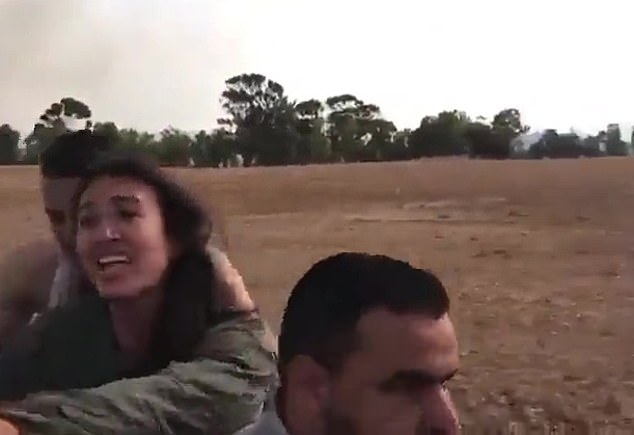
The harrowing image of Noa Argamani being torn away from her boyfriend and kidnapped into Gaza on a motorbike became a symbol of the October 7 atrocity. This powerful image, published by the Mail on Sunday, was shared globally and played a significant role in rallying support for the release of all hostages taken by Hamas.
Yet, while Noa’s face was known worldwide, she remained unaware of the impact of that image during her 245 days of captivity. For those agonizing days, she was held under armed guard in the Strip, completely isolated from the world outside.
“I was shocked,” Noa said, speaking about the defining image for the first time. “Only when I got back home, all my friends and family told me that the whole world saw my video.”
Now, she has revealed how she spent those days in captivity, unaware of the furore over that image. She has spoken in detail for the first time about the horrific events of the day she was taken.
A Life in Captivity
Noa recounted witnessing a fellow captive executed in front of her eyes, nearly dying herself in an air strike, being forcibly starved, and worrying each day that her terminally ill mother, Liora, had died in Israel. Each day, she would try to manifest her freedom through spiritual conversations with God, asking to be home in time for her father, Yaakov’s birthday.
It finally came true when she was rescued in a daring special forces mission on June 8, 2024—the day her father turned 69—and she was able to see 61-year-old Liora before she died the following month.
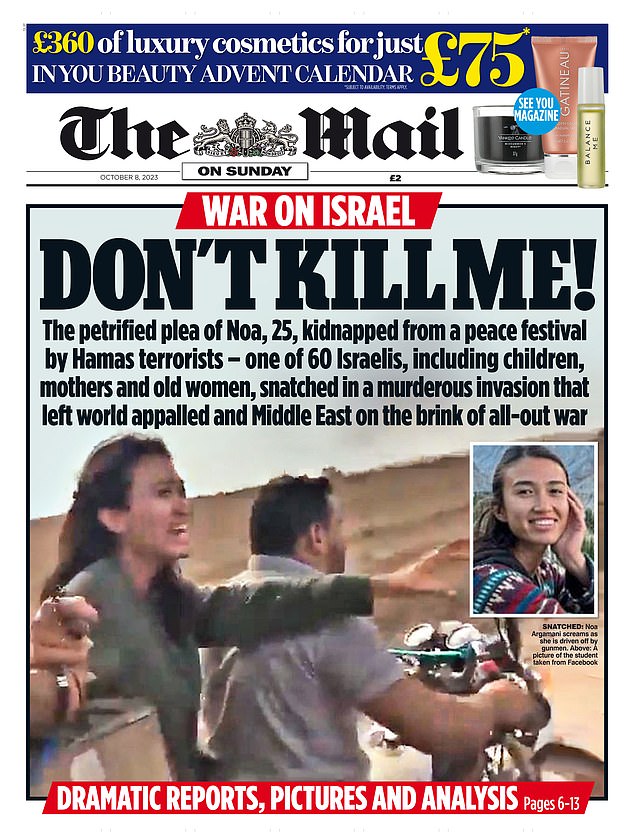
The burden of her unwanted fame was uncomfortable to bear. “I didn’t understand how that moment… a really specific moment of me… how that got so famous,” she said in conversation with journalist Jonathan Sacerdoti this week.
But she decided to “use that stage” to fight for her boyfriend, Avinatan Or, 32, and dozens more who were still in Gaza—immediately traveling to America to meet Donald Trump.
The Day of Capture
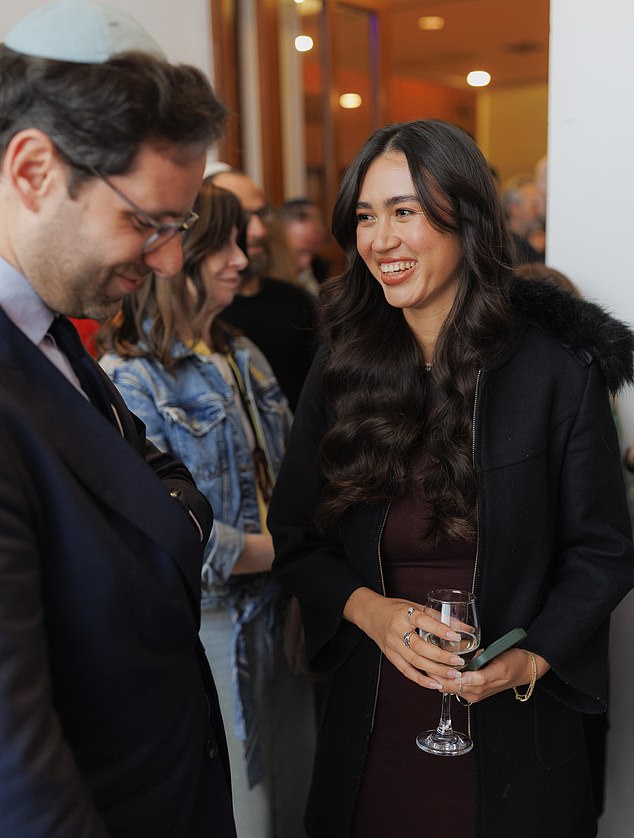
After every single hostage was released—dead and alive—in remarkable ceasefire deals in January and October last year, Noa finally talked about her horrific ordeal at an event at St John’s Wood United Synagogue in London.
She and Avinatan, who hid the fact he was a special forces hero, tried to flee the Nova Festival massacre in a car while on the phone to another friend who took a wrong turn.
“I heard my friend already screaming that he’s seen the terrorist,” Noa told Mr Sacerdoti. Then the line went quiet until she heard “terrorists screaming from his phone: ‘Allahu Akbar!’”
“In that moment, me and Avinatan looked into each other’s eyes, and we knew that my friend was murdered in cold blood,” she said.
Their car got stuck, so they hid in a dried out river bed for hours—but the terrorists found them.
“They threw me onto the motorcycle,” Noa, a software engineering student, said. “That was the last time that I saw Avinatan.”
Life in Captivity
While on the motorbike, Noa “looked around” to get her bearings. “I saw many signs in Arabic on the road. I thought, ‘Okay, I’m not in a good place.’”
She was taken to a house and ordered to hand over her jewellery, shoes, and socks. “They told me: ‘Welcome to Gaza.’ In that moment, I knew that I don’t need to be afraid, I don’t need to cry. There is no place for other emotions. I just need to survive.”
She asked everywhere for Avinatan but got no answer. In her first months, she looked after two little girls, Irish-Israeli Emily Hand, then eight, and Hila Rotem, then 12, who had been kidnapped “with their toys” in their Disney pajamas from their beds in Kibbutz Be’eri.
“While they were kidnapped, they were walking through all the dead bodies from their friends from the kibbutz,” Noa said. “There are some memories that these two little girls will never forget.”
Noa picked up rudimentary Arabic and used it to negotiate with the guards to get the girls pen and paper to distract them. “We were afraid that some of the civilians outside will hear that we speak in Hebrew and come in and kill us,” she said. “So we try to do the best to keep them [the girls] busy.”
Only one guard was nice to Noa, but the terrorists “took him away” when they realized. They went days without food and weeks without showers, moved from house to house.
After the girls were freed in November 2023, she was held with Itai Svirksy, 38, and Yossi Sharabi, 53, until an Israeli air strike hit their home the following January.
Noa and Yossi were stuck under rubble. “We couldn’t breathe,” Noa said. The terrorists pulled her out and she ran “screaming” to Yossi. “It was already too late,” Noa said. “We were able just to rescue his body and in that moment, I lost one of my dearest friends.”
She went on: “I was injured really bad. All my head was open.” Fearing a brain bleed, Noa forced herself not to sleep that night because “I may not wake up in the morning.”
Doctors since said it was a “miracle” she survived as she was given no medical attention.
A terrorist moved her and Itai to another house. “Two days after that, he executed Itai in front of my eyes, and in two days, I lost two of my best friends,” Noa said.
Finding Strength in Faith
“After that, I stayed five months by myself, just wondering what they could tell me at any moment…”
She “found herself talking to God maybe every day” and would be “grateful for the things that I had,” telling Him “thank you for the T-shirt that I have… for the little bit of water that I have.”
“It’s really peaceful to be grateful,” she said.
Noa had no idea of the rescue plans, but in the days before she found herself trying to “manifest that this is over” in time for her father’s birthday.
She would say: “Thank you God that the act is closed.”
When special forces entered, she feared it was a trick by Hamas, but then she saw the Star of David on their uniforms, “how they were full of tears,” and how they hugged her and she knew it was the IDF.
She said the hug “explained something bigger” to her. She realized “for so long” she had been looking for someone who “really cared about” her.
“Because I never felt that hug during all the time that I was by myself,” Noa said.
Her rescue alongside three other hostages was bittersweet as Commander Arnon Zamora died saving them, and Noa said his death “represents Israel.”
“We can’t live joy without the grief, without the sadness,” she said. Noa said seeing her mother was “everything that I wished for every single day.”
“Just to be in this moment, to hug her again, to know that she knows that I’m safe, I’m home and alive, that something that is a present that both of us had from that moment.”
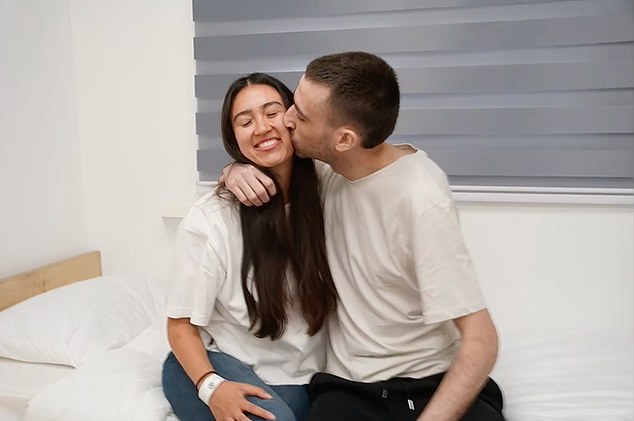
After her mother passed, she traveled to Congress in Washington for Donald Trump’s inauguration and fought for Avinatan, who miraculously was released alive last October.
Noa said since her mother was diagnosed with a brain tumour four years ago, each day she has been “caring for somebody really close to me whose life is really close to death.”
“After Avinatan got back, I looked at him and I said: ‘It’s over. It’s really over right now.’ From that moment on, we can truly heal. We’re not thinking about death any more.”