
Unpacking the Roots of the October 7th Atrocities: A Historical Perspective
The brutal attacks by Hamas on Israel on October 7, 2023, and the subsequent global reactions, including widespread support for the terrorist organisation and condemnation of Israel’s military response, have left many questioning the origins of such unbridled violence. In his meticulously researched book, The Road to October 7, historian Rafael Medoff provides a crucial historical context, arguing that these events are not inexplicable but rather the culmination of centuries of ingrained hatred and systematic indoctrination.
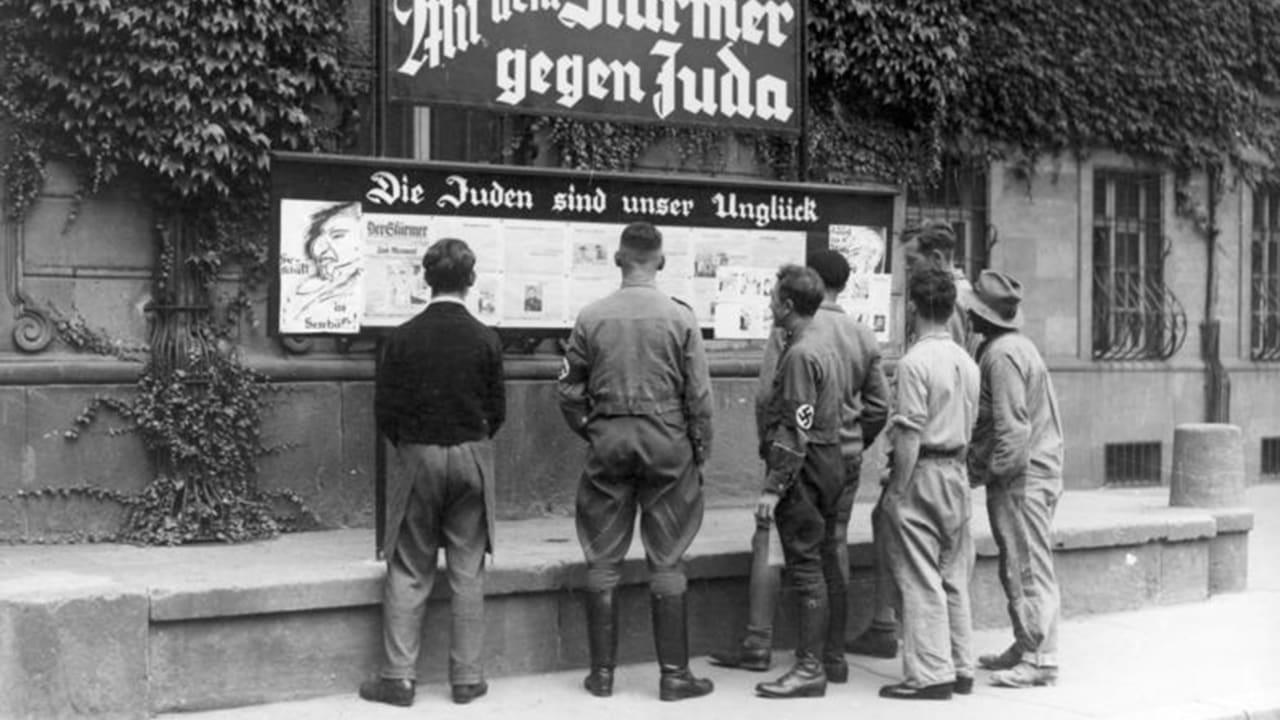
Medoff draws a stark parallel between the events leading up to October 7th and the rise of Nazi Germany in the 1930s. He meticulously details how, over generations, the Palestinian Authority and Hamas have embedded deep-seated hatred of Jews and Israel into the educational curricula provided to Palestinian children. This sustained indoctrination, he contends, is the fertile ground from which such extreme violence springs.
His work delves into the historical patterns of persecution inflicted upon the Jewish people by a succession of oppressors. Medoff posits that the visceral Jew-hatred that forms the core of Hamas’s philosophy is not a new phenomenon but rather fits into a centuries-long trajectory of antisemitism. He specifically identifies education as a primary driver for the persistence of this hatred.
Medoff forcefully argues that the capacity for such atrocities – the butchery of innocent people, the rape and mutilation of defenseless women, the beheading of children – is not innate to human nature. Instead, he asserts, “For thousands of human beings to perpetrate such atrocities, there has to be intensive indoctrination.”
The Long Road to Violence: Indoctrination and its Echoes
The Road to October 7 meticulously traces this path of indoctrination. Medoff writes, “The road to October 7,” he writes, “wound its way through long centuries in which young people who were nurtured on hateful religious and nationalistic teachings grew up to become perpetrators of atrocities against Jews.” This highlights how generations are shaped by the ideology they are exposed to from a young age.
Beyond the direct indoctrination within Palestinian society, Medoff also turns his critical gaze towards contemporary Western institutions, particularly in the United States. He devotes significant attention to the failure of a range of American academic institutions in the aftermath of October 7th. He documents their inability or unwillingness to confront blatant antisemitism exhibited by both faculty and students, and their subsequent failure to protect Jewish students from intimidation and harassment.
A Historian’s Perspective: Medoff’s Background and Insights
Rafael Medoff, a historian in his mid-60s, brings a wealth of expertise to this subject. Born in the United States, he is a recognised authority on the Holocaust, Zionism, and American Jewish history. He is also the founding director of the David S. Wyman Institute for Holocaust Studies in Washington, DC, an organisation dedicated to examining America’s response to Nazism and the Holocaust through scholarly and public-facing projects. Medoff earned his PhD in Jewish history from Yeshiva University and is a fellow at the Finkler Institute of Holocaust Research at Bar-Ilan University in Israel.
In a recent media interview, Medoff discussed his research into the historical ties between some American universities and Nazi Germany in the 1930s. He was asked to connect these findings to the pro-Hamas protests that erupted on university campuses following October 7th. His response was pointed:
“The common denominator,” he replied, “is their leaders’ indifference to antisemitism. In the 1930s, Harvard, Columbia, George Washington University, Wesleyan, and others ignored Nazi antisemitism as they built friendly ties with the Hitler regime, which included inviting Nazi representatives to speak on their campuses. In the aftermath of October 7, these same universities ignored the waves of antisemitism by some of their own students, including the genocidal calls for the annihilation of millions of Israeli Jews.”
This observation underscores a recurring theme of institutional complicity or inaction in the face of rising antisemitism, spanning decades and manifesting in different forms.
Deconstructing the Narrative: Past and Present
Medoff structures his book into two key sections: “The Present” and “The Past.”
The Present: In this section, Medoff meticulously documents the rise of Hamas, the horrific events of October 7th, and the pervasive “hate education” that has become embedded within Palestinian society. He also identifies what he terms “Western enablers” – entities such as US universities, human rights non-governmental organisations, and certain women’s advocacy groups – that he argues failed to adequately respond to the atrocities committed by Hamas.
The Past: This section offers a profound historical analysis, arguing that Hamas’s methods and ideology are not isolated incidents but rather bear striking resemblances to historical instances of anti-Jewish persecution. Medoff examines medieval anti-Jewish violence, the pogroms of czarist and Ukrainian history, the systematic extermination of the Holocaust, and a century of Palestinian Arab terrorism. Through this extensive historical survey, he frames the October 7th attacks as the product of a conflict “1,500 years in the making,” directly linking contemporary Islamist and Arab anti-Israel sentiment to what he describes as an “eternal war against the Jews.”
The Enduring Scourge of Antisemitism
Antisemitism, Medoff highlights, is a persistent and recurring phenomenon throughout the history of Western civilisation. Throughout different eras and under varying social and political conditions, outbreaks of antisemitic violence have been fuelled by a diverse range of justifications, including religious, political, racial, and social grievances. Medoff’s focus is not on dissecting the unique causes of each historical episode but on demonstrating the undeniable and enduring persistence of antisemitism across the centuries.
Echoes of the Past: Trophy Victims and Modern Technology
In his media interview, Medoff drew a chilling connection between the Hamas atrocities and medieval practices, specifically mentioning the parading of “trophy victims.” He elaborated on this disturbing phenomenon:
“Going back to medieval times,” Medoff said, “we find descriptions of pogromists parading the corpses of their Jewish victims. It’s a way of boasting of the killer’s achievement. And it’s also a way of inflicting a final indignity on the victims, by demonstrating complete physical supremacy, even in death. Parading victims has been a very common feature in the history of Palestinian Arab violence against Jews. Modern technology has given us a new twist on this old horror – perpetrators of the October 7 atrocities used their cellphones to livestream what they were doing to the Jews.”
This observation powerfully illustrates how ancient forms of barbarism can be amplified and recontextualised by modern technology, making the horrors of the past visible in real-time to a global audience.
An Eternal War, But Not a Losing One
Medoff’s central thesis in The Road to October 7 is that the Hamas pogrom and hostage-taking on that day should not be viewed as an isolated aberration or solely a product of contemporary geopolitical tensions. Instead, he argues they represent the most recent manifestation of a “centuries-old international war against the Jewish people,” a conflict fuelled by an enduring antisemitic ideology and a relentless process of indoctrination.
Despite the grim historical analysis, Medoff concludes his book on a note of cautious optimism. He finds hope in the existence of a Jewish state and a formidable Jewish army that consistently defies the expectations of Israel’s adversaries. He writes, “The statelessness and helplessness that characterized Jewish existence through centuries of crusades, pogroms, and mass murder are phenomena of bygone eras. The war against the Jews may be eternal, but that does not mean that the Jews will lose that war.”
The Road to October 7 offers essential, deeply researched context to a horrific event that will forever be etched into Israel’s history. For anyone seeking a profound understanding of these complex and deeply disturbing events, this book is an indispensable resource.


