
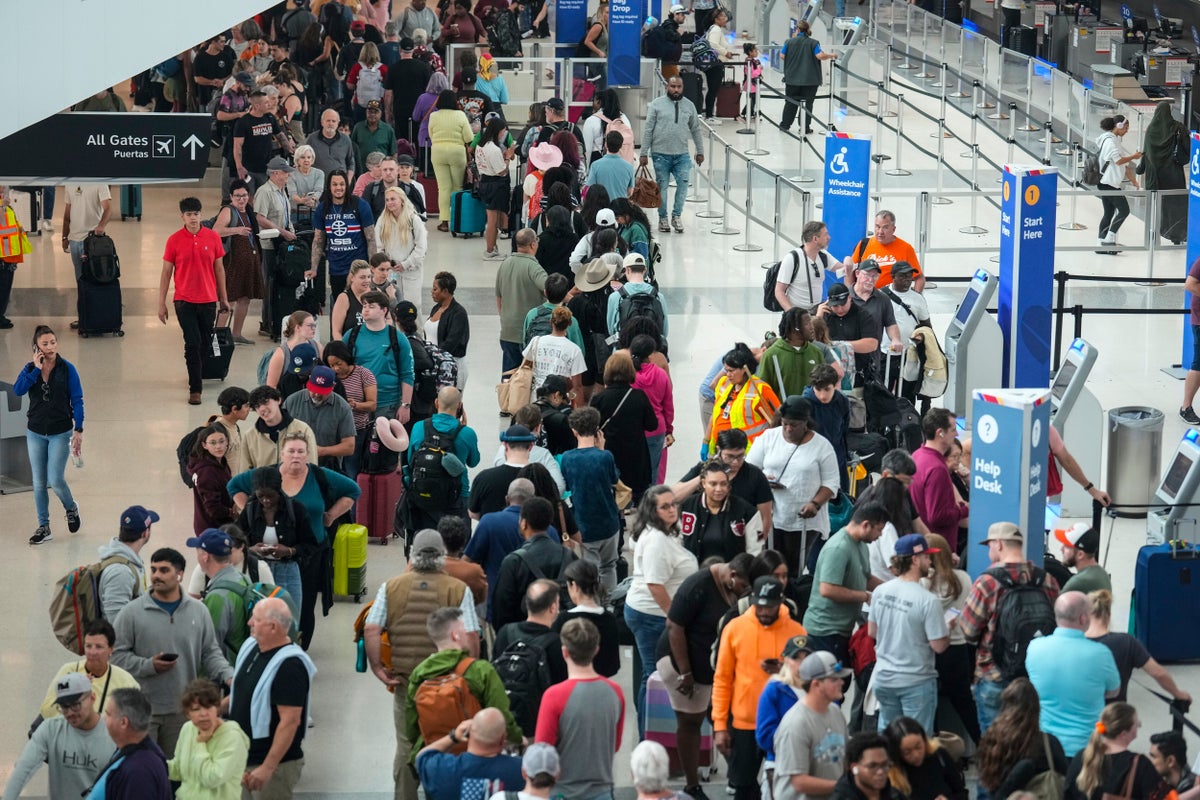
Airport Chaos Mounts as Government Shutdown Hits TSA Workers
Travellers across Australia are experiencing significant delays and frustration at airports as the ongoing shutdown of the Department of Homeland Security (DHS) continues to impact the Transportation Security Administration (TSA). Many TSA employees are working without pay, leading to concerns about their financial stability and the potential for burnout.
President Donald Trump has publicly acknowledged the plight of TSA agents who are continuing their duties despite not receiving their regular paychecks. He specifically lauded Johnny Jones, the secretary-treasurer of the American Federation of Government Employees TSA Council 100, a union representing thousands of TSA personnel nationwide.
In a post on his social media platform, Trump expressed his gratitude to Jones and other TSA agents for their dedication. He stated, “Thank you to Johnny Jones and all of our GREAT TSA Agents who are going to work but not being paid because the Radical Left Democrats refuse to honor the deal that was approved and voted on in Congress.” He further elaborated on his perspective, suggesting that Democrats would prefer to allocate funds towards what he described as “Border Criminals, Murderers, foreign Drug Dealers, and some of the worst people on earth,” rather than supporting the TSA workforce. Trump urged the agents to “Keep fighting for the USA. GO TO WORK! I promise that I will never forget you!!! President DJT.”
Johnny Jones, who also reportedly serves as a TSA officer at Dallas Fort Worth International Airport, has been a vocal advocate for his colleagues. He has spoken out about the severe consequences of the DHS funding lapse.
The Human Cost of the Shutdown
Jones conveyed his appreciation for the President’s attention to the matter, expressing hope that the shutdown could be resolved swiftly to ensure his members receive their hard-earned wages. He shared with media outlets that a significant number of TSA employees live on a tight budget, meaning they are now struggling to meet their financial obligations. Jones described witnessing “desperation in the eyes of my coworkers,” highlighting that many lack the financial reserves to withstand such prolonged periods without income. He voiced his concern that some individuals may never fully recover from the economic hardship.
A Political Impasse
The DHS funding lapsed in mid-February, following the longest government shutdown in US history that federal employees endured just a few months prior. This latest funding gap has created a ripple effect, with Senate Minority Leader Chuck Schumer accusing Republicans of obstructing efforts to pass legislation that would specifically fund critical DHS operations, including the TSA.
Schumer asserted that Democrats have made multiple attempts to pass standalone bills to maintain the functionality of essential DHS services while negotiations continue. He stated, “Six times Republicans came to the floor and blocked them.” He emphasised that TSA officers should not be forced to miss paychecks, disaster relief funds should not be jeopardised, and national security should not be compromised as a result of a political standoff initiated by Republicans.
Conversely, Senate Majority Leader John Thune has countered that Democratic lawmakers are refusing to engage in discussions and negotiations on issues they themselves have raised. Thune described the situation as “kind of a new low, really,” suggesting it is challenging to find solutions when one party is unwilling to participate in dialogue.
The Trump administration has also consistently placed the blame for the funding shortfall on the Democrats. In a recent statement, the White House indicated that Democrats appear to be unconcerned by the difficulties their actions have created for TSA agents.
The Impact on Air Travel
The lack of consistent funding and the uncertainty surrounding paychecks are not only affecting TSA employees but also having a direct impact on the travelling public. Reports of significantly longer wait times at airport security checkpoints have become increasingly common. Passengers are facing hours-long queues, leading to missed flights, increased stress, and a generally negative travel experience. This situation is expected to worsen if the shutdown persists, potentially disrupting holiday travel and essential business trips. The ongoing political deadlock is creating a tangible and disruptive consequence for everyday Australians.


