
National Assembly Announces High-Level Summit to Reform Fiscal and Development Planning Framework
The National Assembly has announced plans to convene a high-level summit aimed at reforming the country’s fiscal and development planning framework. The event, which will take place on April 14 and 15, 2026, is scheduled to be held at the Bola Ahmed Tinubu International Conference Centre. This policy dialogue is being organised by the House of Representatives Committee on National Planning and Economic Development in collaboration with key government institutions.
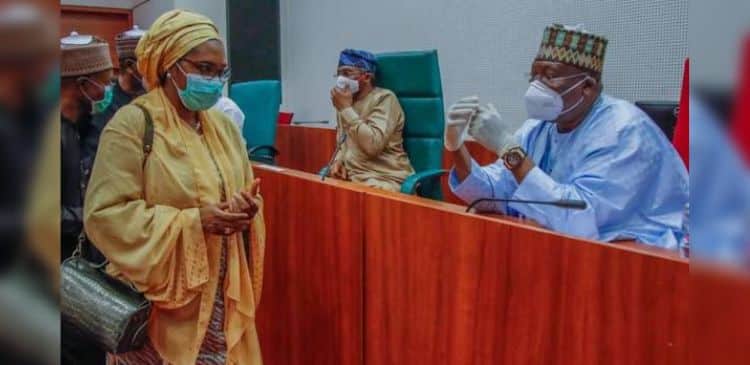
The Chairman of the committee, Gboyega Isiaka, disclosed this information on Monday while addressing journalists at the National Assembly Complex in Abuja. Speaking on behalf of the joint Senate and House committees on National Planning and Economic Development, Isiaka emphasized that the summit would focus on bridging persistent gaps between national plans and budget implementation.
According to Isiaka, the dialogue is expected to bring together stakeholders from across government, the private sector, and policy institutions to chart a more coherent and results-driven development path. He highlighted the need for a shift from the current business-as-usual approach, stating, “We cannot continue on a business-as-usual trajectory. Our growth must not only accelerate but must also be deliberately tied to a well-structured and implementable national plan.”
Isiaka pointed out that Nigeria’s current growth rate of about 3.54 per cent remains inadequate to meet its long-term ambition of building a $1 trillion economy, especially when weighed against a population growth rate estimated at 2.7 per cent. He explained that the initiative—being organised in collaboration with the Office of the Vice President, the Ministry of Finance, the Ministry of National Planning, and the Budget Office of the Federation—would prioritise aligning the country’s development agenda with its fiscal framework.
Reflecting on Nigeria’s history of economic planning—from pre-independence development strategies to Vision 2020 and the Economic Recovery and Growth Plan—the lawmaker noted that many frameworks recorded only partial success due to structural weaknesses, macroeconomic instability, and external shocks such as fluctuating oil prices. “The lessons are clear: plans alone are not enough; execution, consistency, and adaptability are critical. This dialogue is about getting it right going forward,” he added.
The forum, he said, would also provide a platform for robust engagement among policymakers, legislators, heads of Ministries, Departments and Agencies, and experts in finance and procurement, to produce actionable reforms. “We are bringing everyone to the table to build consensus around a planning and budgeting system that delivers real, measurable results for Nigerians,” Isiaka stated.
On his part, Deputy Chairman of the Committee, Clement Jimbo, stressed the importance of strategic planning in national development, warning that weak frameworks could continue to undermine economic progress. “If you fail to plan, you are invariably planning to fail,” Jimbo said, citing global success stories such as Singapore, which he noted achieved rapid transformation through disciplined and forward-looking policies.
He added, “Even if we achieve just one percent improvement from the ideas generated here, it will significantly enhance our planning process and outcomes.” Addressing concerns about Nigeria’s current budgeting model—particularly the envelope system—Jimbo acknowledged its limitations but cautioned against wholesale adoption of alternatives like zero-based budgeting.
“With over a thousand MDAs, adopting zero-based budgeting wholesale could be time-intensive and impractical. What we need is a system that reflects our realities while improving efficiency and accountability,” he said. He revealed that the summit would explore a range of options, including performance-based budgeting, with breakout sessions designed to allow MDAs to share experiences and propose context-specific reforms.
On managing potential oil windfalls, Jimbo said while responsibility lies largely with the executive arm, there are workable strategies to ensure fiscal stability. “There are multiple pathways to managing windfalls effectively, and I am confident that with the right framework, Nigeria can better optimise such opportunities,” he noted.
The planned summit comes amid growing calls from economists, policymakers, and development experts for a comprehensive overhaul of Nigeria’s budgeting system, which has long been criticised for inefficiency, poor implementation, and weak alignment with national development goals. Over the years, Nigeria has struggled with late budget passage, low capital expenditure execution, and a disconnect between approved budgets and actual development outcomes.
Analysts argue that despite ambitious plans, including Vision 2020 and the Economic Recovery and Growth Plan, the country has yet to achieve sustained, inclusive growth due largely to weak fiscal discipline and policy inconsistency. Concerns have also been raised about the dominance of recurrent expenditure over capital spending, as well as the limited impact of public budgets on infrastructure, job creation, and poverty reduction.
The envelope budgeting system—where spending limits are pre-allocated to MDAs—has particularly come under scrutiny for encouraging incremental rather than performance-driven budgeting. In addition, Nigeria’s heavy dependence on oil revenues has exposed its fiscal framework to volatility, with global oil price shocks often disrupting budget implementation and economic planning.
Stakeholders have therefore advocated reforms such as performance-based budgeting, stronger monitoring and evaluation systems, improved revenue mobilisation, and better integration of medium- and long-term development plans into annual budgets. The forthcoming National Assembly dialogue is seen as a critical step toward addressing these longstanding challenges and laying the foundation for a more transparent, accountable, and growth-oriented budgeting system.