
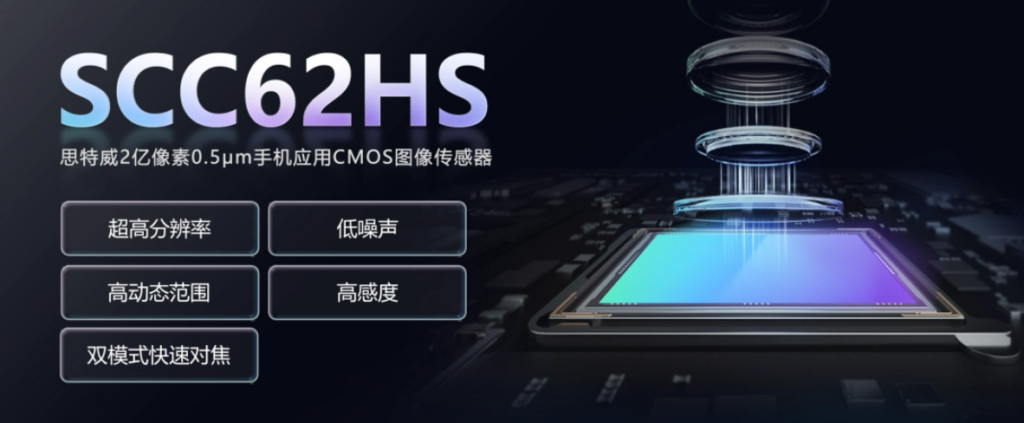

Chinese tech firm SmartSens has thrown its hat into the ring for high-resolution smartphone cameras with the unveiling of its new SCC62HS image sensor. This cutting-edge component is specifically designed for mobile devices and boasts an impressive 200-megapixel resolution, coupled with a suite of advanced imaging technologies aimed at elevating photo and video quality, particularly in challenging lighting conditions.
SmartSens Enters the 200MP Arena
The SCC62HS marks SmartSens’ debut in the highly competitive 200-megapixel sensor market. It’s the first sensor of its kind to be built on the company’s proprietary domestic high-performance Stacked BSI platform. Utilising a refined 55nm Stacked BSI manufacturing process, the sensor features remarkably small 0.5μm pixels, all housed within a 1/1.55-inch optical format. SmartSens has engineered this sensor with a dual focus: capturing incredibly fine details, whether it’s sweeping landscapes or intricate group shots, while simultaneously keeping manufacturing costs in check to facilitate broader adoption in the smartphone market.
The SCC62HS isn’t just about raw megapixel count; it’s packed with innovative technologies designed to enhance image capture. Key among these are:
- PixGain HDR: This proprietary technology is a standout feature, promising to deliver a remarkable dynamic range of up to 86.3dB. Crucially, it’s engineered to minimise motion-related artefacts, a common issue in high-dynamic-range photography, ensuring clearer and more natural-looking images even when subjects are moving.
- SFCPixel: This technology contributes to improved image quality by optimising how pixels gather light and process information.
- AllPix ADAF: This advanced autofocus system is designed to work effectively across a wide spectrum of lighting conditions.
SmartSens asserts that the synergy between these technologies results in significantly improved dynamic range, a noticeable reduction in image noise, and a more responsive and faster focusing performance. The sensor is capable of outputting images at its full 200-megapixel resolution, allowing for the capture of ultra-high-definition content without compromising on intricate detail.
Advanced HDR Capabilities for Any Scenario
A significant advantage of the SCC62HS lies in its sophisticated HDR implementation. Beyond the impressive dynamic range offered by PixGain HDR, the sensor incorporates on-chip dual-frame fusion. This clever integration reduces the processing burden on the smartphone’s main chipset during HDR video recording, which can also translate into more efficient power consumption – a welcome benefit for mobile users.
Furthermore, the SCC62HS offers compatibility with various HDR modes, including Staggered HDR and NDOL HDR. This flexibility ensures that the sensor can adapt to a multitude of shooting scenarios, allowing photographers and videographers to achieve optimal results regardless of the environmental conditions.
Stellar Low-Light Performance and Flexible Autofocus
SmartSens has also placed a strong emphasis on low-light performance. The SCC62HS boasts an impressive sensitivity rating of 3574mV/lux*s, coupled with a remarkably low read noise level of just 0.92e-. According to the company, these specifications are instrumental in preserving image clarity and detail even in dimly lit environments, combating the graininess and loss of definition that often plague low-light shots.
The sensor’s autofocus capabilities are equally robust and versatile. It supports both the aforementioned AllPix ADAF system and a Sparse PDAF (Phase Detection Autofocus) system.
- AllPix ADAF: This system leverages full-pixel focusing, making it particularly adept at acquiring sharp focus in challenging lighting conditions where traditional autofocus methods might struggle.
- Sparse PDAF: This system, on the other hand, employs partial phase-detection pixels. Its primary advantage lies in its power efficiency, making it the ideal choice for everyday use where rapid yet less power-intensive focusing is required.
SmartSens has already commenced the sampling process for the SCC62HS, providing early access to its partners. The company anticipates that mass production of this promising 200-megapixel sensor will kick off in the third quarter of 2026, signalling its commitment to making high-resolution imaging more accessible in the next generation of smartphones.


