
Starmer Navigates Diplomatic Storm and Domestic Cost-of-Living Crisis Amidst Middle East Tensions
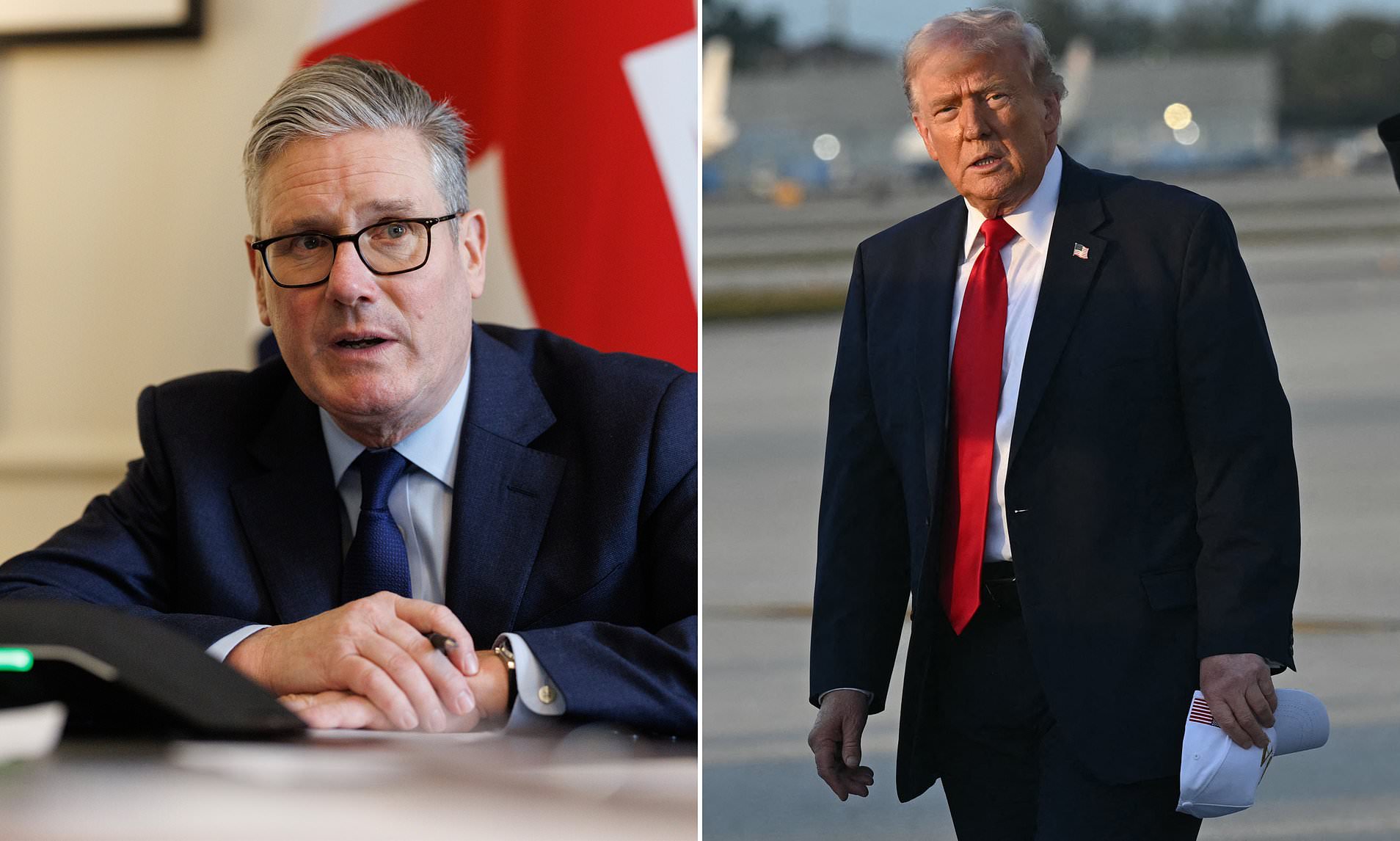
The nation’s political landscape is currently a whirlwind of diplomatic manoeuvring and economic anxiety, as Prime Minister Keir Starmer grapples with the fallout from a public spat with former US President Donald Trump and the escalating crisis in the Middle East. A high-stakes phone call with the US President aimed at mending the “special relationship” followed a week of sharp criticism from Trump after Starmer initially delayed authorising US military aircraft to operate from the UK for operations targeting Iran.
The 20-minute conversation between Starmer and the US President reportedly centred on military cooperation in the Middle East. During the call, the Prime Minister conveyed his “heartfelt condolences” for the lives lost in the ongoing conflict, a grim tally that tragically rose to seven soldiers by last night.
However, the international theatre is not the only battleground for Sir Keir. The Middle East crisis is casting a long shadow over his domestic agenda, specifically his commitment to easing the cost of living for households across Britain. He acknowledged the public’s growing apprehension regarding the potential impact of the conflict on energy bills, a concern that is resonating deeply with many families.
Escalating Middle East Conflict Sparks Global Concern
The situation in the Middle East has taken a dramatic turn in recent days:
- Iran has reportedly appointed Mojtaba Khamenei, son of the assassinated Ali Khamenei, as its new leader.
- Israel has issued a stark warning, vowing to pursue and eliminate those responsible for the Islamic Republic’s actions.
- Reports from Tehran describe its streets as having been transformed into “rivers of fire” following bombardments of its oil depots.
- In retaliation, Iran has launched missile attacks targeting Israel, Kuwait, Qatar, Saudi Arabia, and Dubai.
These developments have amplified fears that Britain could face unprecedented wholesale gas prices across Europe. Furthermore, oil prices are teetering on the brink of breaching $100 a barrel within days, a direct consequence of Iran’s effective blockage of the vital Strait of Hormuz to oil tankers.
Britain’s vulnerability to these price hikes is exacerbated by its comparatively low gas reserves. With only 6,700 GWh (gigawatt hours) in reserve – sufficient for just two days of consumption – the UK is in a less secure position than many other European nations to weather potential supply disruptions.
Prime Minister Addresses Public Worries on Cost of Living
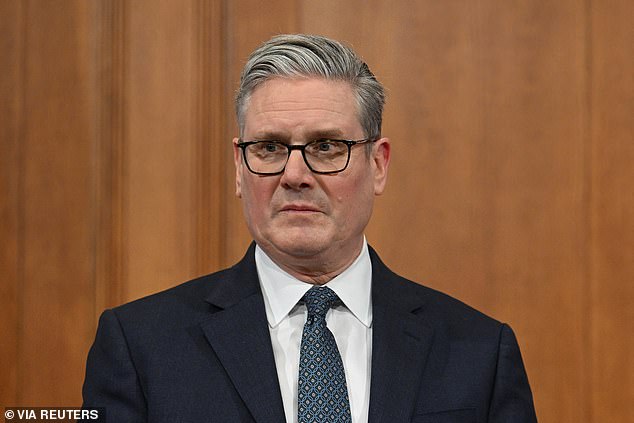
During an anticipated visit to a community centre in London today, Sir Keir is expected to address the nation’s anxieties directly. He is set to state: “I know that people are worried sick for friends and family as the conflict in the Middle East continues. That’s why we’re working round the clock to keep British citizens safe. But people are also rightly worrying what this means for life at home – their bills, their jobs, their communities. No matter the headwinds, supporting working people and their families with the cost of living is always top of my mind.”
Government ministers are reportedly already exploring intervention measures to shield families from escalating energy bills. These discussions are drawing parallels with the financial freezes implemented in the wake of Russia’s invasion of Ukraine. A key pledge in Labour’s manifesto was to reduce energy bills by £300 by 2030, and failing to meet this target could further erode public support.
Indications of the Government’s concern over the war’s impact on prices have emerged, with Energy Security Secretary Ed Miliband reportedly contacting consumer champion Martin Lewis over the weekend. The founder of the Money Saving Expert website shared on social media that he had engaged in a detailed discussion with Miliband about the challenges individuals are facing with domestic energy and heating oil bills.
Mr Lewis highlighted that while current energy bills are insulated from immediate wholesale price spikes, a significant risk looms at the end of spring when the summer price cap is determined. He warned, “If rates haven’t dropped back down by May, and it looks like it’ll stay high so the October price cap will rise too, and no cheap fixes are available, then things get into real problem territory. The Government needs to be (and I suspect is starting to) planning now for that eventuality in case more hard-core intervention is needed.”
Energy Security and UK’s Gas Reserves
The geopolitical tensions have already had tangible impacts on global energy markets. Last week, Qatar was compelled to shut down its colossal liquefied natural gas (LNG) plant following an Iranian drone attack. Simultaneously, Israel’s strikes on Tehran’s oil facilities yesterday cast a dense pall of black smoke over the capital’s skyline.
This aggressive posture prompted Iran to issue a direct threat of retaliation against oil sites in neighbouring countries if the attacks persisted. Ebrahim Zolfaghari, a spokesperson for Iran’s central military command, stated on state television: “If you can tolerate oil at more than $200 per barrel, continue this game.”
Natasha Fielding, a gas price expert at the commodity consultancy Argus Media, elaborated on the UK’s precarious position. “The UK’s limited gas storage makes it more exposed to global gas and LNG supply disruptions in winter than the rest of Europe,” she explained. “The UK cannot rely on its storage to meet demand if it gets cold, so it must be able to secure LNG cargoes ahead of other European countries, no matter the cost.”
Despite these concerns, the Government has maintained that gas supplies remain secure. The Department for Energy Security and Net Zero issued a statement categorically refuting claims that the UK possesses only two days of gas supply. They asserted, “We have a diverse energy mix and are confident in our security of supply.” National Gas, responsible for Britain’s gas network, echoed this sentiment, stating that current storage levels are “broadly in line with what we would expect at this point in the year and are comparable to this time last year.” They further emphasised that storage constitutes a minor portion of the UK’s diverse gas supply, with the majority sourced from the UK Continental Shelf and Norway, supplemented by LNG, interconnector pipelines with continental Europe, and storage facilities.
Diplomatic Repercussions and the “Special Relationship”
The recent phone call between Sir Keir and Mr Trump was the first since the previous Saturday, when the Prime Minister initially declined a request from the then-President for US aircraft to operate from RAF Fairford in Gloucestershire and Diego Garcia in the Chagos Islands. Although Starmer reversed his decision a day later, his initial refusal reportedly provoked a barrage of criticism from Trump.
The former President expressed his “very disappointed” sentiments, labelling Starmer as “not helpful” and lamenting the perceived peril to the “special relationship.” He characterised the UK as “very, very unco-operative,” pointedly remarking, “This is not Winston Churchill that we’re dealing with.”
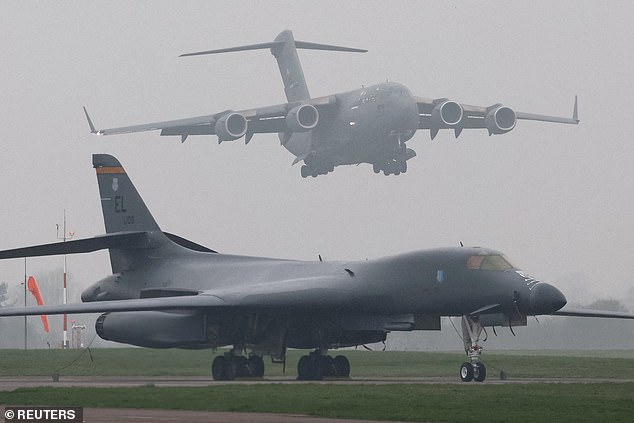
In the aftermath of these exchanges, four B-1 bombers have landed at RAF Fairford. The UK is also dispatching a Merlin helicopter to the Middle East and deploying HMS Dragon to safeguard the Akrotiri base in Cyprus. Furthermore, the Ministry of Defence confirmed that UK forces successfully intercepted an attack drone targeting Iraq.
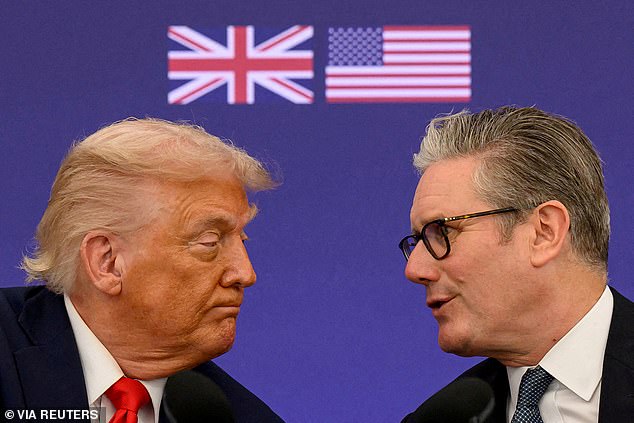
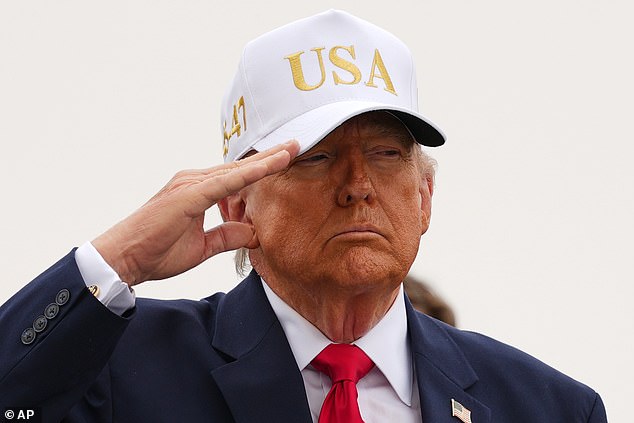
However, following a statement from the MoD indicating that preparations for the deployment of the aircraft carrier HMS Prince of Wales were being accelerated, Mr Trump posted a terse message: “That’s OK, Prime Minister Starmer, we don’t need them any longer – But we will remember. We don’t need people that join Wars after we’ve already won!”
Lord Dannatt, former head of the Army, voiced his frustration, stating, “It is so frustrating, because America is an important ally of ours. They need us. We need them. And Keir Starmer standing on a narrow legal point has ruined that relationship.” In contrast, Foreign Secretary Yvette Cooper offered a pragmatic perspective, remarking, “The thing I’ve learnt doing this job is that you have to focus on substance and not on social media posts.”
Amidst the diplomatic fallout, Sir Keir faces continued pressure to reconsider the King’s upcoming state visit to America next month, given the former President’s controversial behaviour. Liberal Democrat leader Sir Ed Davey argued that such a visit would be perceived as a significant diplomatic victory for President Trump, stating, “A state visit from our King would be seen as yet another huge diplomatic coup for President Trump. It should not be given to someone who repeatedly insults and damages our country.”


