
Internal Labour Critiques Reveal Deep-Seated Concerns Over Party’s Direction and Economic Strategy
Leaked correspondence and internal discussions, revealed in documents pertaining to Lord Mandelson’s appointment as US ambassador, have exposed significant internal criticism within the Labour Party regarding its strategic direction and approach to economic policy. The revelations, contained within a substantial dossier, offer an unflattering glimpse into the inner workings of a party grappling with leadership questions and its core policy tenets.
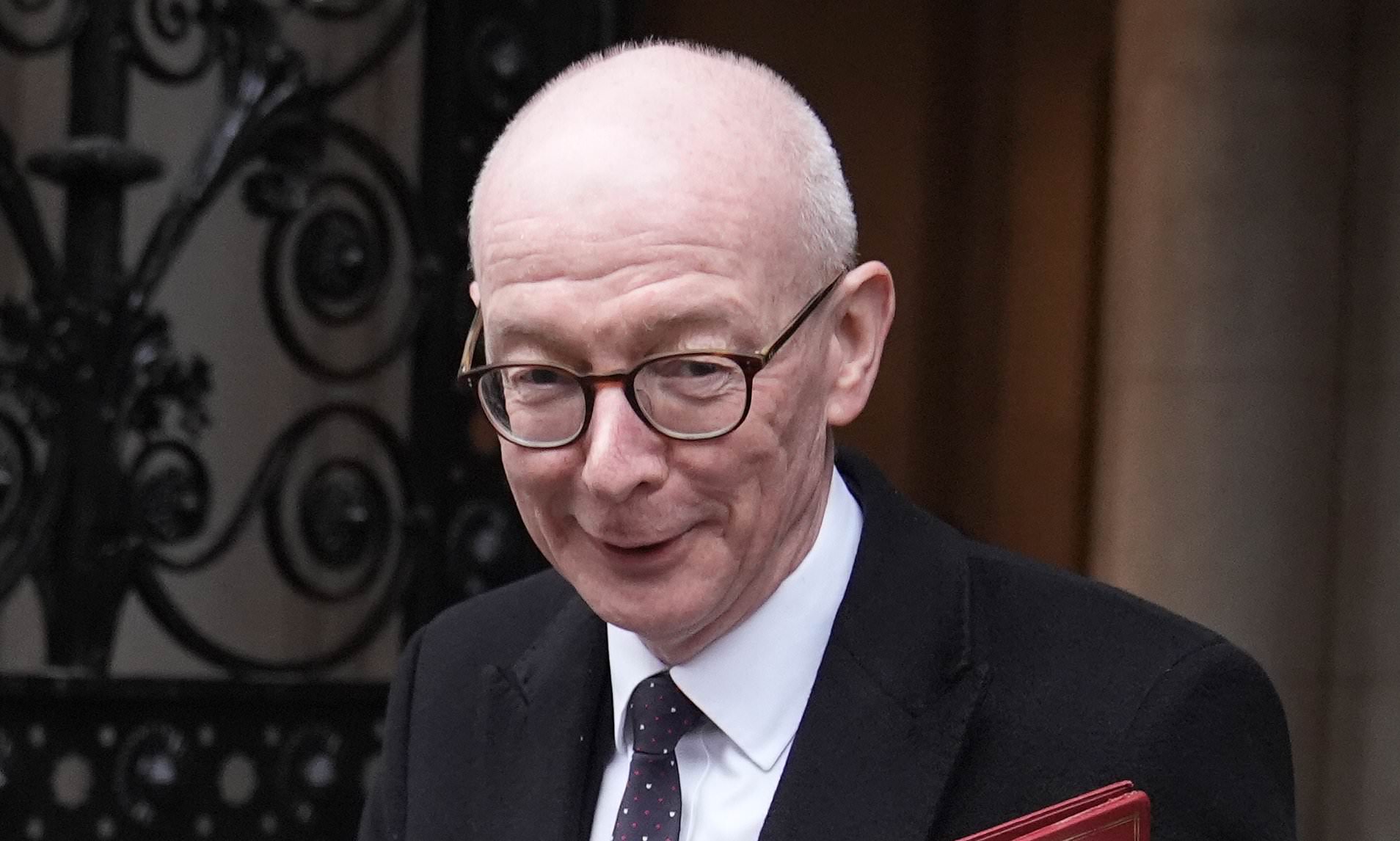
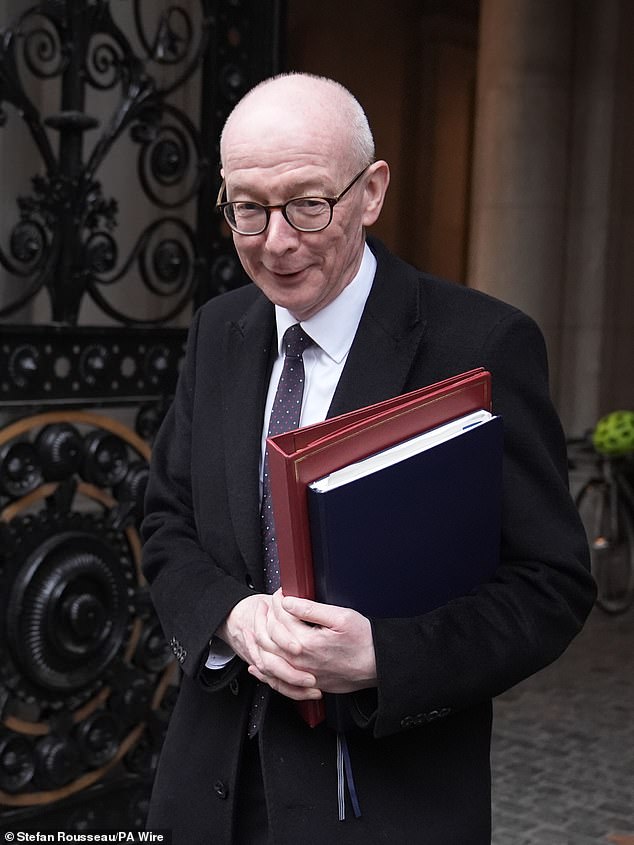
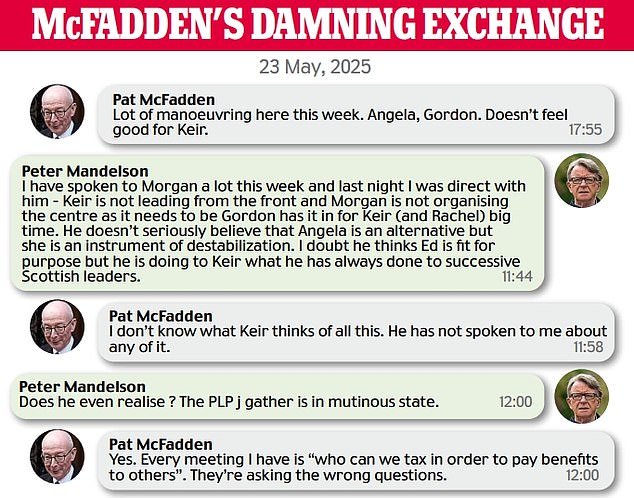
A senior Cabinet minister, identified as Pat McFadden, who now holds the position of Work and Pensions Secretary, reportedly stated that Labour’s meetings were dominated by a singular, and in his view, misguided, question: “who can we tax in order to pay benefits to others.” This sentiment, articulated in conversations with Lord Mandelson, suggests a party focused on redistribution rather than fundamental economic growth.
This critical assessment echoes a notorious note left by former Labour Treasury minister Liam Byrne for his successor in 2010, which famously read: “I’m afraid there is no money… Good luck!” The parallels drawn by critics between these two instances underscore a perceived ongoing struggle within Labour to manage the nation’s finances effectively.
The Conservative Party has seized upon these revelations, branding Labour as “the welfare party.” The timing of the release, coinciding with the extensive documentation surrounding Lord Mandelson’s ambassadorship, has amplified the scrutiny.
Further details emerging from the Mandelson Files indicate that senior Labour figures, including Mr McFadden during his time as Chancellor of the Duchy of Lancaster, had contemplated radical fiscal measures. Among these were proposals for a “huge bank levy” intended to fund initiatives like the winter fuel allowance, and discussions around scrapping the two-child benefit cap.
Mr McFadden is quoted as telling Lord Mandelson that such actions would amount to “abandoning long-term growth for short-term [party] management.” This admission highlights a perceived tension between immediate political expediency and sustainable economic development within the party’s decision-making processes. These candid exchanges between Mr McFadden and Lord Mandelson, a seasoned figure from the “New Labour” era, provide an embarrassing insight into the perceived failings of the current Labour leadership, under Sir Keir Starmer.
Lord Mandelson himself is depicted as expressing significant concerns about the party’s trajectory. In correspondence from May 2025, he reportedly communicated directly with Morgan McSweeney, Sir Keir Starmer’s former chief of staff, stating that “Keir is not leading from the front and Morgan is not organising the centre as it needs to be.” Mandelson further questioned whether the Prime Minister was aware of the “mutinous state” within the Parliamentary Labour Party (PLP).
Mr McFadden’s response to these observations was stark: “Yes, every meeting I have is ‘who can we tax in order to pay benefits to others’. They’re asking the wrong questions.”
Mandelson’s critique extends to the broader leadership, suggesting that “It stems from the top and Keir lacks verve as does the Cabinet as a whole.” He called for “more dynamism and can-do optimism from the Government. More panache.” The architect of New Labour also alluded to Sir Keir’s past visit to the US, suggesting it was orchestrated to avoid “any encounter with journos that might involve him answering a question.”
The documents also touch upon internal party rivalries and potential destabilisation efforts. Mandelson, discussing former Prime Minister Gordon Brown, suggested that Brown “has it in for Keir (and Rachel [Reeves, the Chancellor]) big time.” While he doubted Brown believed Angela Rayner was a viable alternative leader, he saw her as an “instrument of destabilisation” and questioned Ed Miliband’s suitability for leadership. These remarks were in response to Mr McFadden’s observation of “lots of manoeuvring here this week. Angela, Gordon. Doesn’t feel good for Keir.” Mr McFadden admitted he was unsure of Sir Keir’s awareness of these dynamics, stating, “I don’t know what Keir thinks of all this. He has not spoken to me about any of it.”
The internal discussions also addressed the government’s handling of a welfare Bill. The proposed cuts to benefits had triggered a significant backbench rebellion, forcing Sir Keir into a policy U-turn. Mr McFadden described the situation as having no positive outcome: “Defeat, pull Bill or gut it – all destroy his [the PM’s] authority.” Mandelson expressed skepticism about a proposed amendment plan by Mr McSweeney, warning that if the Bill failed a vote, “I am not sure that Keir survives that.”
The release further reveals that Mr McSweeney, who was reportedly instrumental in Sir Keir’s decision to appoint Mandelson to Washington, had shared a document with Mandelson that indicated a lack of faith in Sir Keir’s ability to reform Downing Street. Mandelson’s assessment of other key figures in Number 10 was equally critical, suggesting that “None of them really know what Keir thinks or wants. In fact most of them don’t think Keir knows what he wants.”
Concerns about the broader economic outlook were also voiced. Following a spring statement and the introduction of global tariffs by Donald Trump, Mandelson reportedly stated, “I was very worried about the economy. Confidence is being lost.” Reflecting on Labour’s disappointing local election results from the previous year, Mandelson critiqued the party’s messaging: “The problem is that when you say ‘stay the course’ people are not clear what the course is. The mantra is Plan for Change. But what is the plan?” He emphasised that “The key to turn is an economic one but I felt when Rachel [Reeves] was here that she was on a growth mission but without an argument about where the growth will come from or how.”
Mandelson’s overarching assessment of Number 10 was that “It is beleaguered and bereft. It requires complete revamp.”
In response to the revelations, a spokesperson for Mr McFadden stated that he had “said publicly many times that the question we should ask is not what are you entitled to, but how can we change your life?”
Baroness Davidson, the former Scottish Conservative leader, commented on the release, stating that Mr McFadden’s words, “‘Every meeting I have is ‘who can we tax in order to pay benefits to others?’ ‘ It should serve as this Labour government’s epitaph.’”


