
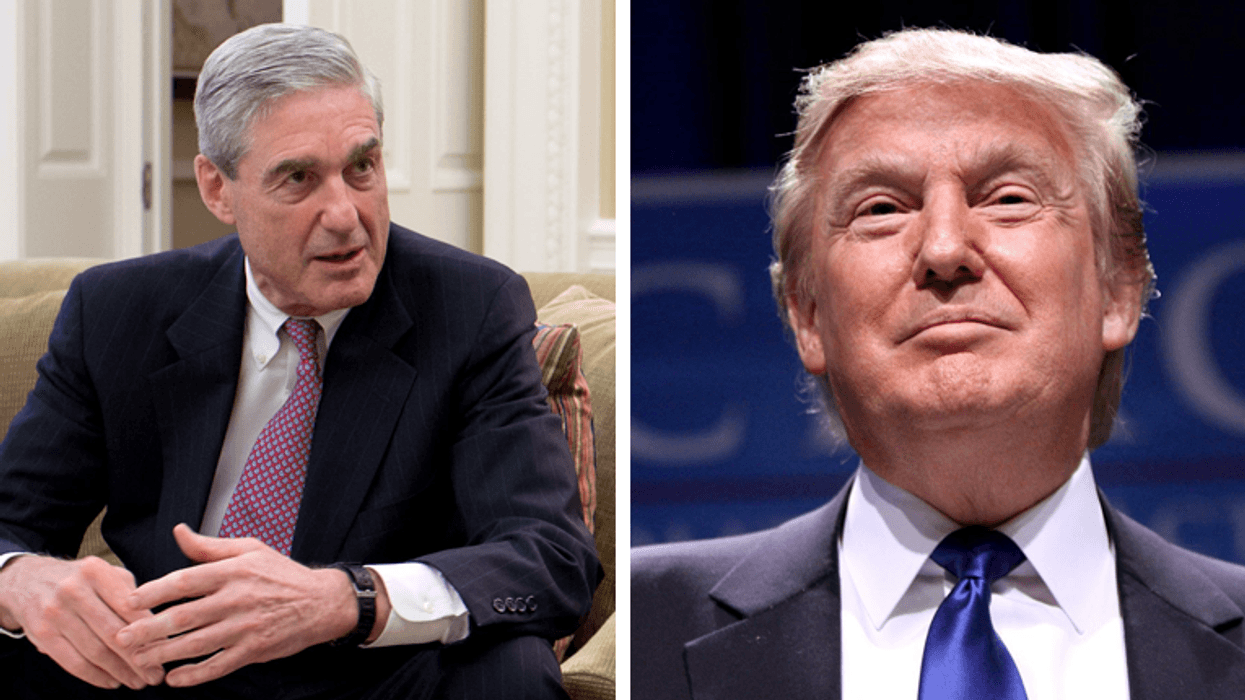
A former advisor to President Donald Trump has voiced his belief that the President made a critical error in the early stages of the Russia investigation, an error that ultimately rendered a proposed compensation fund unnecessary. Sam Nunberg, who served as a political advisor during Trump’s 2016 presidential campaign and was later subpoenaed as part of Special Counsel Robert Mueller’s investigation, stated that Trump possessed the full authority to terminate Mueller’s probe from the outset.
“Frankly, he should have done it during the transition,” Nunberg asserted, adding that he was advised to do so at the time but neglected to act. He maintains that there was no conspiracy or collusion with the Russians, making the continuation of the investigation “absolutely ridiculous.”
Nunberg further elaborated on the handling of the investigation, specifically referencing the announcement of the probe. While not directly blaming then-Attorney General Jeff Sessions, he pointed to his deputy, Rod Rosenstein, as the individual responsible for the manner in which the investigation was made public. Nunberg believes that, at a minimum, individuals subjected to such investigations should have their legal fees reimbursed, especially if they are deemed victims of “lawfare.”
Reports suggesting Nunberg had applied for compensation from a government fund were clarified by the former advisor. He explained that “there was no fund” at the time of his statements. However, when questioned by The Wall Street Journal about the prospect of applying, he indicated that if a fund were to be established and applicable to the Mueller investigation, he would have submitted an application.
Compensation for Those Investigated
Nunberg strongly argued that individuals investigated by the Mueller probe deserve financial compensation, asserting that the investigation should never have been initiated. He expressed a belief that “at a minimum, everyone who was either investigated or a witness should be compensated.” While he doesn’t fault the “rank-and-file staff” of the investigation, he highlighted the significant personal and professional toll it took on those associated with Donald J. Trump. “Any association with Donald J. Trump meant you were going to have to hire a white-collar attorney,” he stated.
He shared his personal experience, detailing the professional ramifications he faced. “I had to inform my clients, as a fiduciary duty, that I’ve been called into the investigation. Things like that,” he recalled. Nunberg described the situation as “extremely unfair” and “arbitrary,” reiterating that the investigation was unnecessary.
A Call for Non-Partisan Compensation
Crucially, Nunberg advocated for compensation eligibility to be independent of political affiliation. “If it’s a political witch hunt, yeah. I think there should be some kind of compensation fund for it, and I don’t care what party the people are from,” he declared.
The Controversial $1.8 Billion Fund
News emerged on Monday that a proposed $1.8 billion fund, initially intended as a settlement in a case involving President Trump and the IRS, had been temporarily cancelled. Nunberg expressed gratitude for the fund’s existence, acknowledging the President’s willingness to include it as part of a settlement with the IRS. He noted, “He didn’t have to do that.”
However, he also offered constructive criticism regarding the fund’s inception. Nunberg suggested that clearer guidelines should have been established when the fund was announced or filed with the court, specifying who the potential recipients might be. He felt the Justice Department could have managed the process more effectively.
The $1.8 billion fund itself was a subject of considerable controversy. President Trump established it as part of a settlement with the IRS, a body he had sued for $10 billion. The lawsuit stemmed from allegations that a contractor had leaked his tax returns during his first term. Simultaneously, the fund was linked to the Justice Department, an entity Trump directly controls. The jurist overseeing the case, Judge Kathleen M. Williams, had mandated that all parties, including the IRS, the Justice Department, and Trump’s legal team, appear in court on May 20th. This appearance was to ensure the legality of any proposed settlement, prompting a rush to finalise an agreement before the judge’s deadline.
Upon its announcement, the fund faced a barrage of legal challenges and scrutiny from both sides of the political aisle in Congress. Legal experts raised concerns that the settlement could potentially violate the principle of separation of powers and may have been construed as illegal self-dealing.
Related Developments and Commentary
- Is Trump Trapped? He’s Hemmed in by Bad Advice, With No Way Out
- Former Campaign Aide Admits Trump May Have Colluded with Russia
- Mueller is reportedly probing the Trump campaign’s seedy ties to the NRA — which has its own Russia problems
- ‘If I were the White House, I would be concerned’: Ex-Trump aide gets spooked after Russia probe testimony


