
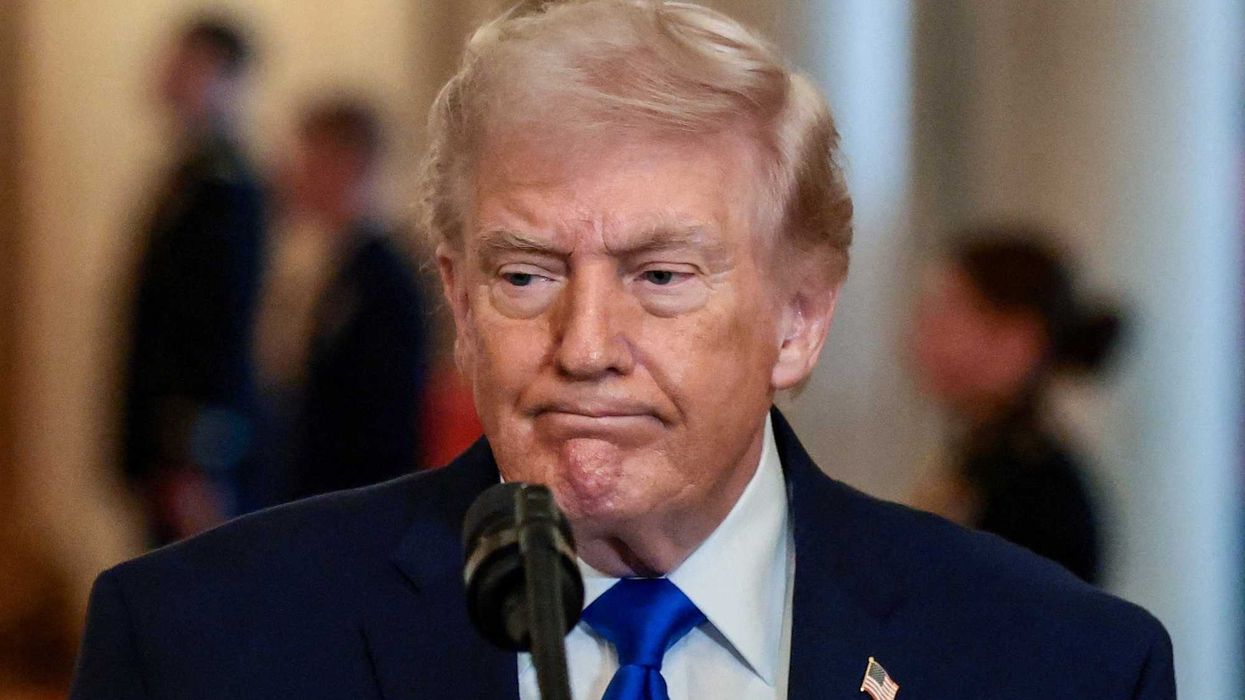
The Trump administration’s controversial $1.8 billion “slush fund” is reportedly on hold, with sources indicating it’s “dead for now.” However, this development has sparked debate among political commentators and legal experts, with many suggesting that the reprieve might be temporary and that further legislative action may be necessary to permanently shut down the controversial initiative.
Senate Republicans, in particular, are reportedly seeking assurances that the administration won’t revive the fund in the future. Jake Sherman, founder of Punchbowl News, shared his observations, noting that while the administration stated they would “abide” by the ruling, there’s a strong sentiment among Republican lawmakers that legislative safeguards are still required.
Senior congressional reporter for Punchbowl echoed this, suggesting that the current situation might not be sufficient to appease enough Senate Republicans. Reese Gorman of NOTUS agreed, stating, “This won’t satisfy Senate R’s.”
The fund has faced widespread bipartisan opposition, primarily due to concerns that it could be used to benefit individuals involved in the January 6th Capitol riot. A prominent Florida editorial board went as far as to label it “the biggest heist in history.” This shared outrage has led to an unusual alignment, with Democrats proposing “imaginative” plans to counter the fund and Republicans expressing vocal pushback.
The turning point appears to have been a threat from several Republican Senators to block a crucial immigration and border control budget reconciliation bill, a key legislative priority for the GOP. This obstruction has now been removed, paving the way for the potential passage of the $70 billion bill. However, another significant hurdle remains: $1 billion allocated for security at Trump’s White House ballroom.
This ballroom security funding has proven to be a contentious point, with public opinion polls indicating an overwhelming 2-to-1 opposition to the project. With the midterm elections on the horizon, Congressional Republicans are under pressure to mitigate the negative impacts of ongoing global conflicts and rising inflation. The elimination of the slush fund offers a much-needed opportunity to focus on their packed legislative agenda and alleviate some of the political pressure as November approaches.
The Nuance of “For Now”
Despite the celebrations among opponents of the fund, some experts are cautioning against premature declarations of victory. Ryan Goodman, Chair Professor at NYU Law, pointed out that the ruling might be a temporary order pending further litigation. He noted, “Reporting sounds broader than complying with temporary order, but instead responding to political concerns from Republicans on Hill etc to drop the fund.”
Kyle Cheney, senior legal affairs reporter for Politico, further clarified the situation, emphasizing that the court has not definitively ruled the fund to be dead. Instead, the judge has issued a two-week pause on the fund while legal complexities are sorted out. Cheney stressed that compliance with this temporary order does not equate to the permanent termination of the fund.
Key Players and Their Stances
Senator Mark Kelly (D-AZ): A vocal opponent of the administration, Kelly has been a frequent target since advocating for military service members to refuse unlawful orders. His Communications Director, Jacob Peters, indicated that Senator Kelly has a legislative solution ready for the situation.
Senate Majority Leader John Thune (R-SD): Thune reportedly communicated to President Trump that the slush fund needed to be shut down to avoid jeopardising his budget reconciliation efforts. Thune stated his views were clear and that the administration shutting down the fund themselves was the preferable course of action.
Republican Senators: A bloc of Republican Senators are reported to have threatened to block the immigration and border control bill, a significant factor in the administration’s decision to halt the fund.
Democrats: Known for their “imaginative” strategies, Democrats have been actively seeking ways to dismantle the slush fund, often collaborating with Republicans on this issue.
The Path Forward
The current situation presents a complex legislative landscape. While the immediate threat of the slush fund appears to have receded, the possibility of its revival remains a concern for many.
The focus now shifts to the upcoming budget reconciliation, where Republicans will likely seek to ensure that mechanisms are in place to prevent the administration from reintroducing similar initiatives. The fate of the $1 billion for White House ballroom security also remains a point of contention, adding another layer of complexity to the legislative week ahead. The coming days will be crucial in determining whether the temporary pause on the slush fund translates into a permanent resolution, and how the remaining legislative hurdles will be overcome.


