
Sussan Ley’s Resignation Triggers By-Election, Posing Early Test for New Liberal Leader Angus Taylor
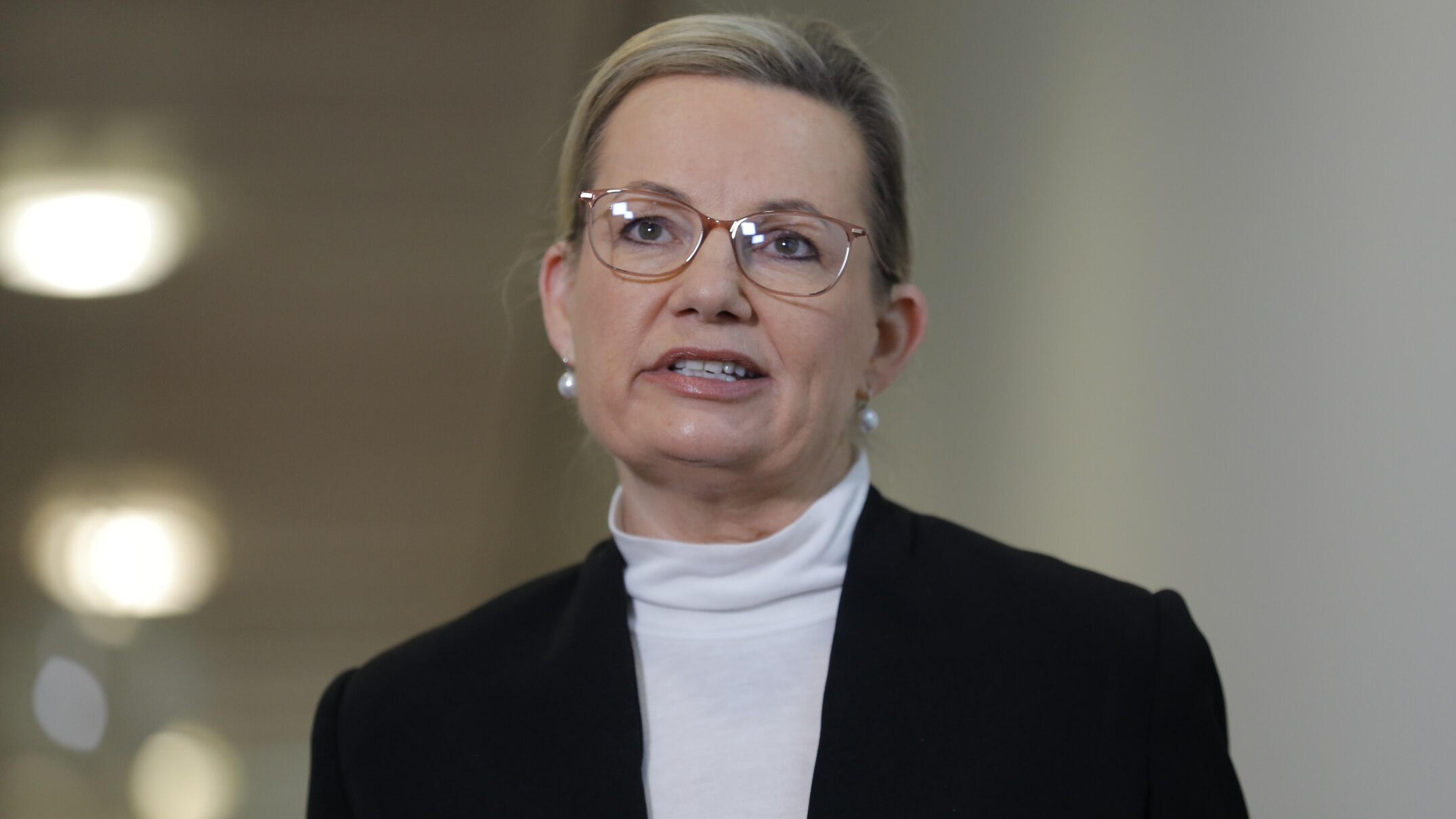
Just two hours after being elected as the new Liberal leader, Angus Taylor faces his first significant electoral challenge, surprisingly emerging from the very politician he replaced. Sussan Ley, the former Liberal leader, has announced her intention to resign from her seat of Farrer in the coming weeks, triggering a by-election in her vast western New South Wales electorate. This move promises to make for a potentially intricate and hotly contested election.
Ley’s tenure as Liberal leader was notably brief, lasting only a few weeks longer than Alexander Downer’s in 1994-95 and slightly less than Brendan Nelson’s post-2007 election defeat. However, her time as the federal member for Farrer is the second longest in the seat’s history. Farrer was previously held by the Nationals’ former Deputy Prime Minister, Tim Fischer, until his retirement in 2001.
The dynamic of the 2001 election was shaped by the Coalition agreement at the time, which prevented both parties from contesting the same seat. In 2001, both Coalition partners agreed to contest Farrer. Ley, a Liberal, comfortably secured the primary vote. However, the distribution of Labor preferences significantly narrowed her victory, leaving her with a slim margin of just 206 votes. This precedent means that with the seat now becoming vacant, both the Liberal and National parties are likely to vie for Farrer once again.
A Contested Landscape: Coalition Partners Eye Farrer
The electorate of Farrer encompasses parts of two state electorates: Albury and Murray. Albury, centred around the regional hub of the same name, is currently held by the Liberal Party. The other, Murray, has a strong historical connection to the Nationals but is presently represented by an independent. This regional history is deeply rooted in conservative politics; Albury itself was the location of one of Robert Menzies’s crucial conferences of conservative parties in 1944, which ultimately paved the way for the formation of the Liberal Party.
The upcoming by-election is poised to potentially re-ignite some of the underlying tensions between the Liberal and National parties, which have only recently been resolved through renewed Coalition agreement negotiations. It sets up a peculiar scenario where Angus Taylor and Nationals leader David Littleproud, having just finalised their agreement, may find themselves campaigning against each other in Farrer. This situation could prove to be a significant distraction for both parties, diverting their attention from holding the current Labor government to account.
Beyond the Coalition: A Multi-Faceted Electoral Battle
The contest for Farrer is unlikely to be confined to just the Liberal and National parties. Other political forces are also expected to enter the fray. One Nation, a party with a history of contesting federal seats, is a likely contender.
Furthermore, the potential for a strong independent candidate looms large. In the previous federal election, independent Michelle Milthorpe secured an impressive 20 per cent of the vote, finishing second after preferences. Her performance suggests a viable pathway for an independent to challenge the established parties.
This confluence of factors – a potential Liberal-National contest, the presence of One Nation, and a strong independent candidate – could transform the Farrer by-election into a complex three- or even four-way race.
Timing and Political Ramifications
Prospective candidates will have a reasonable window of opportunity to organise their campaigns and build support, as Sussan Ley is not stepping down immediately. Depending on the exact timing of her resignation to Speaker Milton Dick, the by-election polling day is not anticipated until at least late April.
After nearly a quarter of a century in federal parliament, Ley’s decision to depart appears to be driven by a lack of significant prospects for a return to leadership. She has stated her intention to leave parliament to provide the new Liberal leadership team with “clear air,” suggesting that a predecessor’s continued presence can sometimes impede a new leader’s ability to establish their authority and vision.
In the short term, however, Ley’s resignation creates an immediate and pressing challenge for Angus Taylor. It will undoubtedly place his leadership under intense scrutiny and serve as a considerable distraction for both Coalition parties, who will likely prefer to focus their efforts on critiquing the performance of the Labor government.