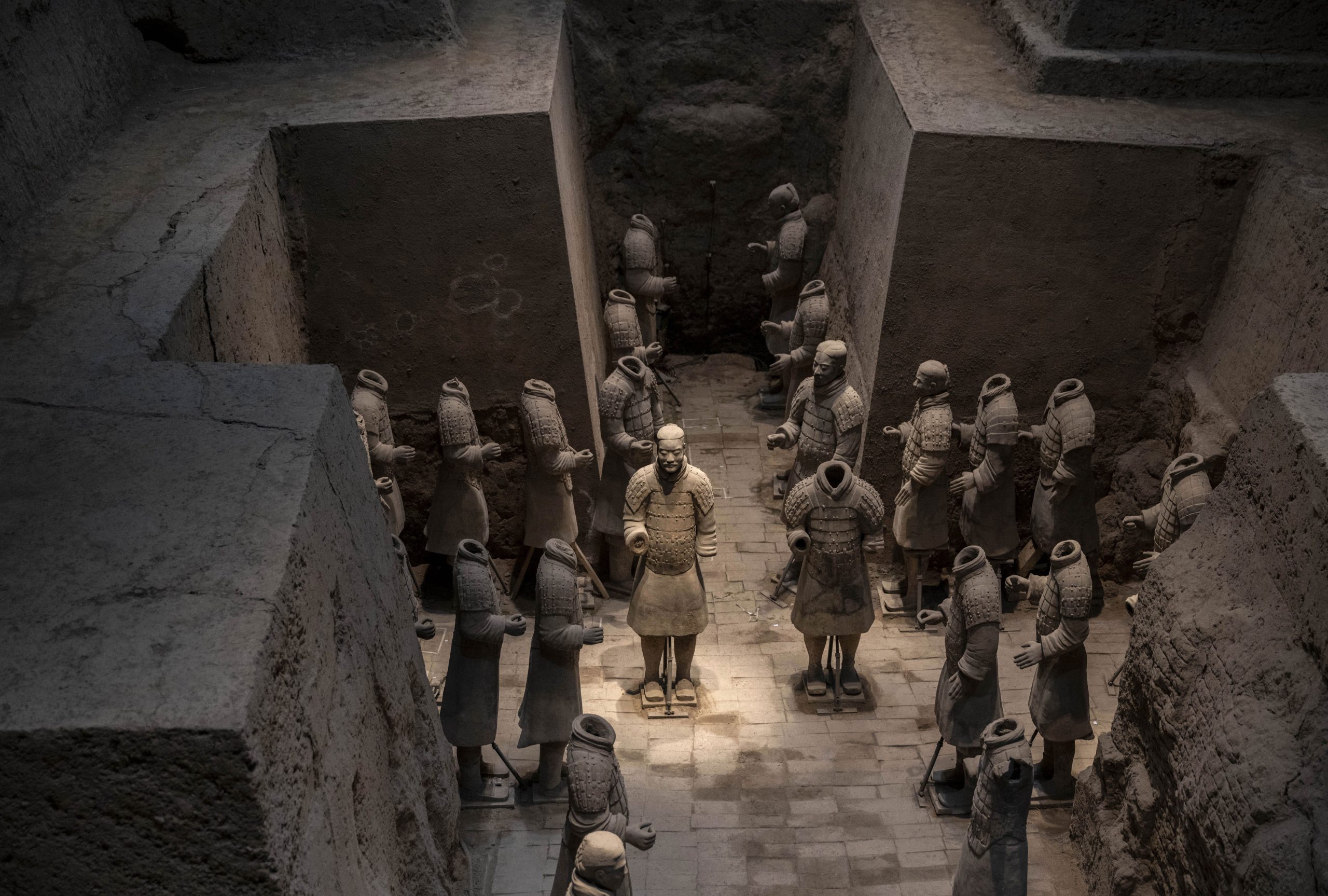
Archaeologists around the world have long been captivated by the enigmatic tomb of Qin Shi Huang, the first emperor of China. This ancient burial site, which has remained sealed for over 2,200 years, continues to intrigue researchers and historians alike. The tomb is surrounded by a mysterious aura, with many questions still unanswered about its contents and the dangers that might lie within.
The tomb belongs to Qin Shi Huang, who ruled from 221 BC to 210 BC. It is famously known for the terracotta army discovered in 1974 by farmers in Shaanxi province. This vast collection of life-sized soldiers and horses was created to protect the emperor in the afterlife. However, despite the extensive exploration of the surrounding area, archaeologists have never dared to open the actual tomb itself. There are several reasons for this hesitation.
According to scientific reports, one major concern is the potential damage that could be caused by opening the tomb. Additionally, there are persistent rumours about deadly booby traps that could pose a serious threat to anyone attempting to enter. These stories, while unverified, add to the mystery and fear surrounding the site.
Historical records, such as those written by Chinese historian Sima Qian just 100 years after Qin Shi Huang’s death, describe the tomb as a grand structure filled with treasures and rare artifacts. He wrote that “Palaces and scenic towers for a hundred officials were constructed and the tomb was filled with rare artifacts and wonderful treasure.” The description suggests that the tomb was not only a place of rest but also a symbol of the emperor’s power and wealth.
Sima Qian also mentioned that craftsmen were ordered to create crossbows and arrows primed to shoot at anyone who entered the tomb. Furthermore, mercury was reportedly used to simulate the country’s rivers, including the Yangtze and Yellow River, as well as the great sea, with the water designed to flow mechanically. Even if these mechanisms have since failed, there remains a fear that liquid mercury could seep through cracks in the structure.
A 2020 study published in a scientific journal supports the idea that the tomb has never been opened or looted. The research suggests that high levels of mercury may still be present and could escape through cracks that have developed over time. This adds another layer of complexity to the decision of whether or not to open the tomb.
Scientists have explored various non-invasive methods to study the tomb without disturbing its contents. However, these techniques have yet to produce definitive results. The challenge lies in balancing the desire to uncover historical truths with the need to preserve the integrity of the site.
Despite the risks, the tomb of Qin Shi Huang remains one of the most significant archaeological sites in the world. Its history, construction, and the mysteries it holds continue to inspire both scientific inquiry and public fascination. As technology advances, it is possible that future discoveries may shed more light on this ancient enigma.
For now, the tomb stands as a silent guardian of the past, waiting for the day when the right tools and methods will allow researchers to explore its secrets safely. Until then, the legend of Qin Shi Huang and his guarded tomb will continue to capture the imagination of people across the globe.