

Astronaut’s Unexplained Medical Crisis Highlights Fragility of Space Health
A concerning medical emergency experienced by a seasoned NASA astronaut while aboard the International Space Station (ISS) has cast a stark spotlight on one of the most vulnerable aspects of human spaceflight: astronaut health. The incident, which occurred in early 2026, amplifies growing anxieties as space missions venture further from Earth. It raises a critical question: what happens when a serious medical issue arises, and the nearest help is days, not hours, away?
A Medical Scare on the International Space Station
The event unfolded aboard the ISS when astronaut Michael Fincke experienced a sudden and perplexing medical episode that rendered him unable to speak. There was no prior warning, no gradual deterioration, and no obvious trigger. Instead, there was a rapid loss of function that immediately sent alarm bells ringing among his crewmates. In the tightly controlled and confined environment of the ISS, even minor anomalies are treated with utmost seriousness. This was far from minor. The crew swiftly recognised the gravity of the situation and enacted emergency protocols, simultaneously contacting flight surgeons on Earth.
Fincke himself described the event as “completely out of the blue. It was just amazingly quick,” as reported by the Associated Press. He further stated, “My crewmates definitely saw that I was in distress. It was all hands on deck within just a matter of seconds.” The response was immediate and highly coordinated, a testament to years of rigorous training for high-stakes contingencies. Onboard diagnostic tools, including vital ultrasound equipment, were deployed to assess Fincke’s condition in real time. Despite these rapid efforts, no definitive cause for the episode could be identified. The event lasted approximately 20 minutes, leaving behind a trail of unanswered questions and exposing a critical vulnerability in the field of space medicine.
The Limitations of Medical Care in Orbit
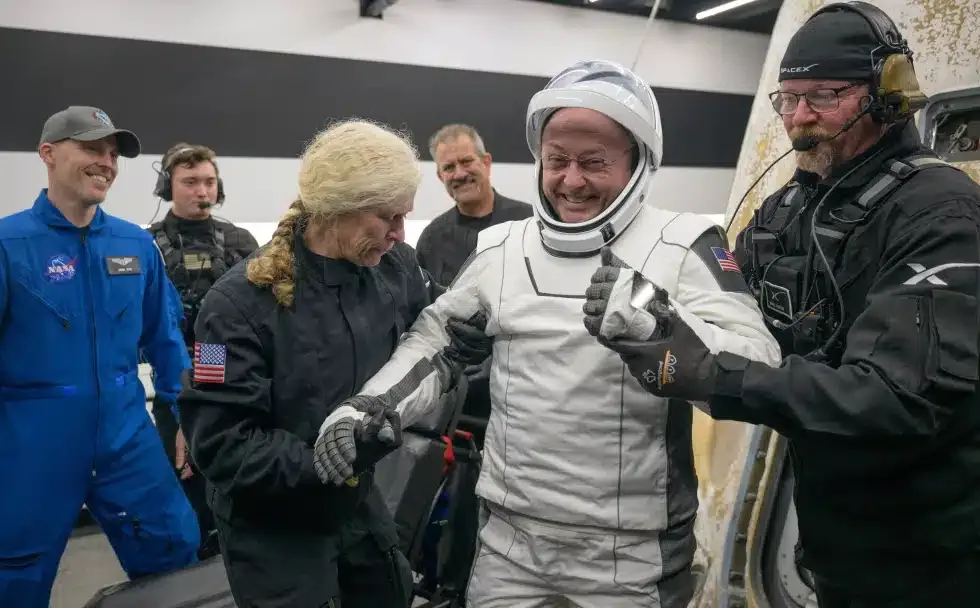
This unprecedented event necessitated NASA’s first-ever medical evacuation from the ISS, a decision that underscores the profound seriousness of the situation. While the relatively close proximity of low Earth orbit allows for comparatively swift returns, the process itself involves complex logistics and inherent risks. Fincke and his crew were brought back to Earth earlier than originally planned, forcing a curtailment of mission objectives and the postponement of scheduled activities, such as planned spacewalks. This outcome starkly illustrates the delicate balancing act between achieving mission goals and prioritising astronaut safety.
The inherent limitations of medical capabilities in orbit are significant. Astronauts undergo extensive training in emergency procedures, and spacecraft are equipped with essential diagnostic tools. However, they lack the comprehensive range of treatments readily available on Earth. There are no fully equipped surgical facilities, no specialists on standby, and no immediate access to advanced imaging technologies. Every medical decision must be made remotely, guided by experts located thousands of kilometres away. These constraints become even more pronounced when the underlying cause of a medical issue remains elusive. In Fincke’s case, while doctors were able to rule out a heart attack, the absence of a definitive diagnosis leaves open the possibility of a recurrence. This raises significant concerns about how such events would be managed during extended deep-space missions.
Artemis Missions Face Escalating Risks
As NASA gears up for the Artemis II mission, a crewed flight intended to orbit the Moon, the implications of this incident become considerably more serious. Lunar missions introduce substantial delays in communication, significantly extended travel times, and severely limited evacuation options. Unlike the ISS, where a return to Earth can be accomplished within a matter of hours, astronauts travelling to or orbiting the Moon could face journeys lasting several days before reaching any form of advanced medical care. This fundamental shift in distance and time dramatically alters the assessment and management of risks.
The agency’s broader aspirations, including the establishment of a sustained human presence on the Moon and the potential development of a lunar base, are contingent upon successfully addressing these complex challenges. A single, unexplained medical event could jeopardise not only the lives of individual astronauts but entire missions. Consequently, engineers and medical teams are now under immense pressure to develop more autonomous healthcare systems for space. These advanced systems could incorporate AI-assisted diagnostics, sophisticated telemedicine capabilities, and compact yet powerful medical devices specifically engineered for the unique demands of deep-space environments. The Fincke episode serves as a potent reminder that space exploration encompasses not only advancements in propulsion and engineering but also a deep understanding of the resilience and vulnerabilities of the human body in unprecedented conditions.
The Enigma of Deep Space Health
What makes this particular case so unsettling is the absence of a clear explanation. It is already well-established that the space environment profoundly affects the human body in complex ways, ranging from bone density loss to fluid shifts that can impact vision and cardiovascular function. However, the emergence of sudden neurological symptoms, such as the temporary loss of speech experienced by Fincke, introduces an entirely new category of uncertainty. Without a confirmed cause, it becomes exceedingly difficult to predict, prevent, or effectively treat similar episodes on future missions.
NASA is reportedly undertaking a review of medical records from past missions, searching for any comparable incidents that may have occurred but were not recognised or fully understood at the time. Such retrospective analyses could potentially reveal previously overlooked patterns or risk factors. This also prompts broader questions about the extent of our current knowledge regarding human adaptation to the rigours of space. As missions grow in duration and ambition, these unknowns carry an ever-increasing weight. The ultimate success of future space exploration endeavours may depend as much on breakthroughs in medical science as on continued technological innovation.
A Crucial Wake-Up Call for the Future of Human Spaceflight
While Michael Fincke has since made a full recovery and reports feeling well, the repercussions of his experience continue to resonate throughout the global space community. This incident has become a critical case study in the inherent unpredictability of human health beyond Earth, prompting a renewed and urgent focus on medical preparedness. It powerfully highlights the essential need for redundancy, adaptability, and robust rapid response capabilities in environments where traditional healthcare infrastructure simply does not exist.
As humanity continues its journey towards the Moon and beyond, each mission provides invaluable lessons. This particular episode delivers a clear and unambiguous message: the most significant challenges of space exploration are not always mechanical or environmental. Sometimes, the greatest hurdles originate from within the human body itself. A comprehensive understanding and effective mitigation of these internal risks will be paramount to ensuring that humanity’s next giant leap is not only achievable but also conducted with the utmost safety.


