UK and France Target Russian ‘Shadow Fleet’ in Mediterranean Operation
British forces have joined the French Navy in a critical operation to intercept and seize the MV Deyna, a sanctioned Russian oil tanker suspected of operating under a false flag in the Mediterranean. This move is part of a broader effort to disrupt Russia’s so-called ‘shadow fleet,’ which is used to transport Russian oil and goods globally while evading international sanctions imposed after the invasion of Ukraine.
The shadow fleet plays a key role in enabling Russia to continue its military operations by bypassing restrictions on trade. The French Navy intercepted the Deyna, an oil tanker, in the Mediterranean, marking another step in the ongoing campaign against these vessels.
Defence Secretary John Healey emphasized the importance of targeting the shadow fleet: “Disrupting, deterring and degrading Russia’s shadow fleet — and starving Putin’s war machine of funds — is a priority for this Government and we will continue to take action alongside our allies.”
Healey also highlighted the role of the UK armed forces in supporting France, stating that their efforts help keep Britain safe at home while supporting Ukraine, deterring Russia, and conducting defensive operations in the Middle East.
French President Emmanuel Macron reiterated France’s commitment to Ukraine, saying, “The war involving Iran will not deflect France from its support for Ukraine, where Russia’s war of aggression continues unabated.” He condemned the vessels as “profiteers of war” who are helping finance Russia’s military efforts.
Key Operations and International Cooperation
Patrol boat HMS Cutlass played a crucial role in monitoring the Deyna and supporting the French operation with tracking and imagery capture near the Strait of Gibraltar. 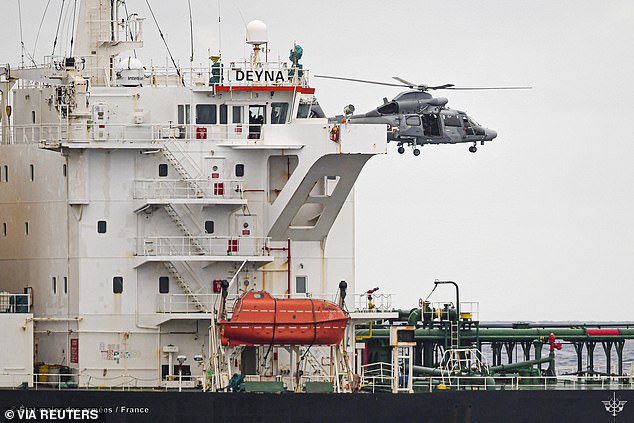
The Deyna is sanctioned by the UK and the European Union for its involvement in transporting Russian oil. This operation is the latest example of the UK’s collaboration with allies in targeting sanctioned vessels.
In January, British forces assisted in the seizure of the oil tanker Marinera by the US. Previously known as the Bella-1, the Russian-flagged vessel was captured by US forces with the help of RAF aircraft and the British supply ship RFA Tideforce in the Atlantic.
Earlier that same month, the Royal Navy patrol boat HMS Dagger helped the French seize another sanctioned ship, the Grinch, in the western Mediterranean. It shadowed the vessel through the Strait of Gibraltar.
The UK has been pushing for more seizures of shadow fleet vessels, with Defence Secretary John Healey and Attorney General meeting senior officials from other nations to discuss military and legal options. However, British forces have yet to board a sanctioned vessel themselves.
Challenges in Naval Capabilities
The Royal Navy and Labour have faced criticism over their lack of preparedness for the conflict. As of March 12, four of the UK’s seven MCMVs (mine countermeasures vessels) are out of commission, with the remaining three based in the UK for roles such as protecting nuclear submarine bases. Even if one were redeployed to the Gulf, it would take five weeks to arrive.
HMS Bangor is currently in the UK undergoing major structural repairs following a collision in Bahrain in early 2024. It is not expected to be ready until late April 2026. 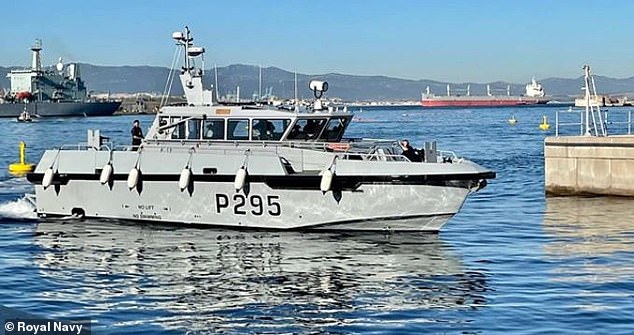
Defence analyst Francis Tusa told the Times that the UK’s naval capabilities are lacking. “When the Iran-Iraq tanker war broke out in the late 1980s, the USA turned to the UK for our mine countermeasures expertise,” he said. “From that time on, there have normally been four advanced MCMVs deployed in Bahrain, often backed up by a support vessel. The Royal Navy now does not have enough MCMVs to cover tasks like protection of the nuclear deterrent, and then to deploy to predictable threats such as in the Gulf.”
Concerns Over Readiness and Maintenance
Significant backlash followed reports that HMS Dragon was delayed by routine maintenance while the conflict in the Middle East escalated. This became particularly concerning after RAF Akrotiri was hit by an Iranian drone fired from Lebanon, raising concerns about the standard of local air defences.