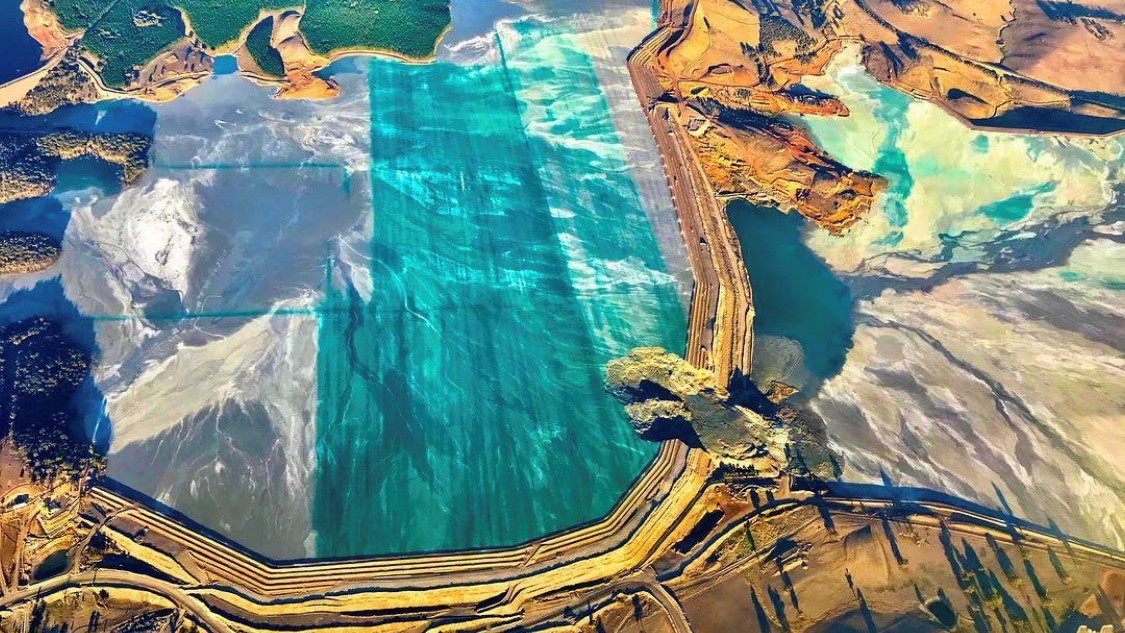
Landowners near one of the world’s most significant gold mines in New South Wales’ central west region have initiated an environmental class action, alleging contamination affecting over 2,000 properties. Legal representatives for the claimants contend that arsenic, heavy metals, and persistent chemicals known as PFAS have migrated from Newmont’s Cadia goldmine onto properties within a 17-kilometre radius.
“This legal action is the culmination of three years of community-led investigation into the impacts on their properties stemming from dust and water pollution,” stated principal lawyer Oliver Gayner. He added that the community felt compelled to pursue litigation after their requests for a collaborative approach to resolve the pollution issues, based on scientific findings, were reportedly refused by the mine operator.
The community members are seeking compensation from the mining giant, asserting that the pollution has diminished their property values through a “toxic trifecta” of air, surface, and groundwater contamination. Furthermore, they are seeking an injunction to prevent any further pollution originating from the Cadia site, a mine that processes over 30 tonnes of ore annually. Mr. Gayner clarified that the objective of this class action extends beyond financial gain; success will be measured by tangible changes in Cadia’s operational practices.
In response, Newmont Cadia confirmed it has been served with legal proceedings in the Supreme Court of New South Wales and indicated it would “respond through the appropriate legal processes.” The company stated that it is inappropriate to comment further given the matter is currently before the court.
The Dust-Up: Residents Raise Concerns
Residents in the Cadia and Errowanbang valleys, located near Orange, first flagged pollution concerns with the NSW Environment Protection Authority (EPA) in 2018, following a structural failure of the mine’s tailings dam wall. Jann Harries, who resides just two kilometres from the mine’s perimeter, described the immediate and pervasive impact of this incident.
“Everything was coated in off-white dust, day in and day out,” Ms. Harries recounted. “It had a distinct taste and smell, and breathing it in would trigger coughing fits.”
Further concerns were amplified when extractor fans above an underground crusher were found to be expelling unfiltered dust into the atmosphere at rates 18 times the legally permitted limit. Subsequent testing of drinking water tanks on neighbouring properties revealed the presence of heavy metals, including lead.
Looking to the Future: Funding and Community Aims
The class action is being financially supported by UK-based litigation funder Aristata. Executives from the firm visited allegedly affected farms last year, travelling from London for the purpose. Michael Hartridge, head of portfolio management at Aristata, described the case as “important” and stated that it aligns with the “UN’s sustainable development goals.”
The claimants have emphasised that their intention is not to advocate for the closure of the mine, acknowledging its significant contribution to the regional economy. However, they maintain that the current operational scale is unsustainable for the protection of their own interests and well-being. Mr. Gayner highlighted the unique nature of this case, stemming from individuals with substantial assets seeking to protect their interests.
“What is unusual is the close proximity of a mine to an organised and determined community, with high-value farmland and residential properties,” he explained. “These individuals are committed to safeguarding their interests both in the present and for the future.”
A History of Court Cases and Environmental Findings
Newmont has a prior history in the Land and Environment Court. In 2023, the company pleaded guilty to three charges of air pollution, resulting in a $350,000 fine. Two additional charges were subsequently withdrawn in exchange for the mine agreeing to install five new dust monitors in 2024.
Also in 2023, farmers situated on the mine’s southern boundary reported the appearance of white foam on the Belubula River, a critical source of irrigation water for the area. Laboratory analysis confirmed that the foam was predominantly composed of PFOS, a synthetic chemical widely used in industrial applications, including firefighting.
A comprehensive, year-long sampling program conducted by the EPA subsequently identified PFAS in the Upper Belubula River catchment at 16 different sites. These included the Blayney tip, landscape supplier ANL, and Cadia itself. At the time, the EPA assessed the risk to livestock and the environment as low.
However, concerns escalated when the EPA later banned fishing in the Belubula River and erected warning signs. This action followed testing that revealed the flesh of certain fish species contained PFOS levels up to 40 times the daily intake limit. A hearing concerning these matters has been scheduled for March.