Coles Under Fire: Supermarket Giant Faces Court Over “Down Down” Pricing Claims Amid Inflationary Pressures
Coles Supermarkets is currently embroiled in a legal battle in the Federal Court, facing allegations from the Australian Competition and Consumer Commission (ACCC) that it misled customers with its iconic “Down Down” price promotion stickers. Internal emails from the supermarket giant, dating back to late 2021 and early 2022, have been presented in court, revealing significant internal pressure to adjust pricing strategies in the face of soaring inflation and intense competition.
The ACCC’s legal action centres on a 15-month period, from February 2022 to May 2023, during which the consumer watchdog claims Coles artificially inflated the prices of 245 products before applying “Down Down” promotional stickers. The crucial allegation is that these promotions offered prices no lower than, and sometimes even higher than, the original, pre-inflated price.
Internal Emails Reveal Competitive Concerns
During the court proceedings, barrister Garry Rich SC, representing the ACCC, presented a series of internal emails between senior Coles executives. These documents, he argued, demonstrated a clear internal drive to relax “guardrails” on pricing as wholesale costs escalated.
In late 2021, Coles operated under a policy that prevented products from being placed back onto “Down Down” promotions for at least nine months after a price increase. This rule was designed to avoid perceptions of misleading customers. However, the emails suggest a growing desire within Coles to utilise promotions that explicitly communicated falling prices, even when the underlying cost increases were significant.
The court heard that in January 2022, these internal rules were modified. The waiting period was reduced to six months following a price change, or 12 weeks if a “genuine verified supplier cost increase” could be demonstrated. One senior manager, in an email read to the court, alluded to a “relaxation” of these rules, noting that certain “huge sales” could not be “afforded to have them uncompetitive for 12 weeks.”
Further evidence of competitive pressure emerged in February 2022, when a senior manager emailed a former Coles Group compliance manager, Anne Hatherley. The email questioned the 12-week limit, specifically referencing “Woolworths had a different set of rules.” The manager expressed concern that “Some of the recent practices in our major competitor are staggering to say the least, however it leaves us with a huge risk of value perception if they continue in this way.” Ms. Hatherley’s response indicated that “Woolworths are really pushing the line,” a statement the ACCC interprets as evidence of potentially deceptive pricing practices by Coles’ rival.
By March 2022, Coles reportedly further relaxed its internal rules, shortening the waiting period after a price increase to just 28 days before a product could be eligible for a “Down Down” promotional reduction.
Dog Food Controversy: A Case Study in Alleged Deception
A particularly striking example presented to the court involved a specific brand of dog food. In February of the following year (2023), an email was read to the then-head of pricing and value at Coles, Chris Reid. The email requested approval to expedite a “Down Down” discount on dog food, citing “Woolworths moving faster.”
The court was informed that the price of this dog food had increased just four days prior, from $21.50 to $24. Mr. Reid reportedly responded that while the shelf price could be reduced, it could not receive the “Down Down” treatment at $22. “He correctly perceived if the price was higher it would be wrong for Coles to make its customers think the price had gone down,” Mr. Rich told the court.
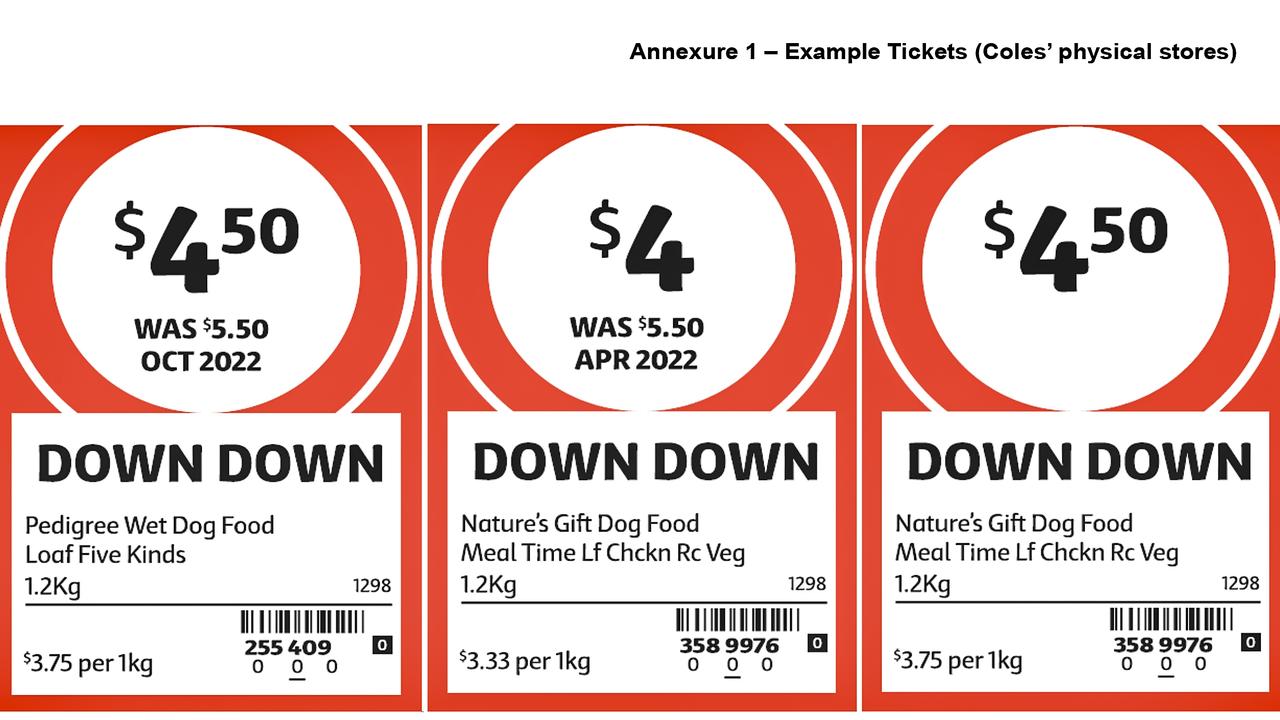
The ACCC’s case highlighted a specific instance with 1.2kg of Nature’s Gift wet dog food. For 296 days, this product was sold at Coles for $4. On February 7, 2023, its price jumped by a substantial 50 per cent to $6. Just eight days later, Coles advertised the price as having dropped to $4.50, with a “Down Down” sticker indicating the price had fallen from $6.
“That statement was literally true, the price had been $6,” Mr. Rich stated. “That statement was also utterly misleading; it did not disclose, and a reasonable consumer would not have understood, that Coles had increased the price to $6 for just seven days.” The ACCC argues that this practice misled customers into believing the $4.50 price represented a genuine reduction from the product’s regular price.

Mr. Rich acknowledged that this occurred during a period of high inflation and that Coles was “perfectly entitled” to increase prices due to rising wholesale costs. However, the core of the ACCC’s argument is that consumers were misled into believing they were receiving a price reduction when, in reality, the advertised “sale” price was still higher than the price at which the product had been sold for the vast majority of the preceding year. “In circumstances where a product is being sold for $4 for almost a year, the price is $6 for just a week, it’s not fair dinkum to tell the customer the price has gone down,” he argued.
The ACCC intends to present evidence suggesting Coles never intended to maintain these artificially inflated prices beyond the brief “spike,” and that this pattern was a deliberate strategy to offset rising wholesale costs. “Coles was desperately, knowingly, increasing the retail price of these products to account for increases in the wholesale costs,” Mr. Rich alleged. “All of the evidence Your Honour is going to hear about how there were good reasons for increasing prices begs the question, ‘Why on Earth are you telling your customers that your prices are going down?’”
A Pattern of Price Manipulations?
The court was informed that 12 products, including everyday items like toothpaste, soft drinks, Arnott’s Shapes, Band-Aids, and shampoo, have been selected as sample products for the case. The majority of these items reportedly saw price increases for a median period of 28 days before being featured in “Down Down” promotions.
Another example cited was Rexona antiperspirant, which remained at $5 for 409 days before being increased to $6.50 for 30 days. It was then reduced to $6, representing a 20 per cent increase on its original price. “There is a similar conduct with respect to all the sample promotions,” Mr. Rich stated. “There is never a scenario in which price two is going to continue.”
Justice Michael O’Bryan, presiding over the case, questioned the relevance of a product’s initial price if wholesale costs had indeed changed. He also expressed scepticism about whether consumers were “so naive” as to believe prices had no connection to wholesale costs. The “Down Down” promotion, introduced in June 2010, has been Coles’ flagship discounting strategy, advertised as a promise to reduce the overall cost of a shopper’s basket.
Coles’ Defence: Navigating Unforeseen Inflation
In response, John Sheehan KC, representing Coles Supermarkets, began his opening statements by contextualising the price changes within a period of “sudden and unanticipated and quite dramatic increase in inflation” that began in 2021 and continued through 2022 and 2023.
Mr. Sheehan indicated that the trial would explore the precise representations made by “Down Down” promotional tickets and what constitutes a “previous regular price.” He argued that it would be an error to assume that shoppers were unaware of the prevailing environment of rapidly increasing prices.
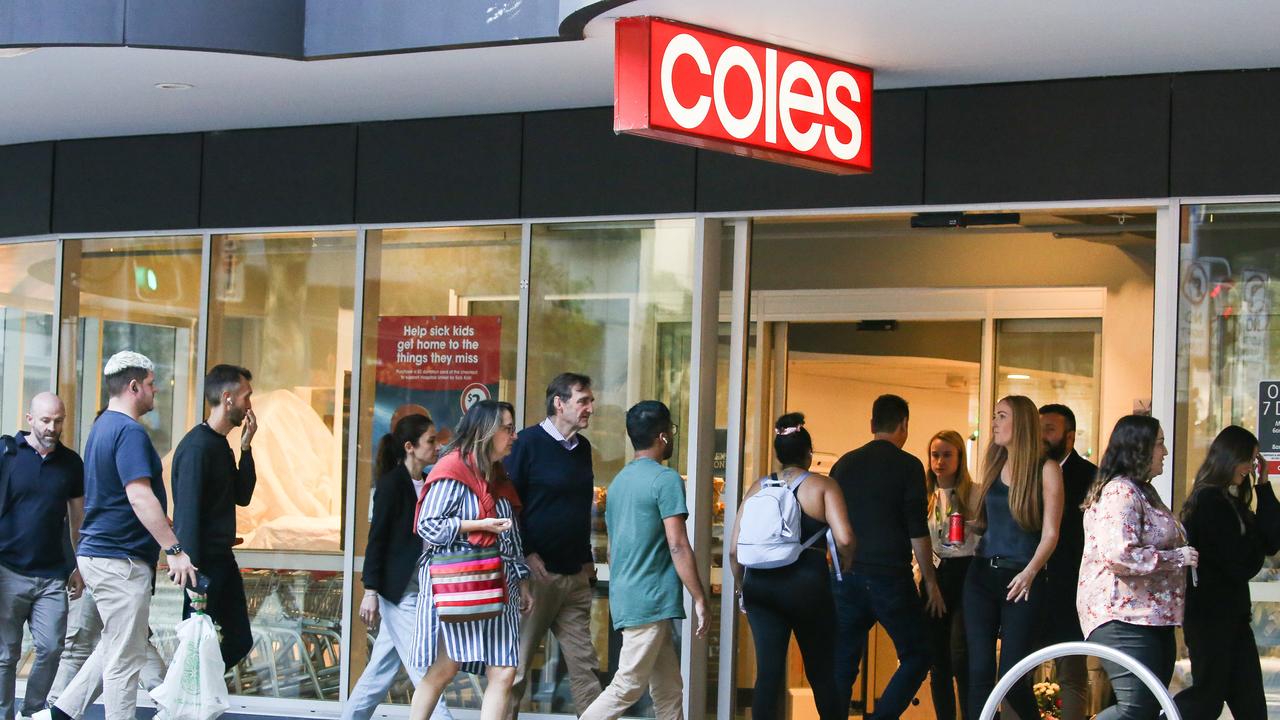
In a market where prices were generally “changing in an upward direction,” Mr. Sheehan suggested that it was “perfectly natural” for Coles to highlight when a particular product’s price was going down. He pointed to the significant negotiating power held by major suppliers like Mars Australia and Coca-Cola Europacific, which influenced Coles’ own pricing decisions.
In a formal statement filed with the court, Coles maintains that the non-promotional price, prior to the application of “Down Down” discounts, represented the genuine, undiscounted shelf price. The supermarket denies that the promotional tags conveyed any representation of a reduction from a “previous regular price.”
The ACCC is pursuing a similar lawsuit against Woolworths for its “Prices Dropped” campaign, which is yet to be heard. The current Coles case is expected to run for approximately 10 days.