
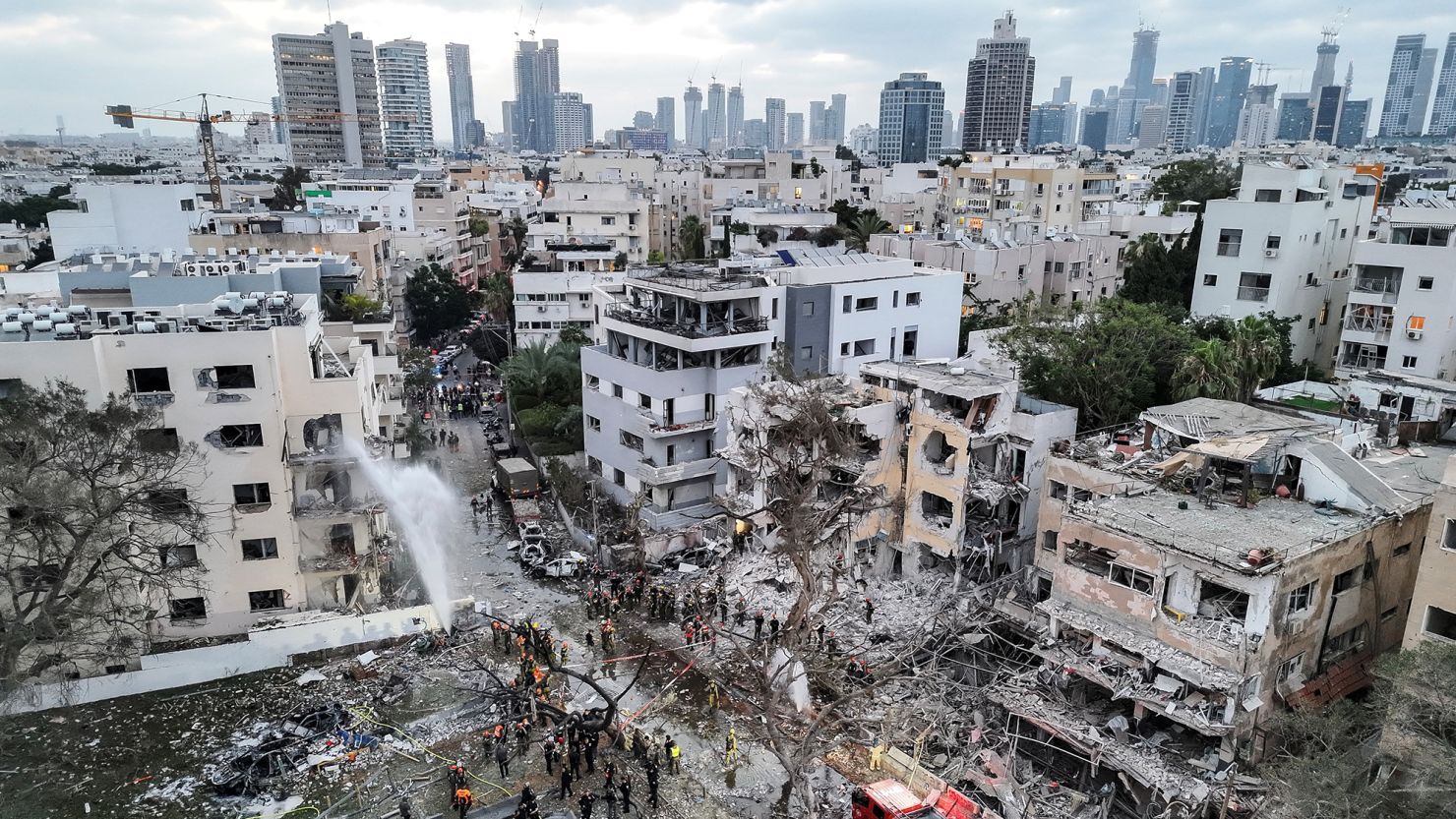
The Human Cost of Geopolitical Strife: Examining the Iran Crisis Through a Humanitarian Lens
The intricate dance of international diplomacy and military posturing often obscures the stark reality of human suffering. Conflicts between major powers are typically discussed in the detached language of strategic advantage, deterrence, and national security. The current military tensions involving the United States, Israel, and Iran are no different, with public discourse heavily focused on Iran’s nuclear enrichment levels, missile capabilities, and the shifting regional power dynamics in the Middle East.
However, beneath this veneer of strategic calculations lies a more profound and troubling truth: wars, often justified in the name of security, frequently inflict devastating humanitarian consequences, disproportionately affecting civilians who have minimal to no agency in the political decisions that precipitate conflict. For nations across the Global South, including Nigeria, this unfolding crisis transcends mere geopolitical drama. It serves as a potent reminder that the human toll of international power struggles is often shouldered by ordinary individuals, both within the immediate conflict zones and far beyond their borders.
The Shadow of Preventive War and International Law
At the heart of the current confrontation lies the long-standing concern over Iran’s nuclear program. International monitoring bodies have confirmed Iran’s enrichment of uranium to levels nearing weapons-grade, significantly exceeding what is required for civilian nuclear energy. For the United States and Israel, preventing a nuclear-armed Iran is framed as an imperative for regional and global security. Israel has consistently maintained that it cannot countenance a hostile regional power possessing nuclear weapons, while Washington views nuclear proliferation in the Middle East as a direct threat to international stability. Notably, Iran has, albeit with reservations, engaged with international monitoring and has not outright rejected dialogue regarding its nuclear pursuits, with discussions ongoing even as military actions commenced.
This context raises critical questions about the legality of preemptive military action. The use of force to avert a potential future threat treads on precarious legal ground under international law. The United Nations Charter, the bedrock of international relations, unequivocally states in Article 2(4): “All Members shall refrain in their international relations from the threat or use of force against the territorial integrity or political independence of any state.”
The Charter permits only two primary exceptions to this prohibition: collective security actions sanctioned by the UN Security Council, and the inherent right of self-defence under Article 51, which allows for individual or collective self-defence “if an armed attack occurs against a Member of the United Nations.”
Preventive military strikes, conducted before an armed attack has materialized, exist in a legally contentious grey area. While some governments advocate for anticipatory action in the face of emerging threats like nuclear proliferation, others caution that broadening the doctrine of self-defence risks eroding the fundamental prohibition on the use of force that underpins the UN system. This legal ambiguity is central to the current crisis.
International Humanitarian Law: A Shield for Civilians
Even when the use of force is deemed lawful, International Humanitarian Law (IHL) imposes stringent regulations on the conduct of warfare. The Geneva Conventions of 1949, considered the cornerstone of modern humanitarian law, were established to mitigate the human suffering caused by armed conflict. Their central tenet is the protection of civilians and those no longer engaged in hostilities. Article 3 of the Geneva Convention sets a minimum standard of humanitarian treatment, stipulating that individuals not actively participating in hostilities “shall in all circumstances be treated humanely.”
Further legal protections are enshrined in the 1977 Additional Protocol I, which governs international armed conflicts. Article 48 introduces the fundamental principle of distinction: “The Parties to the conflict shall at all times distinguish between the civilian population and combatants and between civilian objects and military objectives.” This principle mandates that military forces must direct attacks solely at legitimate military targets.
Equally vital is the principle of proportionality. Article 51(5)(b) of Additional Protocol I prohibits attacks that may cause “incidental loss of civilian life, injury to civilians, [or] damage to civilian objects… which would be excessive in relation to the concrete and direct military advantage anticipated.” These provisions are crucial because modern conflicts often unfold in densely populated areas where military and civilian infrastructure are intertwined. Even with advanced weaponry, the risk of civilian harm cannot be entirely eliminated.
The tragic loss of over 150 school girls on the first day of the conflict starkly illustrates the rationale behind the Geneva Conventions and the ongoing humanitarian catastrophe witnessed in regions like Gaza and Lebanon, as well as strikes in Gulf states. Civilians appear to be either deliberately targeted or, at the very least, deliberate efforts to avoid civilian casualties are lacking. Within two weeks of the conflict’s escalation, estimates suggest 1,850 Iranians have been killed, with the WHO reporting 10,000 injured and 3.2 million temporarily displaced. Israeli civilian fatalities are reportedly around 15, though the Institute for National Security Studies at Tel Aviv University suggests actual figures may be subject to military censorship.
Beyond Battlefield Casualties: The Wider Humanitarian Impact
Modern conflicts invariably trigger secondary humanitarian crises, including mass displacement, economic collapse, widespread psychological trauma, and the destruction of essential infrastructure. Hospitals, water systems, electricity grids, and transportation networks are frequently damaged or disrupted during hostilities. The collapse of these vital services can endanger civilian populations for extended periods, long after the immediate fighting ceases. The humanitarian dimension of war, therefore, extends far beyond the immediate casualties on the battlefield; it encompasses the broader social and economic ramifications that shape civilian lives for years to come.
In the context of the current confrontation involving Iran, these repercussions are unlikely to be confined to the Middle East. The Gulf region is a linchpin of global energy supply, with approximately one-fifth of the world’s oil transiting through the Strait of Hormuz daily. Disruptions to this critical maritime corridor have already precipitated sharp increases in global energy prices. While industrialized economies may absorb these higher oil prices as an economic inconvenience, with governments possessing financial reserves and policy tools to mitigate the impact, developing countries often experience energy price shocks that translate directly into hardship for their populations.
Nigeria, despite being a major crude oil producer, remains heavily reliant on imported refined petroleum products. Consequently, rising global oil prices typically lead to increased domestic fuel costs. This is currently evident in Nigeria, where higher transportation expenses are driving up food prices, increasing the cost of electricity generation for businesses dependent on diesel generators, and placing additional strain on household budgets. For millions of Nigerians already contending with inflation and economic uncertainty, global conflicts can thus have tangible and severe human consequences.
The International Covenant on Economic, Social and Cultural Rights (ICESCR) recognizes the fundamental right to an adequate standard of living, encompassing access to sufficient food and appropriate living conditions. Article 11 of the covenant affirms that “The States Parties… recognise the right of everyone to an adequate standard of living… including adequate food, clothing and housing.” Economic shocks triggered by distant wars can therefore indirectly undermine the realization of these rights in vulnerable societies.
Nigeria’s Role: Resilience and Advocacy
For Nigeria, the current conflict presents a dual challenge and opportunity. Historically, Nigeria has positioned itself as a staunch advocate for international law and peaceful conflict resolution, playing a significant role in peacekeeping operations across Africa and consistently championing diplomatic solutions to international disputes. In times of international crisis, middle powers like Nigeria can exert considerable influence in reinforcing the importance of legal norms governing the use of force.
Through diplomatic engagement within multilateral forums such as the United Nations and the African Union, Nigeria can bolster calls for restraint, de-escalation, and the resumption of negotiations concerning nuclear safeguards. Simultaneously, Nigeria must acknowledge that geopolitical instability elsewhere can swiftly translate into domestic economic pressures. Strengthening national resilience, through enhanced refining capacity, economic diversification, and sound macroeconomic policies, should therefore be viewed as an integral component of Nigeria’s broader national security strategy.
At its core, the current crisis compels a fundamental re-evaluation of the international order we aspire to preserve. If security policies are pursued without due consideration for humanitarian consequences or legal constraints, the inevitable outcome is a perpetuating cycle where civilian populations repeatedly bear the brunt of geopolitical rivalries. Upholding international humanitarian law and prioritizing civilian protection is not merely a moral imperative; it is essential for maintaining a credible and stable global order. For nations in the Global South, the stakes are particularly elevated, as the economic and social aftershocks of distant conflicts often arrive long before diplomatic resolutions.
International humanitarian law was conceived to mitigate the human cost of war and ensure that fundamental principles of humanity are respected, even amidst conflict. The enduring relevance of these principles hinges on the commitment of all states, regardless of their power, to abide by them. For countries like Nigeria, the imperative extends beyond mere observation of these conflicts; it involves actively advocating for a world where security is pursued without sacrificing the legal and humanitarian norms that safeguard civilian life. When the rhetoric of war dominates international politics, it is rarely the strategists who pay the ultimate price. Instead, that price is paid in the lives and suffering of ordinary citizens who had no voice in the decisions that led to the conflict.


