

Despite a relentless, month-long aerial assault by the United States and Israel, Iran’s Islamic Republic has demonstrated a surprising degree of resilience, according to new research. The regime has successfully orchestrated a significant number of pro-government public demonstrations, while simultaneously implementing a stringent crackdown on any signs of dissent. This has resulted in the detention of at least 1,400 individuals, highlighting the regime’s capacity to maintain control amidst intense external pressure.
Experts suggest that the high volume of pro-regime gatherings, coupled with the escalating detentions, underscores the enduring strength of the Islamic Republic. The conflict, which began with a devastating surprise strike by Israel that claimed the life of Iran’s Supreme Leader Ayatollah Ali Khamenei and numerous senior officials, has seen continued targeted assassinations of key figures. Most recently, Alireza Tangsiri, the naval commander of the Revolutionary Guards, was killed in an attack on the port city of Bandar Abbas.
Clionadh Raleigh, president of Acled, an independent conflict monitoring organisation, commented on the effectiveness of the US-Israeli strategy. “The US-Israeli decapitation strategy could not have been more successful and continues to be so… but the regime has not fragmented and there are no defections,” she stated. “The messaging within Iran is how they are winning, and that is constant and consistent.” Acled has compiled a comprehensive database of protest incidents and violence throughout the month-long conflict.
The research from Acled indicates a consistent daily rate of US and Israeli strikes on Iran, ranging between 47 and 102 attacks, which have resulted in substantial civilian casualties. In contrast, Tehran’s retaliatory actions have been largely ineffective, with Acled noting only 70 fatalities from Iranian retaliation during the war, compared to the 1,157 individuals killed within Iran, of whom 341 have been identified as civilians. Acled’s methodology involves cross-referencing and verifying reports from Iranian, regional, and international media, social media, and on-the-ground sources to accurately log and categorise incidents of violence.
Pro-Regime Mobilisation and Suppression of Dissent
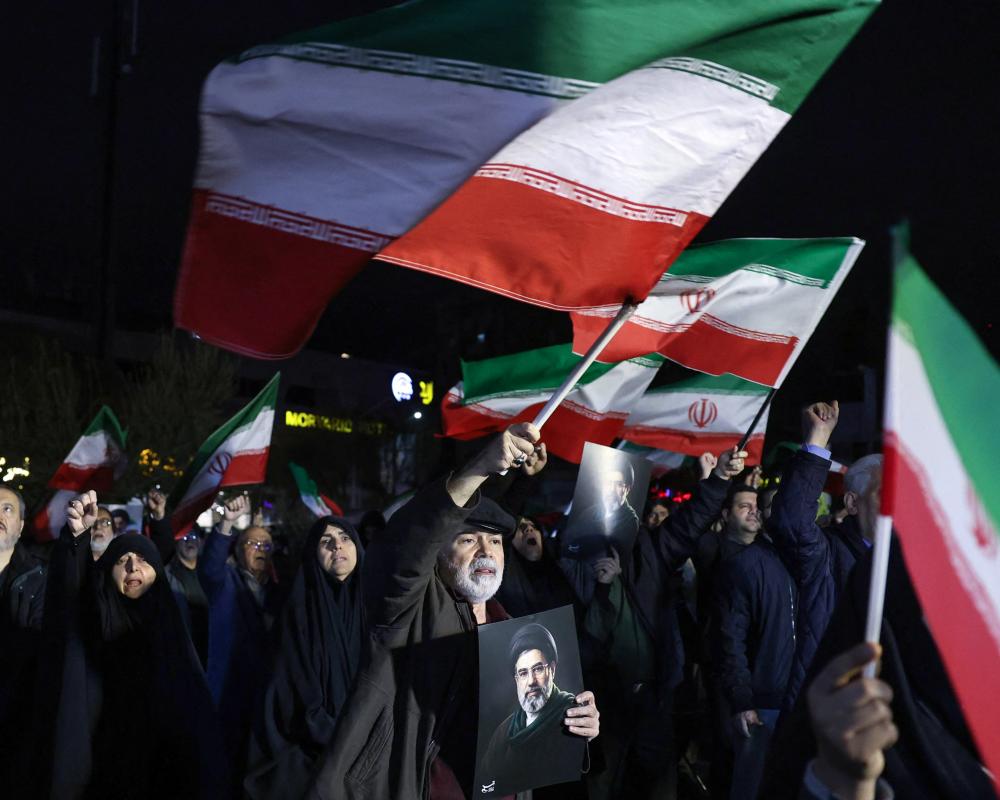
The period from February 28th to March 19th witnessed the most sustained waves of pro-regime mass public demonstrations in Iran. Acled recorded 195 such gatherings between February 28th and March 6th, primarily focused on mourning for Ayatollah Khamenei and condemning Israel and the US. The following week saw 158 demonstrations, and nearly 300 were counted between March 13th and 19th, with celebrations surrounding the succession of Mojtaba Khamenei being a prominent feature. While many of these events took place in the capital, Tehran, others were reported in the north-east and south-west regions of the country.
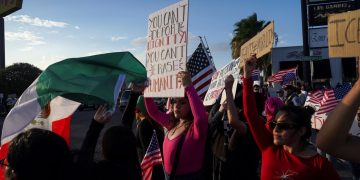
Acled’s analysis highlights the highly managed nature of these protests. “The protest wave [in Iran] is regime-managed – [of] 845 protests, 99.2% [are] pro-regime. The transition from mourning to succession endorsement appears orchestrated,” the researchers noted. They further pointed out that a single anti-regime protest observed on March 25th was met with lethal force, resulting in 10 fatalities. This incident serves as a stark illustration of the severe consequences of dissent.
The near-total absence of anti-regime protests, as identified by Acled, suggests a complex interplay of factors. These could include genuine nationalist consolidation in the face of external aggression, widespread self-censorship among the populace, or the regime’s effective pre-emptive suppression through its extensive arrest campaign.
Escalating Arrests and the Cost of Dissent
The arrest campaign has emerged as the regime’s primary domestic tool for control. In the 27 days leading up to the research, over 1,465 individuals were reportedly detained. The nature of the charges has also escalated, moving from initial accusations like ‘filming damage’ to more severe allegations such as ‘espionage’ and ‘mercenary’ as the conflict has progressed.
Obtaining precise details of such repressive actions is challenging. However, recent incidents paint a grim picture. On March 25th, security forces reportedly opened fire on anti-regime demonstrators and shot at apartment windows in Tehran, leading to the deaths of 10 people. On March 18th, three individuals died in Chabahar when detainees protested over food ration cuts within a prison. Furthermore, on March 17th, security forces intervened against gatherings in Fardis and four districts of Tehran where demonstrators were chanting anti-government slogans.
Dr. Raleigh observed that significant anti-regime activism was only visible on the initial night of Ayatollah Khamenei’s death. “Since, there has been a coordinated effort to have pro-Iran or anti-war protests,” she explained.
Regime Resilience and Ideological Conditioning
Alia Brahimi, a regional expert at the Atlantic Council think tank, asserted that the pro-regime protests were not spontaneous and demonstrated the regime’s ability to withstand the joint US-Israeli offensive. She noted that the potential death of leaders has long been anticipated within Iran, with decades of ideological conditioning preparing citizens to accept the loss of senior commanders.
“That moral effort has an organisational counterpart which has built resilience by making sure there are multiple replacements for anyone who holds a senior post, and by, more recently, decentralising decision-making,” Brahimi elaborated. “This is part of the Islamic Republic’s unique system and worldview.”
Casualty Figures and Ongoing Repression
Estimates of civilian casualties vary significantly. María Martinez of the International Federation of Red Cross and Red Crescent Societies (IFRC) stated on Friday that, citing figures from the Iranian Red Crescent, over 1,900 people have been killed and at least 20,000 injured in Iran since the commencement of US and Israeli attacks.
The US-based Human Rights Activists news agency (HRANA) reported on Wednesday that 3,300 people had been killed since the war began, including 1,464 civilians, among whom were at least 217 children.
Earlier in the year, large-scale protests across Iran were met with violent suppression by security forces, resulting in 7,000 deaths, according to HRANA. In a recent development, three men accused of killing police officers during these protests were publicly hanged.
The unrest earlier this year represented the most severe internal threat to Iran’s clerical regime in over 45 years. Since the outbreak of the current conflict, security forces have established checkpoints in major cities and implemented extensive internet shutdowns, marking one of the longest and largest such outages on record. On March 16th, senior officials announced the arrest of 500 individuals accused of being “spies.”
Ahmad-Reza Radan, the national police commander, issued a stern warning: “If anyone comes forward in line with the wishes of the enemy, we will no longer see them as merely a protester, we will see them as an enemy… And we will do to them what we do to an enemy.”