
Holy Week Tensions: Catholic Leaders Barred from Jerusalem Shrine Spark International Outcry
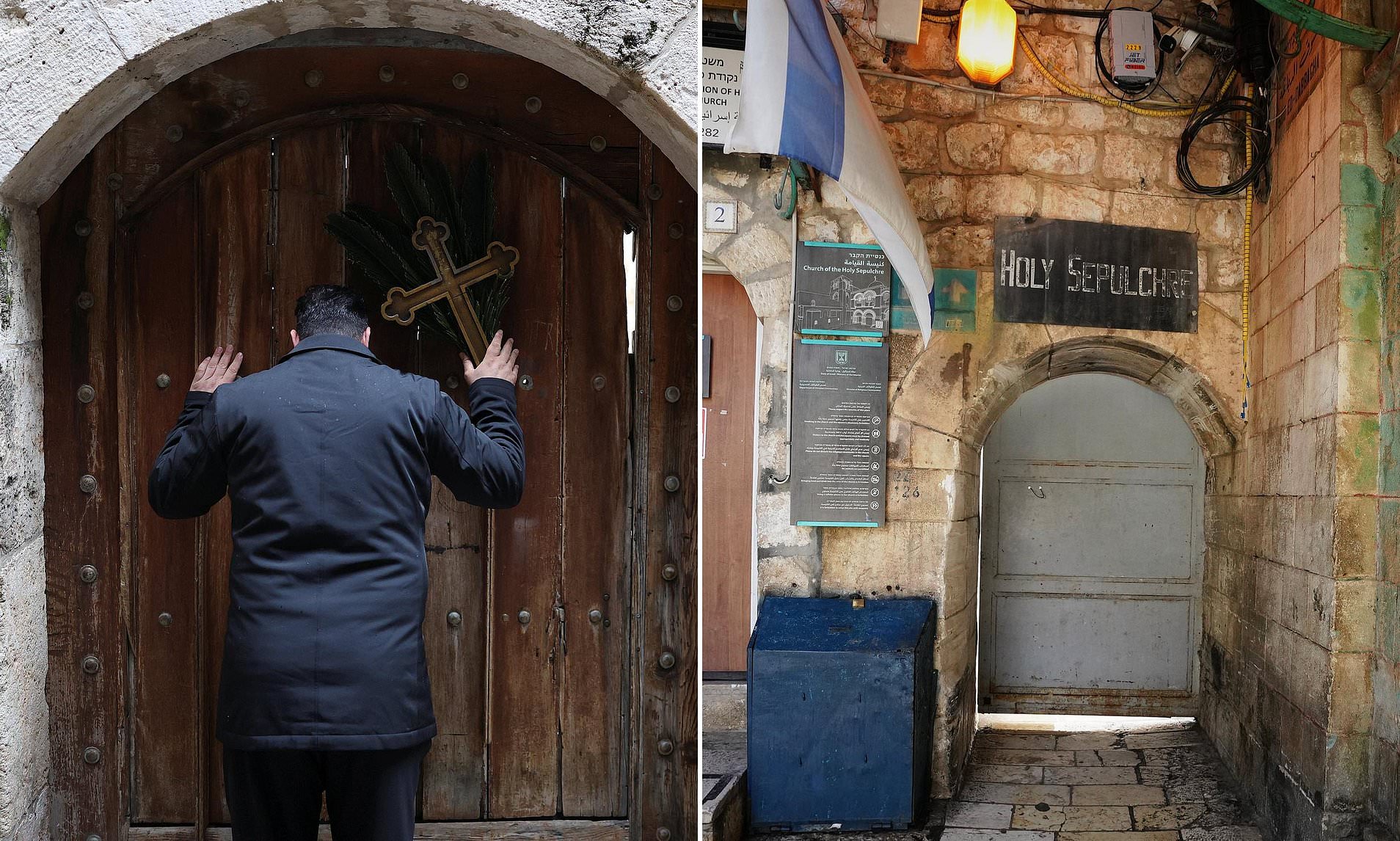
Palm Sunday, a pivotal day in the Christian calendar commemorating Jesus’ triumphant entry into Jerusalem, was overshadowed by an unprecedented incident in the holy city. For the first time in centuries, Catholic leaders, including the Latin Patriarch of Jerusalem, Cardinal Pierbattista Pizzaballa, were prevented by Israeli police from entering the revered Church of the Holy Sepulchre to celebrate a private Mass. This move has ignited a firestorm of criticism from global leaders and religious bodies, who decry it as an infringement on religious freedom and a violation of the established status quo.
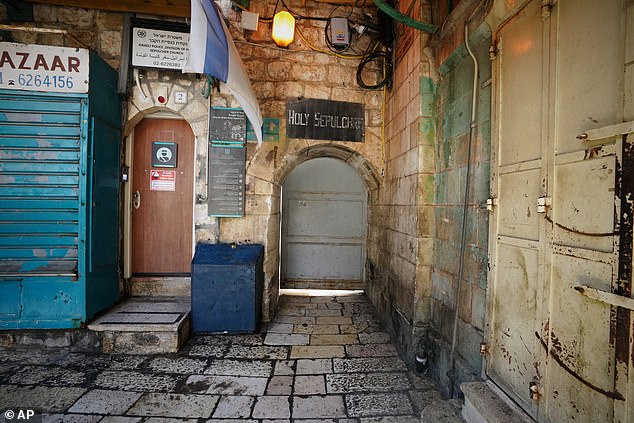
The Church of the Holy Sepulchre, one of Christianity’s holiest sites, is traditionally a focal point for Palm Sunday commemorations. However, in the context of the ongoing conflict with Iran, Jerusalem’s major holy sites, including this sacred church, have faced closures due to security concerns. The city has experienced intermittent missile attacks, prompting authorities to implement stringent safety measures.
A “Manifestly Unreasonable” Decision
The Latin Patriarchate in Jerusalem vehemently condemned the Israeli police’s decision, labelling it a “manifestly unreasonable and grossly disproportionate measure.” The prohibition specifically targeted Cardinal Pizzaballa and the Custos of the Holy Land, preventing them from conducting a private Palm Sunday service at the very location believed to be the site of Jesus’ crucifixion.
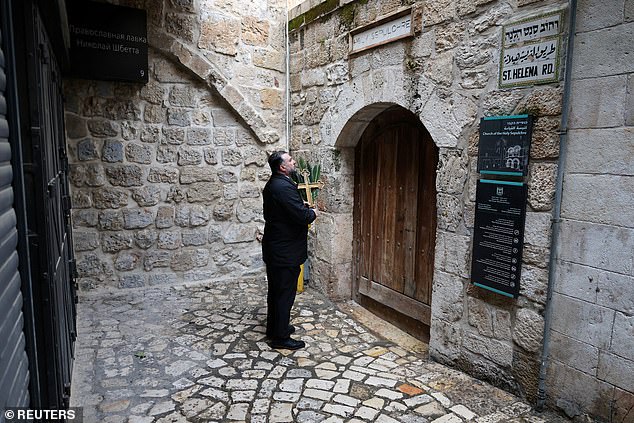
Israeli police stated that church authorities were informed on Saturday of the inability to hold Mass on Palm Sunday. Their reasoning cited safety considerations, the potential lack of access for emergency vehicles in the narrow alleyways of the Old City, and insufficient shelter provisions.
However, the Latin Patriarchate countered this by highlighting that the Church of the Holy Sepulchre had been hosting private Masses since the conflict began on February 28th. They questioned the justification for singling out Sunday’s private Mass and the access of just two religious leaders as being different or posing a greater risk. Farid Jubran, the spokesperson for the Latin Patriarchate, expressed bewilderment, stating, “It’s a very, very sacred day for Christians and in our opinion there was no justification for such a decision or such an action.”
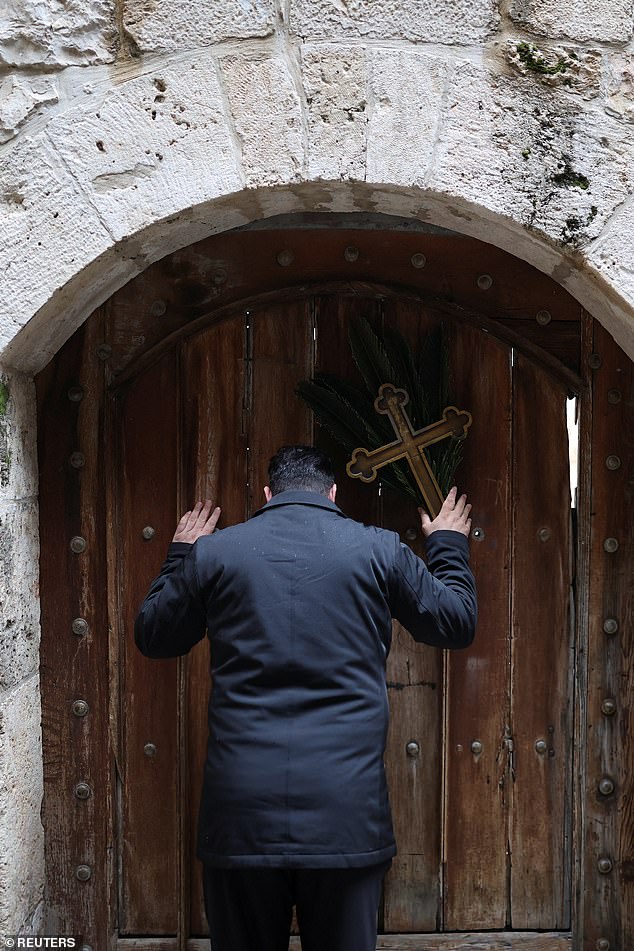
The Patriarchate emphasised that their request was for a small, private ceremony involving a few religious leaders, not a public gathering. They asserted that the police’s decision not only impeded the freedom of worship but also disrupted the delicate balance of the status quo in Jerusalem concerning holy sites.
A Cancelled Tradition and Alternative Observances
The traditional Palm Sunday procession, a vibrant spectacle that typically draws tens of thousands of Christians from across the globe, involves a walk from the Mount of Olives into the Old City, marked by waving palm fronds and joyous singing. This year, due to safety concerns, the Patriarchate had already cancelled this public procession. Masses within the church were limited to fewer than 50 worshippers, adhering to Israeli military guidelines for civilian gatherings.
Cardinal Pizzaballa ultimately celebrated Mass at the nearby St. Savior’s Monastery, a significant church adjacent to an underground music school designated as a safe shelter by the Israeli military. Later that day, he led a prayer for peace at the Dominus Flevit Shrine on the Mount of Olives. While his homily focused on Jesus, he did not explicitly address the morning’s incident.
Across the globe, Pope Leo XIV, during Palm Sunday Mass in St. Peter’s Square, offered prayers for Christians in the Middle East, describing their current situation as an “atrocious” conflict. He alluded to the difficulties many faced in fully observing the rites of these holy days, though he did not offer specific details. A Vatican spokesman had not yet responded to requests for comment on the Jerusalem incident.
International Condemnation Mounts
The barring of Catholic leaders from the Church of the Holy Sepulchre triggered widespread condemnation from international quarters. The United States, a key ally of Israel, voiced its strong disapproval. U.S. Ambassador Mike Huckabee, an outspoken evangelical Christian, described the incident as “an unfortunate overreach.” He pointed out that the proposed prayer by Cardinal Pizzaballa and other leaders was well within the 50-person limit for gatherings, adding, “For the Patriarch to be barred from entry to the Church on Palm Sunday for a private ceremony is difficult to understand or justify.”
French President Emmanuel Macron also condemned the action, viewing it as an exacerbation of the “concerning increase in violations of the status of the Holy Sites in Jerusalem.” He took to social media to assert, “The free exercise of worship in Jerusalem must be guaranteed for all religions.”
Italian authorities, spanning the political spectrum, expressed their strong objections to the restriction placed on Cardinal Pizzaballa, an Italian cardinal who is also considered a prominent contender for the papacy in the upcoming conclave. The Italian government lodged a formal protest with Israeli authorities and summoned Israel’s ambassador to Rome for an explanation. Prime Minister Giorgia Meloni declared that the police action “constitutes an offense not only against believers but against every community that recognises religious freedom.” Meloni’s government has strived for a balanced approach to the conflict in Gaza, supporting Israel’s defence while acknowledging the Palestinian toll. Italy has also stated it will not participate in the conflict with Iran, while maintaining that the Islamic Republic should not acquire nuclear weapons.
Israeli Response and Future Prospects
Israeli Prime Minister Benjamin Netanyahu stated that there was no “malicious intent” behind the decision, reiterating that the cardinal’s access was restricted due to safety concerns. He assured that Israel would endeavour to partially reopen the Church of the Holy Sepulchre in the coming days. Netanyahu posted on X, “Given the holiness of the week leading up to Easter for the world’s Christians, Israel’s security arms are putting together a plan to enable church leaders to worship at the holy site in the coming days.”
In an interview with Italian Catholic broadcaster TG2000, Cardinal Pizzaballa acknowledged a difference of opinion with Israeli authorities regarding access to the church but described the dispute as remaining polite. He expressed a desire to “clarify better what will be done in the coming days, respecting the security of all naturally but also in respect of the right to prayer.”
This incident draws parallels with the security measures affecting other holy sites. The Western Wall, Judaism’s holiest prayer site, is also largely closed due to safety issues, though limited numbers of worshippers are permitted in an adjacent enclosed area. Smaller religious sites within Jerusalem’s Old City that are situated near acceptable bomb shelters and adhere to gathering size restrictions are generally permitted to remain open. The situation at the Church of the Holy Sepulchre highlights the complex challenges of balancing security imperatives with the fundamental right to religious observance in a volatile region.


