South Australian Premier Peter Malinauskas has secured a second term for the Labor Party following a significant victory that also saw One Nation achieve remarkable success and reshape the political landscape of the state.
Malinauskas was widely expected to retain his position after a strong first term, with critics arguing that the party’s inability to address South Australia’s growing challenges would affect the election outcome. However, the Labor Party has managed to overcome these concerns, with projections indicating they will secure at least 33 seats across the state—up from the 27 seats they won in the previous election.
State of Play: 24 Seats Needed for Victory
- Labor: 35
- Liberal Party: 5
- One Nation: 2
- Others: 2
- Five seats in doubt
The most notable success story from this election is the surge in support for One Nation. The party received a significant boost in votes from electorates across the state, with early swings reaching up to 20 per cent in areas like Mount Gambier and Adelaide. One Nation is now expected to win two seats.
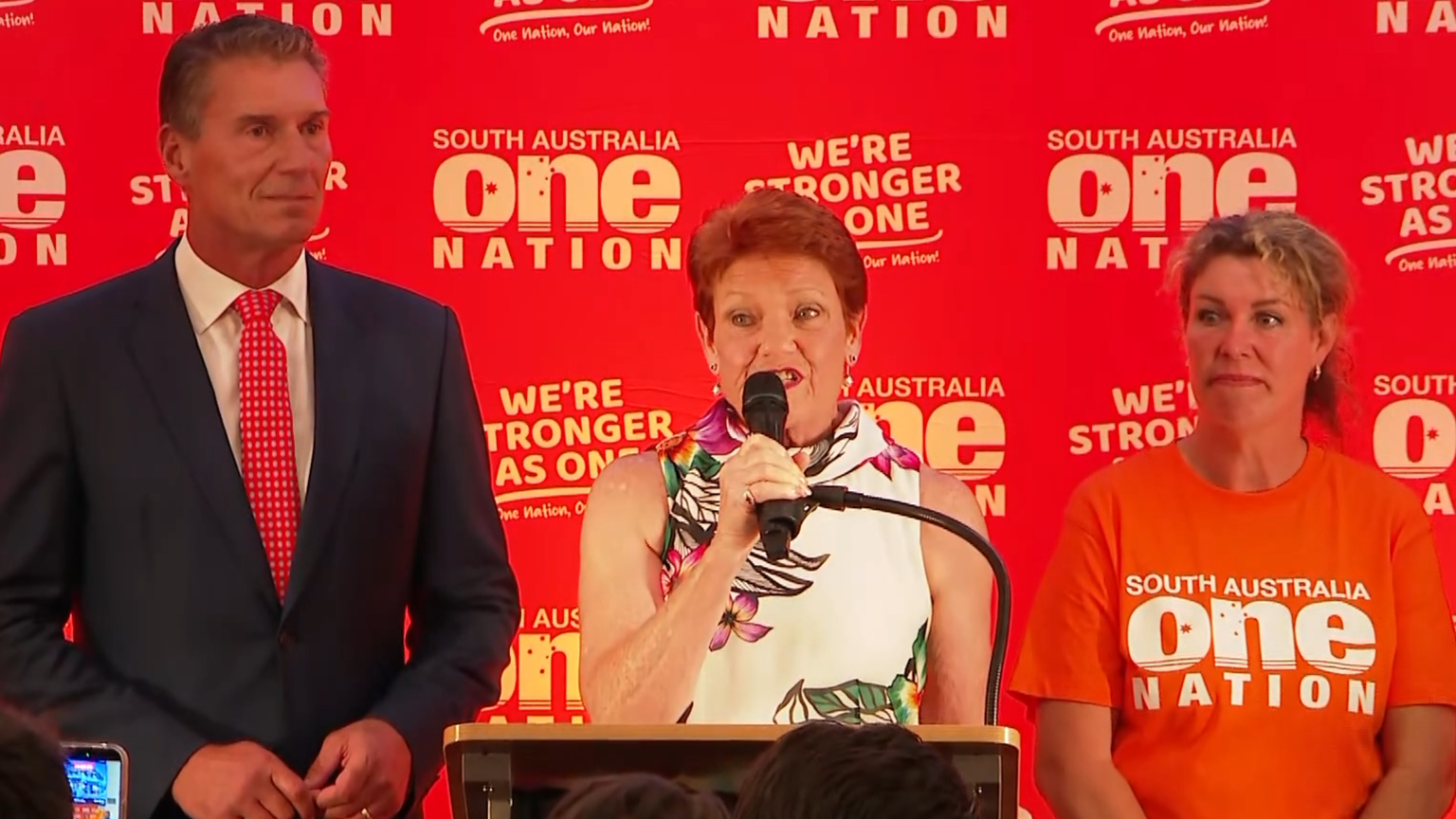
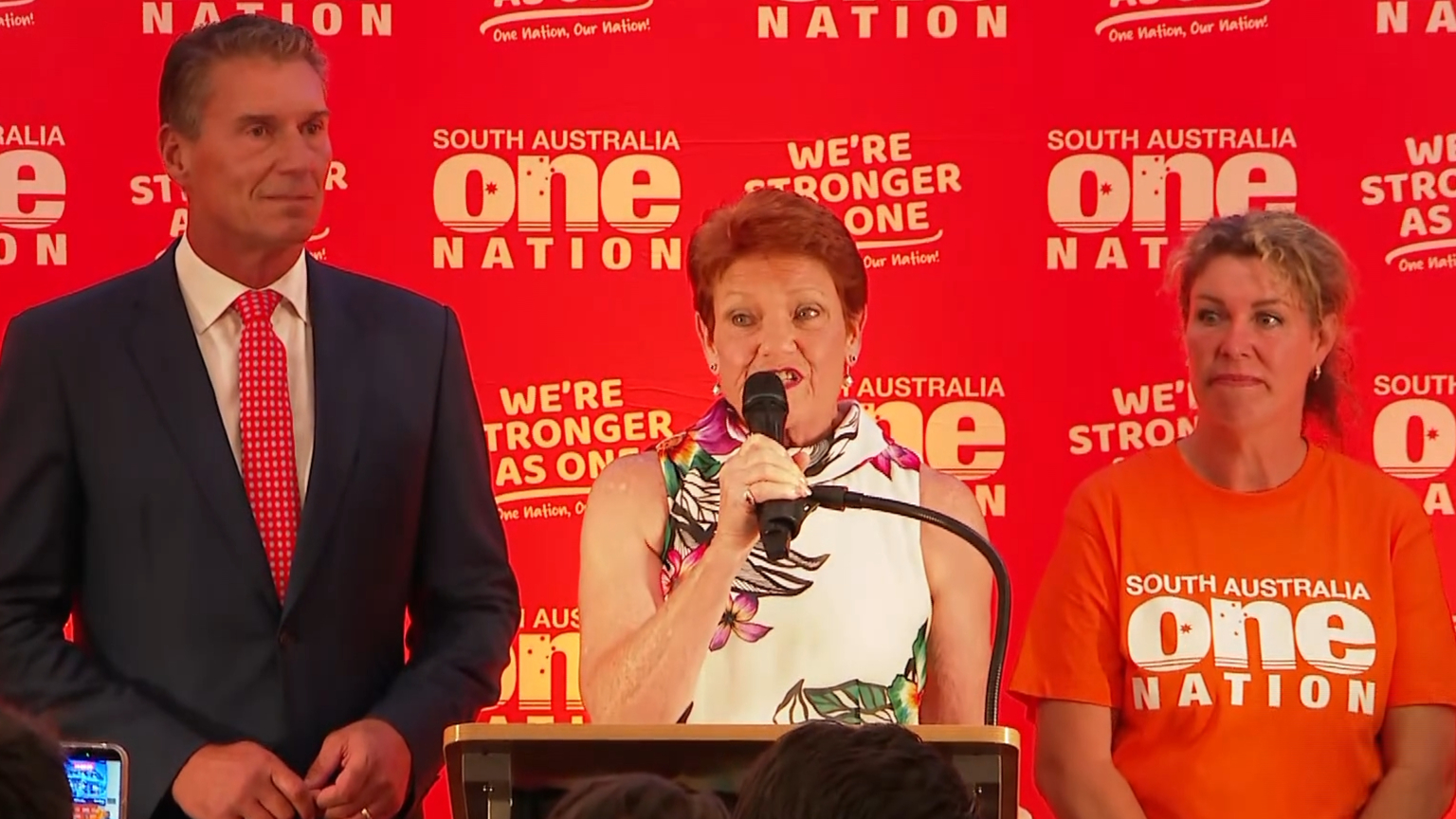
Pauline Hanson addressed a large crowd of orange-clad supporters at the SA One Nation headquarters as voting continued late into the night. She remarked on the size of the crowd, saying, “The last time I saw a crowd like this was when we won 11 seats in Queensland in 1998.” She described it as “the start of a new beginning for the people of South Australia and for the people of Australia.”
Hanson congratulated Malinauskas on his victory but warned that she is leaving behind “some landmines” in South Australia as she returns to Canberra. “I’m leaving you some landmines; they’re called One Nation members of parliament,” she said. “So I suggest you don’t step on them because they will explode.”
‘Seismic Shockwaves’
Hanson has made it clear that her goal is to expand the party’s influence nationwide. With both major parties in South Australia losing votes to One Nation, political experts are predicting that the party’s strong performance will create “seismic shockwaves” in Victoria ahead of its own state election in November.
Charles Croucher, a political editor, stated, “It would be a lightning bolt to Victoria, particularly for Labor, who have relied on some of those regional and outer suburban seats.” He added that the primary emotion among One Nation voters is anger, as many feel left behind. This sentiment is more pronounced in Victoria than in South Australia.
Croucher suggested that he would not be surprised if Victorian Premier Jacinta Allan were to lose her position within the next week.
Liberal Party’s Position
The Liberal Party is projected to hold onto just a few seats and has lost former leader Vincent Tarzia, who was defeated in his electorate of Hartley. The Liberal Party is expected to win the seats of Ngadjuri, Bragg, Chaffey, Flinders, and Hurn’s electorate of Schubert.
However, the Liberal Party is likely to maintain its role as the opposition, with One Nation poised to gain just a couple of additional seats.
‘Turn the Temperature Down’
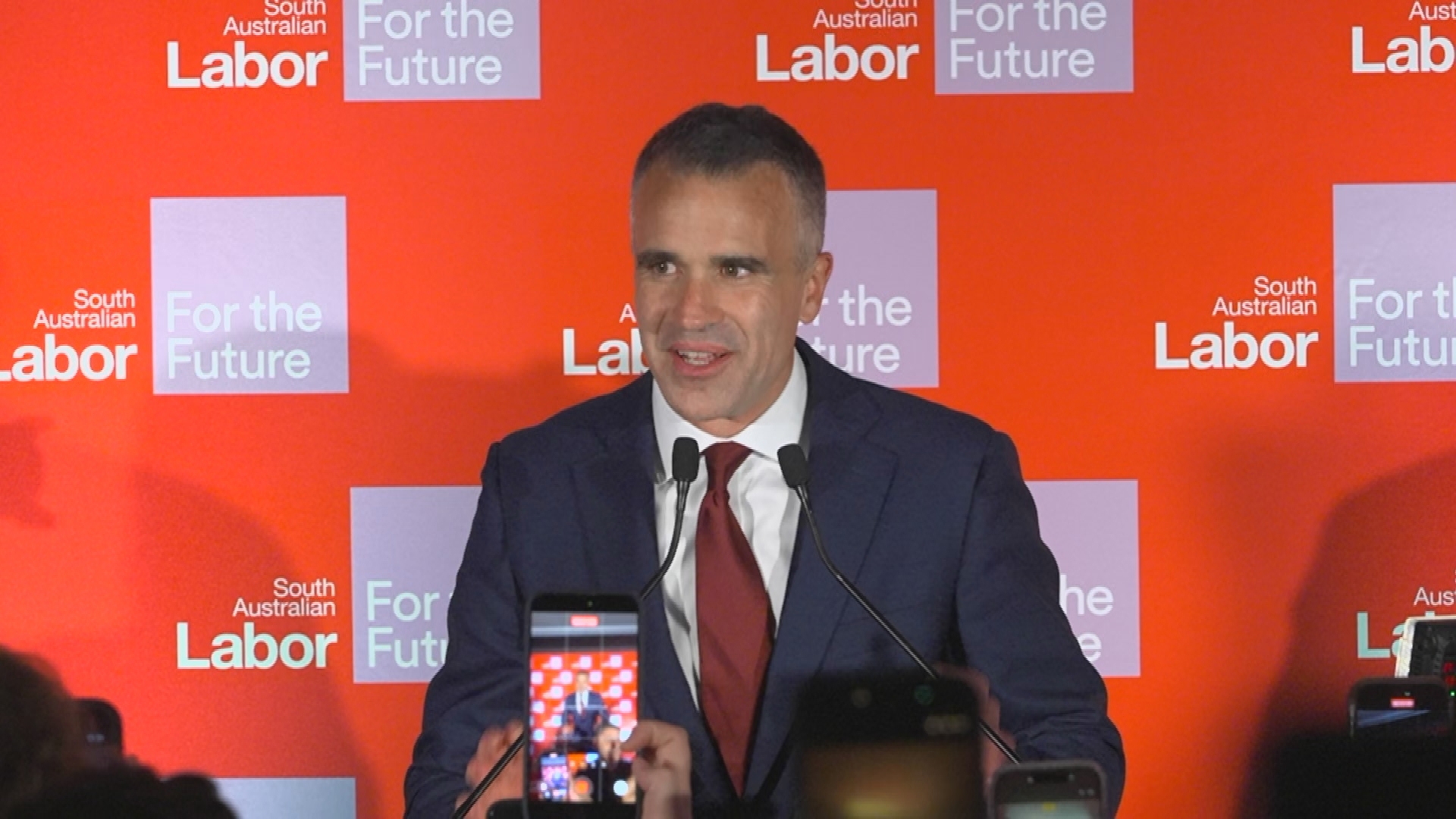
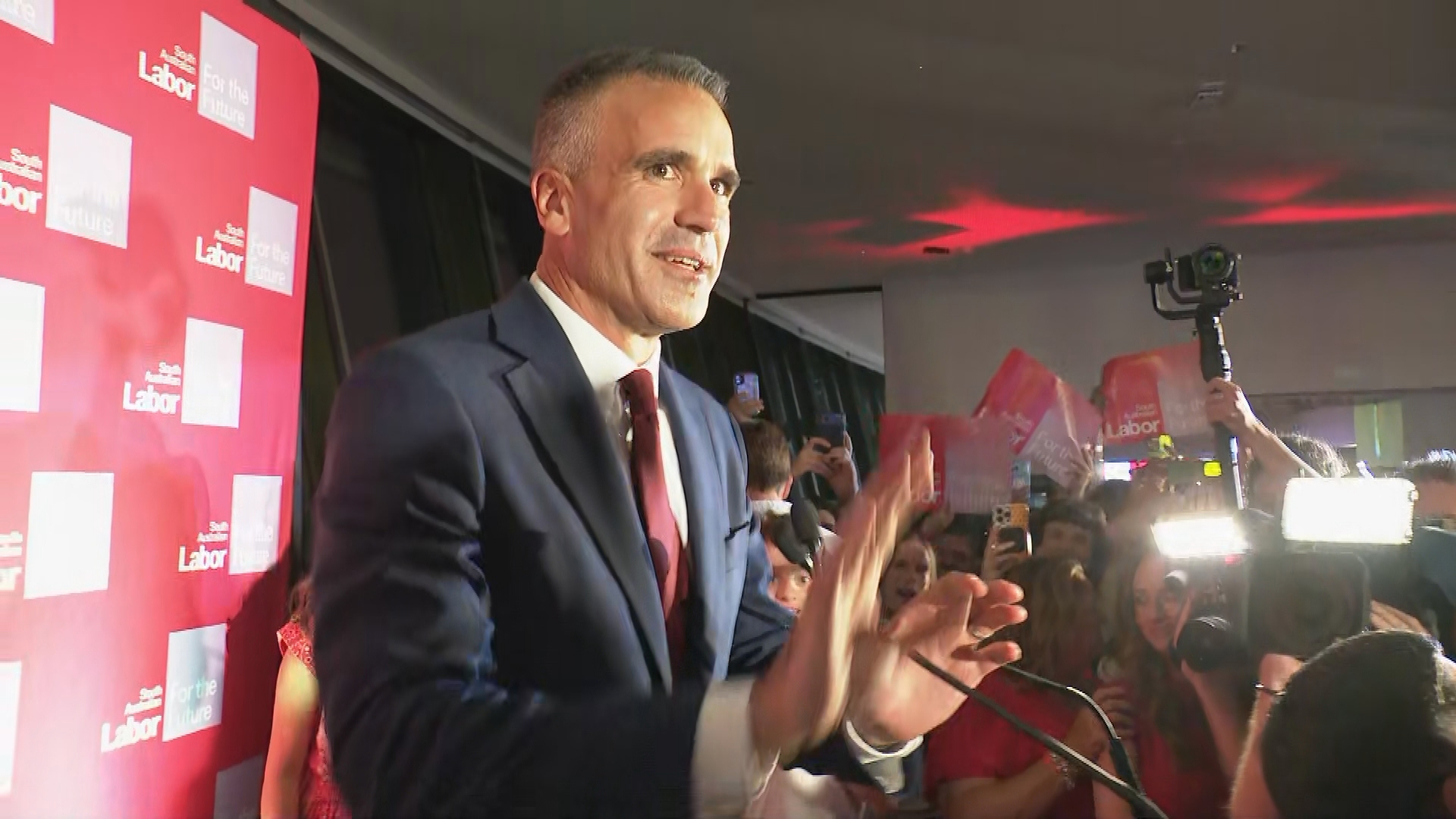
In his victory speech, Malinauskas urged South Australians to “turn the temperature down” following what he described as “a hot summer.” He credited his party’s “discipline and unity” throughout the campaign and subtly acknowledged One Nation’s anti-immigration policies.
“It’s been a hot summer in Australia, so maybe we should all look forward to the temperature coming down just a little bit so that when we sing the national anthem with pride we don’t forget there is a second verse,” Malinauskas said.
He emphasized the importance of unity and diversity, stating, “Which reminds us, when we all combine we can achieve anything when we work together. Diversity has always been our greatest strength. There is no way that this state comes to its full potential unless we work together.”
Malinauskas concluded by addressing all South Australians, regardless of where they lived, their background, or the challenges they faced. “Just as long as they call South Australia home,” he said.