
Bridging the Canine Communication Gap: A New Collar Promises Real-Time Human-Dog Dialogue
A California-based technology firm, Traini, has unveiled what it claims to be a groundbreaking device capable of translating human speech into a language that dogs can understand, and vice-versa. Marketed as the “world’s first real-time human-dog conversational collar,” this innovative gadget aims to revolutionize the way humans interact with their canine companions.
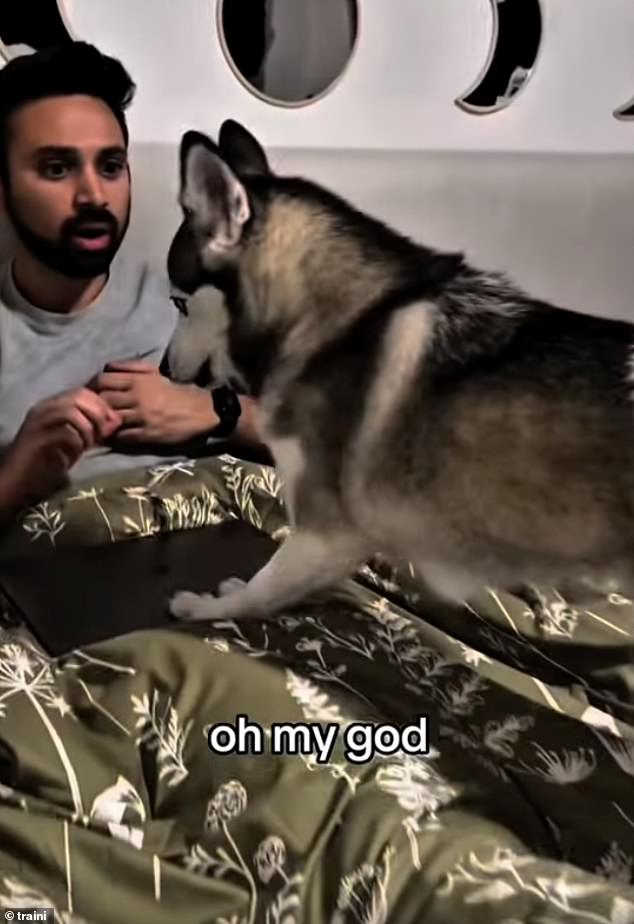
The company’s website showcases compelling video demonstrations of the collar in action. One clip features a man issuing a command through a smartphone app: “Can you get me the remote?” The collar then processes this request and emits a series of AI-generated barks, which the dog appears to comprehend and act upon by retrieving the remote control.
Another demonstration illustrates a more affectionate interaction. An owner, using the app, instructs the collar to say, “Give me a kiss.” The device translates this into a series of canine vocalizations, prompting the dog to respond by licking the man’s face.
Traini describes its creation as “the world’s first pet behavioural AI that responds emphatically, built to align technology with pet well-being.” The underlying technology reportedly leverages artificial intelligence to interpret human commands and translate them into distinct canine vocalizations, while also potentially deciphering canine responses.
Skepticism from the Dog Training Community
Despite the exciting claims, the prospect of genuine two-way conversations with dogs remains a subject of considerable debate within the professional dog training community. Renowned celebrity dog trainer Sharon Bolt has expressed a healthy dose of skepticism regarding the device’s ability to facilitate full-blown dialogues.
She highlights the nuanced nature of canine communication, explaining that the pitch and tone of a dog’s bark convey a range of emotions. “When a dog barks there are different emotions displayed through high pitched and lower gruffer barks,” Bolt stated. “Higher is more anxious or scared while lower is more confident. You can understand how an app might be able to recognise those different emotions.”
However, she questions the leap from recognizing emotional cues to enabling complex conversations. “But I can’t see the logic in being able to have a conversation with it,” Bolt added. “You can train a dog to get a remote. There are certain phrases like dinner or walkies it might understand. But general chit chat, no.”

The Science Behind the Bark
The core of Traini’s technology appears to lie in its advanced AI, which is designed to:
- Analyze Human Speech: The system takes spoken commands from a connected app.
- Translate into Canine Vocalizations: It then converts these commands into a sequence of barks, yips, and growls that are intended to be understandable to dogs. The AI likely learns to associate specific sound patterns with actions or intentions.
- Interpret Doggy Responses (Potential): While the current focus seems to be on human-to-dog translation, the long-term vision likely includes deciphering dog barks and body language to provide human-readable feedback. This would involve complex pattern recognition and behavioral analysis.
Potential Applications and Future Implications
If Traini’s technology proves effective, the implications for pet ownership and animal welfare could be significant. Beyond simple command translation, such a device could potentially:
- Enhance Training: Make training sessions more efficient and intuitive for both owner and pet.
- Improve Well-being: Allow owners to better understand their dog’s needs, such as distress, hunger, or a desire for play, leading to improved mental and physical health for the animal.
- Strengthen Bonds: Foster deeper connections and understanding between humans and their dogs.
- Aid in Behavioral Issues: Potentially help identify and address the root causes of problematic behaviors by facilitating clearer communication.
However, the ethical considerations and the sheer complexity of animal cognition mean that the journey towards truly conversational AI for pets is likely to be a long and intricate one. The current iteration of Traini’s collar represents an ambitious step, but the ultimate goal of a seamless, human-like dialogue with our furry friends may still be some way off. The scientific community and pet owners alike will be watching closely to see how this technology evolves and whether it can truly bridge the gap between species in the way it promises.


