
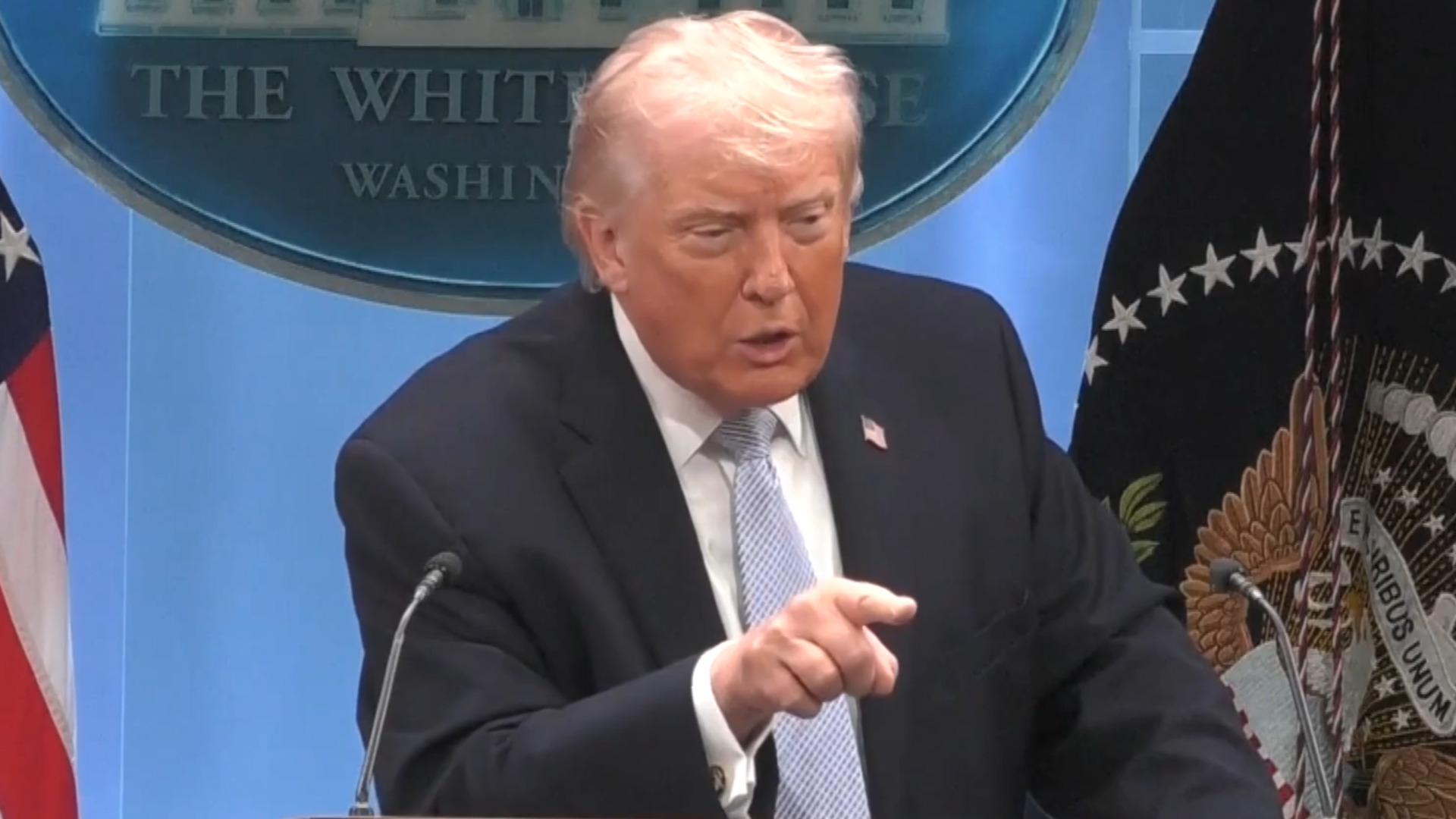
US President Donald Trump has expressed strong disapproval of a question posed by a reporter from the New York Times regarding his previous statement about threatening to destroy Iran’s key civilian infrastructure and whether such actions could be considered war crimes.
Trump responded sharply, saying, “Quiet, quiet, quiet. You no longer have credibility at the New York Times.” He continued, “People like you … are fake; you’re fake.”
Background of the Controversy
The exchange took place during a press briefing where Trump was questioned about his earlier remarks on Iran. The president had previously warned that the US would target Iran’s critical infrastructure if the country continued to pose a threat. This statement raised concerns among international observers and legal experts, who argued that such actions could violate international law and potentially constitute war crimes.
The reporter from the New York Times sought clarification on whether Trump’s comments implied an intention to commit acts that would be considered unlawful under international humanitarian law. This line of questioning led to Trump’s sharp rebuke, as he accused the publication of lacking credibility and being biased against his administration.
Reactions from the Public and Media
The incident sparked widespread discussion across various media platforms and public forums. Many analysts pointed out that Trump’s response reflected a pattern of attacking journalists and media outlets that challenge his policies or statements. This approach has been a recurring theme throughout his presidency, often drawing criticism from both domestic and international media organizations.
Some experts argue that Trump’s dismissal of the New York Times’ credibility is not only unproductive but also undermines the role of a free press in holding leaders accountable. They emphasize that the media plays a crucial role in informing the public and scrutinizing government actions, especially when those actions involve matters of national security and international relations.
Legal and Ethical Implications
The question raised by the reporter touched on significant legal and ethical issues. International law, including the Geneva Conventions, prohibits attacks on civilian infrastructure unless it is directly used for military purposes. If Iran’s infrastructure is deemed essential for its civilian population, any attack on it could be seen as a violation of these principles.
Legal scholars have debated whether Trump’s rhetoric could be interpreted as endorsing such actions, which could have serious consequences if carried out. Some have warned that inflammatory language from political leaders can escalate tensions and lead to real-world conflicts.
Impact on Press Freedom
Trump’s response to the reporter highlights the growing tension between political leaders and the media. In recent years, there have been increasing concerns about the erosion of press freedom in various parts of the world, with some governments attempting to control or suppress critical reporting.
The situation with the New York Times underscores the importance of maintaining an independent and free press. Journalists play a vital role in ensuring transparency and accountability, and their ability to ask difficult questions is essential for a functioning democracy.
Conclusion
The exchange between Trump and the reporter from the New York Times serves as a reminder of the complex relationship between political leaders and the media. While leaders have the right to express their views, they also have a responsibility to engage in constructive dialogue and respect the role of the press in democratic societies.
As the global community continues to grapple with issues of national security, international law, and media ethics, it is crucial to uphold the principles of transparency, accountability, and free expression. The incident also highlights the need for ongoing discussions about the responsibilities of both political leaders and the media in shaping public discourse and ensuring informed decision-making.


