The Swanston Centre, a mental health facility in Geelong, has been the site of escalating safety concerns, culminating in a tragic death within a patient’s room. Just as the grim aftermath of a violent incident was being addressed, a new patient arrived with a visibly worried family member. Their immediate question – “How do I know he is safe here?” – echoed the long-held anxieties of the centre’s staff, who have for over a decade raised alarms about the deteriorating safety conditions overseen by Barwon Health.
“They were right,” stated a veteran mental health worker, confirming the genuine fear underpinning the family member’s query. “I couldn’t guarantee that he’s going to be safe.” This apprehension proved tragically prescient.
A Deadly Encounter in a “Legacy Room”
Days prior, a 31-year-old man was found dead in his room at the Swanston Centre, allegedly at the hands of another patient admitted to the adjacent room. The two shared a bathroom, separated by a flimsy, non-locking saloon-style door. In the early hours of February 22, staff discovered the deceased patient on the floor, surrounded by shards of glass, with the other patient standing over him. The man who lost his life had been admitted for relatively minor treatment and housed in one of the centre’s “legacy rooms.” The dated design of these rooms, requiring patients to share bathrooms, no longer meets contemporary safety standards.
Staff conducting routine nightly checks discovered the patient missing from his room. A frantic search ensued, but the tragic discovery was made close by. The 31-year-old was found on his bedroom floor, his body amidst broken glass, his neighbour in close proximity. Police and homicide detectives are now investigating the death, with WorkSafe and Barwon Health also conducting their own inquiries. Traumatised staff are left grappling with the question of why their long-standing concerns were not addressed sooner.
“I think it’s been swept under the rug,” lamented one worker, who frequently worried about placing patients in acute mental health distress in rooms necessitating shared bathrooms. “Staff are feeling very uneasy about how to do their job. There’s a lot of sadness because someone’s come in for treatment… and that’s hard to comprehend.”
Barwon Health stated it was unable to comment further due to the ongoing police investigation but assured that all incidents are reviewed through established governance processes to identify and address risks, supporting ongoing quality and safety improvements.
A “High-Risk” Zone and a Rampage
The severity of the situation at Swanston Centre was starkly admitted by Barwon Health in a 2019 submission to Victoria’s mental health royal commission. The submission detailed how conditions within the centre had become so dangerous that University Hospital Geelong had been designated a “high-risk public zone” by Victoria Police. This alarming classification stemmed from a surge in violence and assaults within the unit, necessitating rapid police response.
The submission highlighted the complex factors contributing to the escalating violence, including:
* Acute psychiatric illness
* Patients arriving with increasingly severe and complex needs
* Rising aggression and substance intoxication/withdrawal
* Overcrowding and restricted liberties
* A critical shortage of safe community-based discharge options, leading to prolonged hospital stays.
Furthermore, Barwon Health’s psychiatric services struggled to attract and retain essential staff, including psychiatrists, psychologists, allied health professionals, occupational therapists, and social workers. The submission warned that workers were exposed to “significant levels of agitation, distress and violence.”
Within days of this submission, a 72-year-old woman admitted for medication adjustment became a victim of a violent incident. A young man, admitted for urgent care and placed in the acute ward rather than a more secure unit, went on a rampage. In a psychotic episode, he destroyed the ward, wielding fire extinguishers and other items, and severely assaulted the woman. Overnight staff were forced to shelter in a secure room during the hours-long attack. The “high-risk public zone” designation proved ineffective as staff were unable to make external calls, including to emergency services. The woman survived but sustained permanent injuries and has since filed a writ against Barwon Health.

Reviews into the security failure were undertaken by the hospital and WorkSafe. While some code black response protocols were reportedly improved and the unit’s layout altered, staff suggest these changes have had minimal impact, with incidents continuing to occur annually.
A Cascade of Tragedies
The safety concerns are underscored by a series of tragic events:
April 26, 2021: Allison Naomi Eagle, 44, was found dead in her room. An involuntary patient undergoing treatment for schizophrenia and respiratory issues, her death was subject to a Barwon Health clinical review. While the coroner found no suspicious circumstances and was unable to definitively link her death to medications, the review identified areas for improvement in sedative monitoring, heart scans, and overnight observation protocols.
December 2022: Another patient died by suicide while undergoing treatment in the acute psychiatric unit. Investigations into this incident are ongoing.
April 2024: A coronial investigation was launched after a 54-year-old woman was found deceased in the Swanston Centre. This investigation is also continuing.
January 2025: A WorkSafe investigation resulted in Barwon Health facing two charges for failing to ensure the health and safety of non-employees. This case is currently before the courts.

A Mother’s Grief and Legal Action
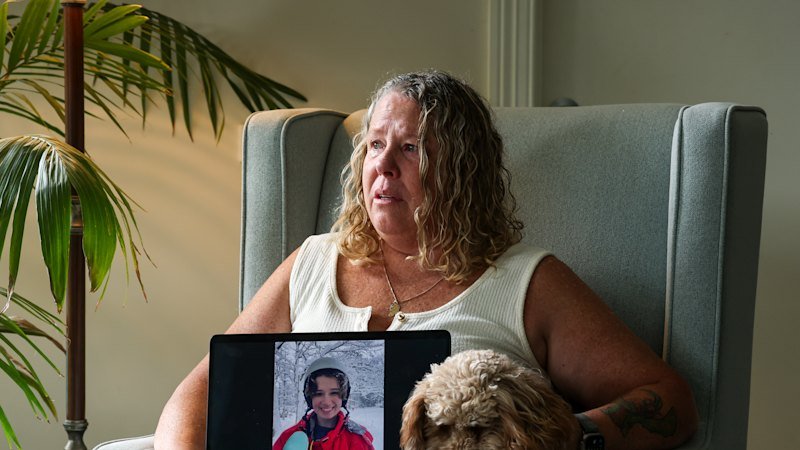
For Lee Johnson, the Swanston Centre was meant to be a safe haven for her 22-year-old child, Bellamy Nieto, who was admitted with suicidal ideation. Tragically, Nieto, who identified as non-binary, was found dead in their room in June 2024, days after a suicide attempt on the same ward. The family is now suing Barwon Health for negligence.
Johnson expressed devastation at the recent death of a patient allegedly killed by another, stating, “I had hoped after Bellamy things would change. The lack of supervision there, and the lack of resolution when there’s conflict within that place is directly related to both deaths.”
It is alleged that Nieto, after being subjected to alleged robbery, harassment, and assault by another patient, was moved from a high-observation room to a more isolated one the night before their death. Johnson claims she had repeatedly requested this patient be separated from her child and alleges they verbally attacked Nieto multiple times, broke into their room, stole belongings, and destroyed a handmade card. The family also alleges that observation times were significantly reduced in the hours leading up to Nieto’s death, leaving them alone and vulnerable.

Johnson stated, “I thought Bellamy was safe. I thought they would protect them… I would have been with them if I knew they weren’t checking on them.” She is speaking out to prevent other families from enduring similar heartbreak, holding the centre “directly responsible” and urging others to trust their instincts if they feel a loved one is not receiving adequate care.

“It’s a Hellhole”
Another Geelong woman, who wished to remain anonymous, recounted years of raising security and privacy concerns regarding her brother’s frequent admissions to the Swanston Centre. She noted a lack of thorough visitor bag checks and observed sensitive patient and visitor information left exposed on the front counter. Her family’s breaking point came when her brother, experiencing severe paranoia and a mental health episode, was discharged and placed in a taxi without their knowledge. Her complaint to the Victorian Health Complaints Commissioner in 2023 documented these safety and privacy concerns.
Wider Systemic Failures
Forensic psychiatrist Dr. Rajan Darjee, while not directly involved in the recent Geelong homicide, believes the issues at Swanston Centre stem from broader systemic failures. He has initiated research into the number of individuals with psychiatric disorders charged with murder, noting a concerning trend of untreated patients with long-standing conditions not receiving timely or sufficient care.
“I’m sure there were problems in the hospital in Geelong, but even with those problems, this probably wouldn’t be happening if we didn’t have systemic failures that mean we have lots of untreated people who are not getting the care they require,” Dr. Darjee explained. He added that these issues occur within a system “totally unfit for purpose,” predicting further tragedies elsewhere.
Associate Professor Simon Stafrace, chair of the Victorian branch of the Royal Australian and New Zealand College of Psychiatrists, described the homicide as a “devastating, distressing and an extremely rare event,” expressing condolences to all affected families. He cautioned against viewing mental health reform as complete, stressing the need for continuous improvement and critical self-assessment of the system at all levels.
Police have yet to lay criminal charges in relation to the recent death. The patient accused of the killing is understood to be too unwell for police interviews and has been transferred to a secure psychiatric unit in Melbourne.
Swanston Centre staff report that statewide issues are amplified within their wards. They note that the new Mental Health Act, while aiming for less restrictive practices, can inadvertently place others in danger. Staffing shortages and the increasing complexity of patient needs further exacerbate these pressures.
A government spokesman expressed deep distress over the incident and offered condolences to the loved ones of the deceased and the centre’s staff. However, for the staff at Swanston Centre, the raw devastation and grief remain. Speaking through the Health and Community Services Union, staff who knew the victim report feeling kept in the dark about the details of the death, hindering their ability to process their grief and find closure.
Lifeline: 131 114