
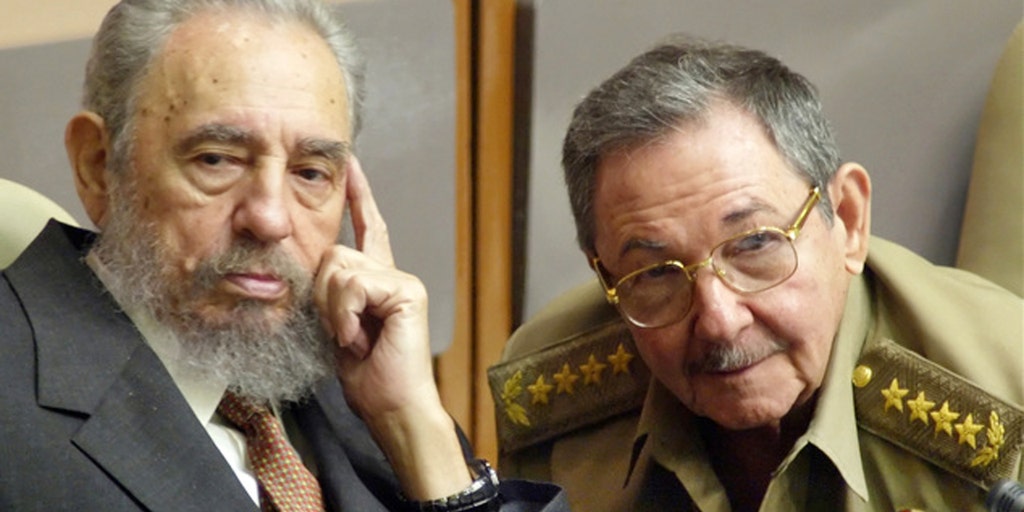
The Castro Dynasty and the Future of Cuba
The Castro dynasty has long been a central figure in Cuban politics, and its influence may now play a crucial role in shaping the island’s future. As the United States and Cuba navigate complex diplomatic tensions, the legacy of the Castro family continues to loom large.
Cuba has been facing an economic crisis for months, with blackouts lasting over 12 hours and fuel rationing becoming a daily struggle. Basic services such as water supply, food distribution, and healthcare have also suffered. This situation has led to widespread concern about the stability of the country’s infrastructure and the well-being of its citizens.
In response, Cuban President Miguel Díaz-Canel has initiated formal talks with the United States to address the ongoing challenges. However, the White House has reportedly insisted that Cuba’s president must step down if any progress is to be made. Meanwhile, former US President Donald Trump has made controversial remarks about “taking Cuba,” suggesting he could do “anything I want with it.”
This speculation has raised questions about the role of the Castro family in determining the island’s future. Fidel Castro, the revolutionary leader who shaped modern Cuban politics, was succeeded by his brother Raúl, who held power until 2018. Raúl, now 94, is still believed to wield significant influence within Cuban politics.
One of the key figures in this narrative is Raúl Guillermo Rodríguez Castro, a great-nephew of Fidel and grandson of Raúl. He has been involved in secret talks with US officials, including Secretary of State Marco Rubio. His father, General Luis Alberto Rodríguez López-Calleja, was a powerful figure in Cuba’s military-controlled business administration group, GAESA, which controlled major sectors of the economy during Raúl Castro’s presidency.
Rodríguez Castro has no formal title in the current government but has maintained a close relationship with his grandfather. He has been described as growing up in a unique environment, surrounded by military men who were trained to support the regime. His nickname, “El Cangrejo” (the crab), comes from a childhood condition that required surgery.
Another member of the Castro family involved in recent events is Óscar Pérez-Oliva Fraga, the grandson of Ángela Castro, Fidel and Raúl’s older sister. He recently became Cuba’s deputy prime minister, overseeing government business. Analysts have speculated that he could become a key figure in Cuba’s political landscape, similar to Venezuela’s Delcy Rodríguez.
Alejandro Castro Espín, Raúl Castro’s son, has also played a role in Cuban politics. He was involved in negotiations with the Obama administration to normalize relations between the US and Cuba. However, he has been less visible in recent years, re-emerging in 2024 at a protest in Havana against Israel’s war in Gaza.
Despite their influence, neither Rodríguez Castro nor Alejandro Castro Espín have publicly commented on the recent tensions between Cuba and the US. Trump’s remarks about “taking Cuba” have sparked further debate, with the Cuban government responding by accusing the US of daily threats.
The economic sanctions imposed by the US since the 1960s have had a lasting impact on Cuba. The country has struggled to maintain its energy grid after the cutoff of Venezuelan oil shipments. As a result, it has turned to natural gas, solar power, and oil reserves, but these efforts have not been sufficient to meet demand.
The Cuban Diaspora in Australia
Members of the Cuban diaspora in Australia, many of whom still have family living in Cuba, are deeply concerned about the country’s declining conditions. They describe a nation where vibrant culture and historical landmarks have been overshadowed by poverty and neglect.
Arian Martinez, who moved to Adelaide in 2023, spoke about the deteriorating living conditions in Cuba. He said that electricity is available for only a few hours each day, forcing people to buy food daily. Public transport is scarce, and infrastructure is crumbling, with old buildings collapsing due to lack of maintenance.
Tomas Alfredo Padro Alvarado, another Cuban expatriate in Adelaide, shared similar concerns. He described the lack of running water, frequent blackouts, and unsanitary conditions caused by garbage accumulation. His parents, who live in Santiago de Cuba, receive a combined monthly pension of approximately $US12, which is barely enough to cover basic needs.
Both men blame the communist regime for the current state of affairs. They argue that while Fidel Castro’s early policies were beneficial, the system created a climate of mutual distrust and limited freedom. They believe that lifting US sanctions and allowing greater economic and political freedom could help stabilize the country.
As the situation in Cuba continues to unfold, the role of the Castro dynasty remains a critical factor. Whether through formal negotiations or behind-the-scenes influence, the family’s legacy will likely shape the island’s future for years to come.


