Houthi Entry Escalates Middle East Conflict, Global Economic Fears Mount
 The ongoing conflict, initially perceived as a US-Israeli engagement with Iran, has dramatically broadened with the Houthi forces of Yemen joining the fray. This expansion signifies a perilous spread of hostilities, raising significant concerns about further damage to the global economy. In an effort to de-escalate and foster a regional solution, Pakistan has announced its intention to host a summit of Middle Eastern powers. However, the planned meeting, involving the foreign ministers of Saudi Arabia, Turkey, and Egypt, notably excludes direct participants in the conflict, casting a shadow of doubt over optimistic US pronouncements of diplomatic headway.
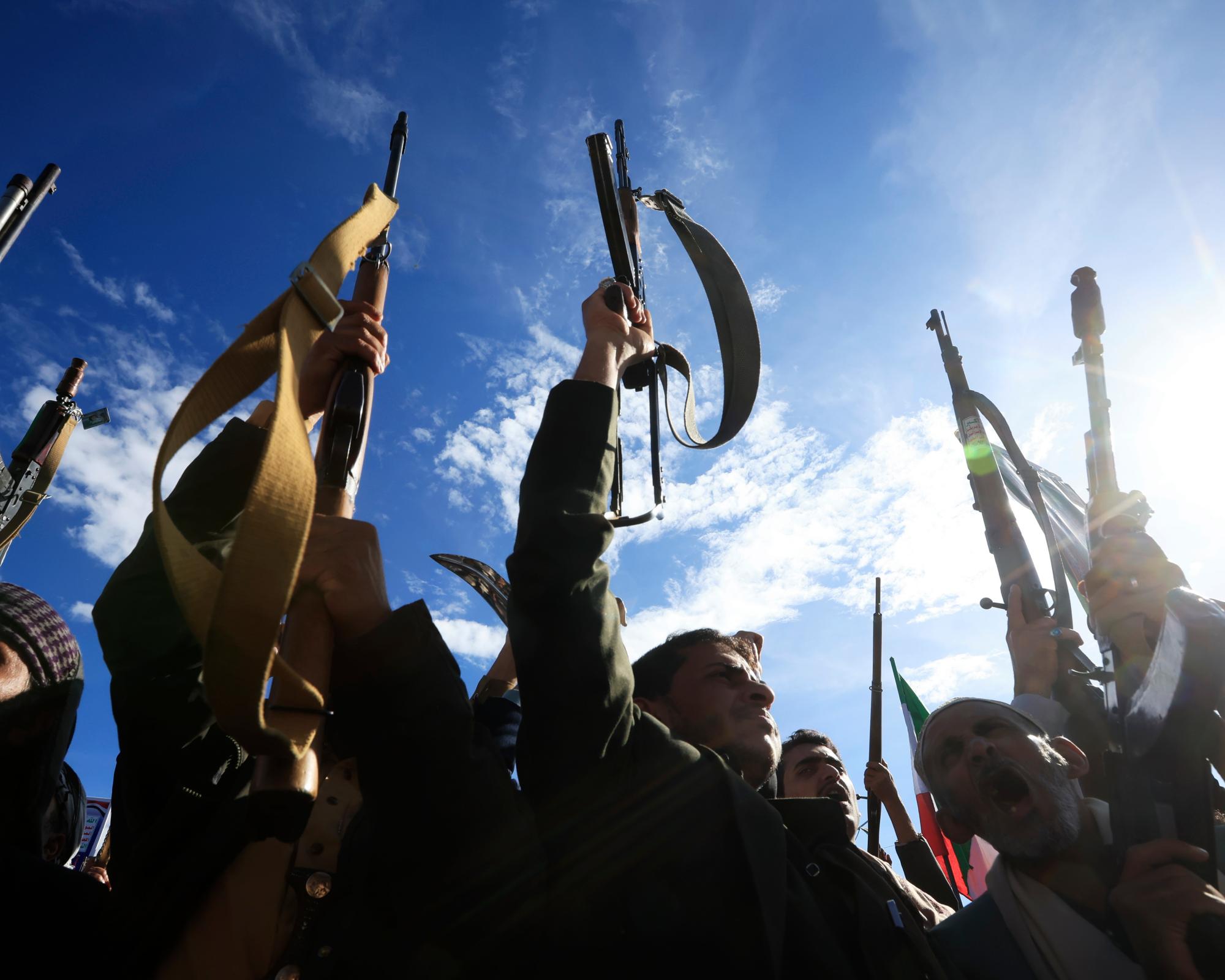
Houthi forces, staunch allies of Iran, declared on Saturday that they had launched a volley of ballistic missiles targeting “sensitive Israeli military sites.” They further vowed to continue their military operations until the “aggression” ceased on all fronts. Israel confirmed the interception of one missile originating from Yemen.
The military spokesperson for the Houthis, Yahya Saree, later elaborated on the group’s actions, stating that a second wave of strikes against Israel had been executed using a “barrage of cruise missiles and drones,” all aimed at military installations. In a televised address, Saree pledged to sustain military operations in the coming days, reiterating that they would persist until Israel “ceases its attacks and aggression.”
Reports from various media outlets indicate that the Houthis, an Iran-aligned militant group based in Yemen, have now attacked Israel for the second time within a 24-hour period, following their official entry into the conflict on Saturday.
Economic Repercussions and Strategic Chokepoints
Despite claims from the United States of having significantly degraded Iran’s military capabilities, intelligence sources cited by Reuters suggest that Washington can only definitively confirm the destruction of approximately one-third of Iran’s missile and drone arsenal.
In a separate development, US media reported that a missile and drone attack on Prince Sultan airbase in Saudi Arabia resulted in injuries to at least 12 US soldiers, with two sustaining serious wounds. Additionally, drones targeted Kuwait International Airport on Saturday, causing substantial damage to its radar system.
The Houthi involvement, given their control over Yemen’s most populous regions, presents a direct threat to the Bab al-Mandab strait. Situated at the southern extremity of the Red Sea, this strait is a critical chokepoint for global energy supplies and other vital trade routes traversing the Middle East.
With Iran having effectively imposed a near-total closure of the Strait of Hormuz, a shutdown of the Bab al-Mandab, which lies between Yemen and the Horn of Africa, would significantly amplify the already severe economic impact of the war. Furthermore, it could potentially reignite the protracted Saudi-Yemen conflict, which inflicted immense humanitarian suffering for seven years prior to a truce in 2022.
Since the US-Israeli offensive against Iran commenced on February 28th, Saudi Arabia has managed to reroute some of its oil exports via pipeline to the Red Sea. However, Saudi commentators have indicated that if this alternative route were also imperiled, Riyadh might be compelled to enter the conflict directly.
On Saturday evening, Pakistan’s Foreign Minister, Ishaq Dar, announced that Iran had agreed to permit an additional 20 Pakistani-flagged vessels to transit through the strait, with two vessels allowed to pass daily.
Farea Al-Muslimi, a research fellow at Chatham House specialising in the Middle East and North Africa, commented on the gravity of the situation: “The decision by the Houthis to join the broader Middle East conflict marks a serious and deeply concerning escalation. The potential impact on key commercial maritime routes, especially in the Red Sea and the Bab al-Mandab strait, cannot be overstated. At the same time, vital economic and military infrastructure across the Gulf region may become increasingly exposed.”
Regional Tensions and Escalating Weaponry
In a further indication of the conflict’s potential to metastasise, Iran’s central operational command claimed to have targeted a Ukrainian anti-drone system depot in Dubai, asserting that the facility was aiding US forces. Dubai authorities have not yet provided immediate confirmation of this alleged strike.
Ukraine has been supplying anti-drone technology and expertise to Gulf states since the conflict began, leveraging its extensive experience in defending against Russian attacks employing Iranian-designed fixed-wing unpiloted aircraft. Ukrainian President Volodymyr Zelenskyy announced on Saturday that his country had signed defence agreements with the United Arab Emirates and Qatar, following a similar pact with Saudi Arabia the previous week.
In the early hours of Sunday local time, air defences successfully intercepted a drone near the residence of Masoud Barzani, the leader of the Iraqi Kurdish ruling party, in Erbil. Security sources confirmed this incident to Reuters amid rising tensions across northern Iraq.
Evidence also suggests an escalation in the types of weaponry being deployed. Reports indicate that the United States has employed cluster munitions. Experts cited by Bellingcat have identified mines photographed in an Iranian village near a missile base in Shiraz as Gator anti-tank mines, a type of cluster munition banned by over 100 countries due to its indiscriminate nature.
The US is reportedly the sole party in the current conflict possessing this specific weapon, although Tehran has been utilising ballistic missiles equipped with cluster warheads in its strikes against Israel. In a condemnation of these strikes on March 16th, the head of US Central Command, Admiral Brad Cooper, characterised cluster bombs as “an inherently indiscriminate type of munition.”
Diplomatic Efforts and Uncertain Futures
As the conflict entered its second month, Pakistan has actively pursued a role as a peace mediator. Prime Minister Shehbaz Sharif and Army Commander Field Marshal Asim Munir had expressed hopes of facilitating US-Iran dialogue. Former President Donald Trump has asserted, without providing evidence, that such contacts were already underway and progressing favourably, a claim vehemently denied by Tehran.
Prime Minister Sharif stated on Sunday that he had engaged in “extensive discussions” with Iranian President Masoud Pezeshkian, briefing him on Pakistan’s diplomatic initiatives.
The efficacy of a regional meeting that excludes the primary belligerents remains uncertain. Crown Prince Mohammed bin Salman of Saudi Arabia has reportedly been privately urging Trump to intensify the campaign against Iran, seemingly concerned that a weakened but unvanquished Iranian regime would represent a worst-case scenario for Riyadh.
On Friday night, Trump alluded to the possibility of Bin Salman joining four other Arab nations in normalising relations with Israel in exchange for concessions related to the attack on Iran, Saudi Arabia’s long-standing regional adversary.
The former US president remarked, “Mohammed would say: ‘Oh yes. As soon as we do this. As soon as we do that.’ It’s now time. We’ve now taken them out, and they are out bigly. We’ve got to get into the Abraham Accords.” Trump made these comments at a Saudi-sponsored investors’ meeting in Miami, where he aimed to promote optimistic economic outlooks for the US in the face of oil price volatility and subsequent stock market sell-offs triggered by the war.
The survival of Iran’s Islamic Republic regime after a month of aerial bombardment presents Trump with a stark choice: either find a way to extricate the US from the costly conflict or escalate the campaign, potentially involving ground troops. The recent deployment of thousands of US Marines and airborne forces to the region has fuelled speculation about a potential land incursion, possibly targeting Kharg Island, Iran’s primary oil export hub, or islands within the Strait of Hormuz.
Tehran has issued a stern warning that such an action would result in the complete closure of the strait and an escalation of attacks on regional infrastructure, including desalination plants crucial for water supply in several Gulf countries.
Al-Muslimi cautioned that such an escalation, potentially coupled with a renewed direct confrontation between Saudi Arabia and the Houthis, could precipitate a widespread regional conflagration. “Any such war would likely be more intense, more destructive, and even more devastating than previous rounds of fighting,” he stated.