German Industry Grapples with Shifting China Dynamics
For decades, China represented a golden ticket for German businesses, a seemingly inexhaustible wellspring of demand for everything from sophisticated automotive engineering to precision industrial machinery. This insatiable appetite fueled a significant portion of Germany’s economic prosperity, particularly within the eurozone’s largest economy. However, this landscape is undergoing a profound transformation. China’s rapid ascent in high-tech manufacturing has not only diminished its role as a passive consumer of German goods but has also positioned it as a formidable competitor, presenting significant challenges to Germany’s industrial prowess.
As German Chancellor Friedrich Merz reportedly prepares for his initial visit to the world’s second-largest economy, the imperative to navigate these evolving commercial ties will be at the forefront of discussions. The changing relationship is keenly felt by companies across the spectrum, from industrial giants to smaller, specialized enterprises.
The Pressure on Small and Medium-Sized Enterprises
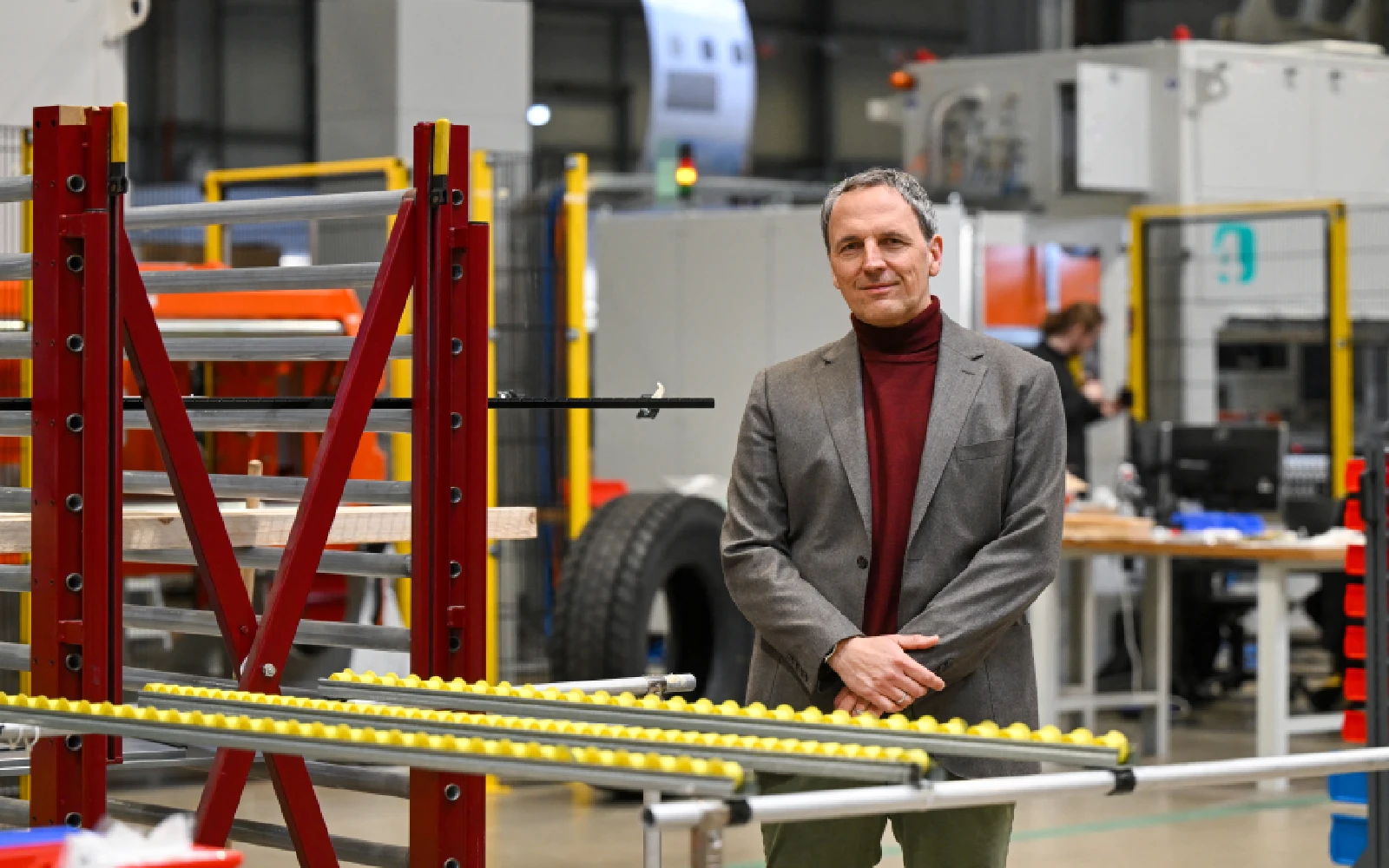
One such company experiencing this shift firsthand is 4JET, a specialist in industrial laser processing technology. Their innovations are applied across diverse sectors, including the manufacturing of car tires and advanced glass processing.
“In all key industrial sectors, China has changed from a very attractive market into a very capable competitor,” stated Joerg Jetter, CEO of 4JET, from the company’s headquarters in Alsdorf, western Germany. He elaborated that this shift is particularly pronounced in industries crucial to Germany’s economic identity, such as the automotive and mechanical engineering sectors. “Clearly, there’s been a shift,” Jetter emphasized.
4JET, with its workforce of approximately 240 employees, has directly felt the impact of this evolving market. The company previously enjoyed substantial business supplying machinery to China’s burgeoning solar cell industry. However, this sector in China has since matured, with local Chinese manufacturers largely displacing German competitors.
In response to this competitive pressure, Jetter made a strategic decision. Rather than continuing to sell directly to Chinese-owned firms, 4JET opted to license some of its proprietary technology for solar cell processing to a local Chinese company. While 4JET continues to thrive by serving other key international markets, the significance of the Chinese market has undeniably diminished for the company.
The challenges faced by 4JET, though significant, are mirrored across the German industrial landscape. While the struggles of automotive giants like Volkswagen against their Chinese counterparts frequently capture headlines, these large corporations often possess the financial fortitude to increase investments and counter competitive pressures.
However, the backbone of the German economy—its small and medium-sized enterprises (SMEs)—often lack this same capacity for rapid, large-scale investment. Consequently, these SMEs are frequently bearing the brunt of the competitive squeeze more acutely.
Economic Indicators Signal a New Era
The anxieties surrounding China’s industrial advancement are no longer mere speculation; they are increasingly substantiated by economic data. “The China shock that was long feared is arriving,” commented Oliver Richtberg, a foreign trade expert at the VDMA, an association representing German factory equipment manufacturers. His organization comprises around 3,500 companies, with approximately 90 percent of them employing fewer than 250 individuals.
Richtberg noted, “Pretty much all of our members say this is going to be a huge challenge for them.”
The changing trade dynamics are starkly illustrated by recent export and import figures:
- German Exports to China: Experienced a notable decline of 9.3 percent in 2025.
- Chinese Exports to Germany: Showed a significant surge during the same period.
Preliminary official data reveals a concerning trend: Germany’s annual trade deficit with China reached an unprecedented record of approximately 89 billion euros (US$106 billion) last year.
The Roots of the Shift and Calls for “De-risking”
Analysts suggest that this recalibration of the economic relationship began roughly a decade ago. It was around this time that China intensified its strategic push into higher-value, high-tech manufacturing sectors, heavily bolstered by substantial state subsidies. While the initial impact was gradual, German industries have only in recent years begun to feel the full force of this intensified competition.
The escalating rivalry from China has amplified concerns about an inherent imbalance in the economic ties between China and Europe. This has, in turn, fueled a growing chorus of calls for businesses to “de-risk,” primarily through diversification and expansion into alternative global markets.
These calls for strategic diversification gained further momentum following China’s assertive actions last year. The nation’s imposition of stricter controls on rare earth mineral exports, and a subsequent temporary halt on semiconductor exports from Nexperia, sent ripples of alarm through the German automotive sector.
The Fading “Made in Germany” Advantage?
Adding to the competitive pressures, some German firms report that the once-coveted “Made in Germany” label no longer carries the same inherent prestige and market advantage it once did.
Egbert Wenninger, a senior executive at Bavaria-based Grenzebach, a firm specializing in automation and production technology for the glass and building materials industries, shared his perspective. “In the past, the German brand and our many years of experience could be marketed as a clear advantage,” he stated.
However, Wenninger observed a shift in global perceptions. He noted that Germany and Europe are now sometimes viewed as “slow, bureaucratic, complicated, and expensive.” Despite this perceived shift in the market’s perception, Grenzebach has managed to maintain its market share in China.
Navigating a Complex Diplomatic and Economic Landscape
Chancellor Merz faces a delicate diplomatic and economic tightrope walk during his upcoming visit to China, Germany’s most significant trading partner. While he will be keen to strengthen economic ties, particularly as relations with the United States under President Donald Trump become more strained, he is also under considerable pressure to address criticisms regarding what many perceive as Beijing’s unfair trade practices.
From Jetter’s perspective at 4JET, Merz’s trip presents a critical opportunity for Germany to articulate a clear stance. He expressed hope that Germany would advocate for “a free market economy that is rules-based and wants a level playing field.” Jetter concluded, “Then, everything else is up to fair competition between two equal partners.”